A bullied student discovers how differently people treat a handsome face. A young woman reshapes her body with a mysterious beauty product. Elsewhere, a musician must face the prospect of loving someone on her way to Mars. Korean animation offers more than one kind of story, and its appeal extends well beyond webtoon adaptations.
These eight selections span series, features and animated shorts by Korean creators, including one Korean–Japanese co-production. They are grouped as suggestions for different tastes rather than a ranking. “Aeni” is a shortened Korean term for animation.
Lookism
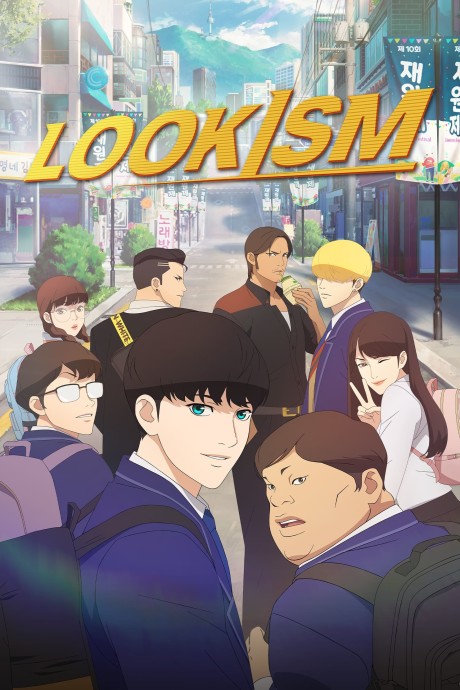
For viewers who enjoy school stories with an unusual premise, Lookism offers a clear starting point. Park Hyeong-seok, also known as Daniel Park, is bullied for his appearance. Acquiring a second, handsome and athletic body lets him see how differently the same person can be treated.
The two bodies make discrimination tangible. Hyeong-seok's confidence and chances of making friends are affected by what others see before they know him. That premise opens into friendship, school violence and the struggle to find a place among his peers.
Studio Mir produces the adaptation of Park Tae-joon's webtoon. Its series format suits viewers who want to follow characters across episodes rather than finish a story in a single sitting. Netflix's production information.
There She Is!!
Doki the rabbit pursues Nabi the cat with enthusiasm, but their world disapproves of relationships between the two species. What begins as a courtship gradually becomes a confrontation with the society around them.
SamBakZa's animated shorts tell the story through movement, expressions and music rather than dialogue. That makes them an accessible way to try Korean animation without committing to a long series. Their cute designs also lead into a story about prejudice, so expect more than a succession of light romantic jokes.
The creators publish the films through their official Newgrounds account. Follow the numbered “steps” to see Doki and Nabi's relationship develop.

Ghost Messenger
Ghost Messenger gives agents of the afterlife a technological tool. Kang-lim uses a Soul Phone to capture spirits that refuse to leave the living world, only to become trapped inside the device himself. It then reaches Little Kang-lim, a boy who can see spirits.
The combination of spiritual fantasy and technology distinguishes this selection. The adult responsible for the mission needs the child's help, setting up an adventure across the boundary between life and death. Choose it for supernatural action rather than a straightforward horror film.
Studio Animal's project has both home-video installments and a 2014 feature version. Check which format you find rather than assuming the film represents an entire series. KOFIC's feature-film entry.
Blade of the Phantom Master
Munsu was once a secret royal agent of Jushin. After the kingdom's collapse, he wanders a violent world filled with people who abuse their power. The figure of an official sent to expose corruption becomes the basis for a dark fantasy rather than a conventional court adventure.
Adapted from the comic by Youn In-wan and Yang Kyung-il, the film is a possible choice for viewers drawn to abrasive heroes and action built around reworked classical material. It is a feature adaptation, so it should not be treated as a substitute for the entire long-running comic.
The 2004 film is a Korean–Japanese co-production involving OLM and Character Plan, not Studio Mir. Original project announcement.
Seoul Station
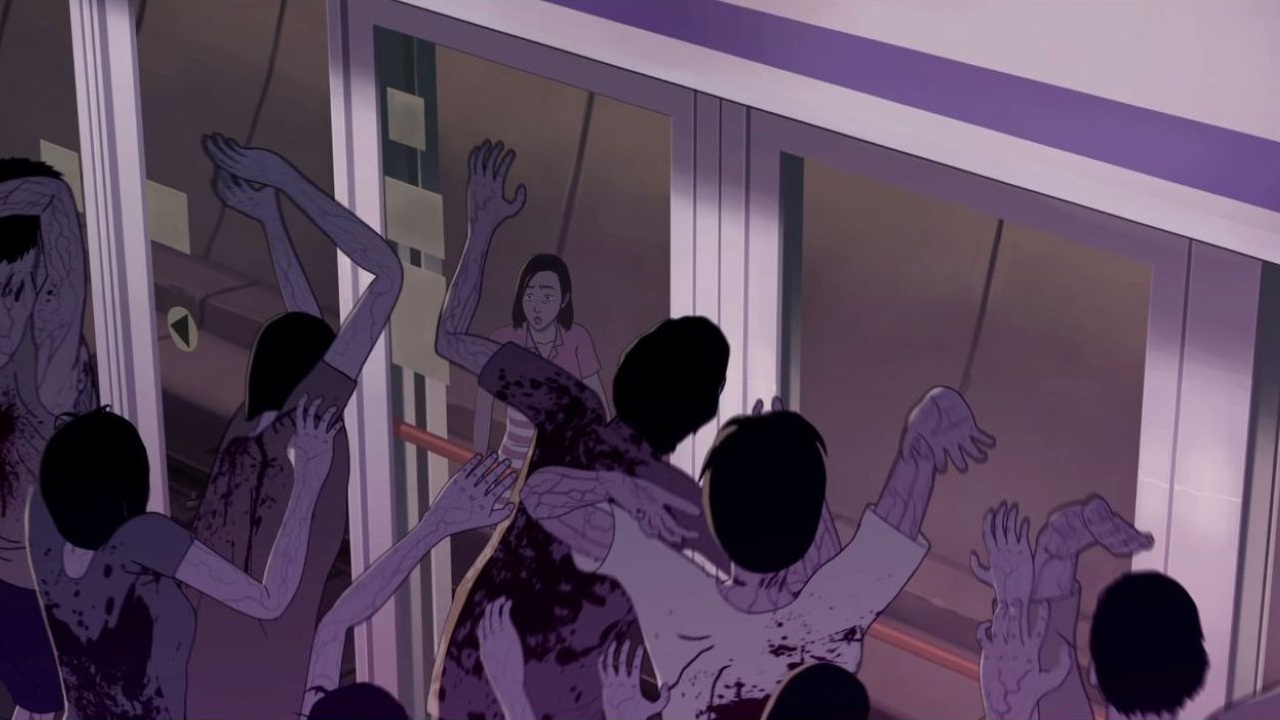
Seoul Station takes animation into adult zombie horror, following an outbreak around a major station in the Korean capital. People already living on society's margins are among the first caught in the disaster.
Director Yeon Sang-ho places their escape alongside indifference and the barriers vulnerable people face. That makes this a choice for viewers who want a social dimension to a zombie story. Its violence and the characters' desperate circumstances are also reasons to avoid treating it as casual family viewing.
The film is the animated prequel to Train to Busan, but its focus is people trapped in the city rather than passengers aboard a train. IFC Center's film introduction.
Beauty Water
A product that softens flesh so users can reshape their appearance sounds like a beauty wish fulfilled. For Ye-ji, it offers escape from the contempt she encounters because of her looks. But an appetite for further improvement puts her body at risk.
Beauty Water is a choice for viewers interested in body horror and beauty standards. Transformation goes beyond clothing or makeup to affect flesh directly, making the process of changing one's appearance a source of fear. Viewers sensitive to bodily distortion may prefer another selection.
Cho Kyung-hun directs, with SS Animent and Studio Animal credited as production companies. KOFIC's film entry.
Kai: The Legend of Mirror Lake
Instead of urban violence or body horror, Kai: The Legend of Mirror Lake offers an adventure through a snowy fantasy world. When the Snow Queen's magic threatens his village, a boy named Kai receives a mission from a river spirit to protect his home.
Lee Sung-gang's 2016 film is a possibility for viewers seeking a fantasy built around a young protagonist's journey. A curse, a spirit of nature and a village in danger build a fairy-tale premise around protecting the place the hero calls home.
For a family film, this offers a different direction from Seoul Station or Beauty Water. See KOFIC's film information and Netflix Korea's synopsis.
Lost in Starlight
Nan-young is preparing to travel to Mars, while Jay is a musician in Seoul. They meet when she brings her mother's old record player in for repair, and fall in love before a journey that could put a planet between them. The film's 2050 setting ties a futuristic romance to familiar objects such as vinyl records and record players.
Choose it for romance with a science-fiction premise. Its central tension is between pursuing an individual dream and holding on to a relationship. The Mars mission serves that emotional question rather than promising battles in space.
Directed by Han Ji-won and voiced by Kim Tae-ri and Hong Kyung in the leading roles, the film debuted on Netflix in 2025. Netflix's official introduction.
If you are unsure where to begin, Lookism offers a series to follow across episodes, while Lost in Starlight is a feature-length romantic option. For horror, the choice between Seoul Station and Beauty Water depends on whether you prefer a social disaster or a threat rooted in the human body.
Correction, November 2, 2026: Blade of the Phantom Master is a Korean–Japanese co-production, not a Studio Mir production. Beauty Water's production credits have also been corrected using KOFIC's entry.