Cover illustration generated with AI for OtaHub.
In late September, games about serving bubble tea, making bánh mì and running food stalls appeared together in a Vietnamese social-media trend about opening a shop. By early November, people were sharing a very different kind of link: a Buddhist temple they could visit in a browser. The two examples show what a small game gains when it is only a tap away from the chat where someone heard about it.
A link gets the player to the game. For them to pass it on, the game still needs to give them something worth talking about. That might be a record of a chaotic shift at a tea shop, or a 3D temple a friend wants to explore for themselves.
Why do people click in the first place?
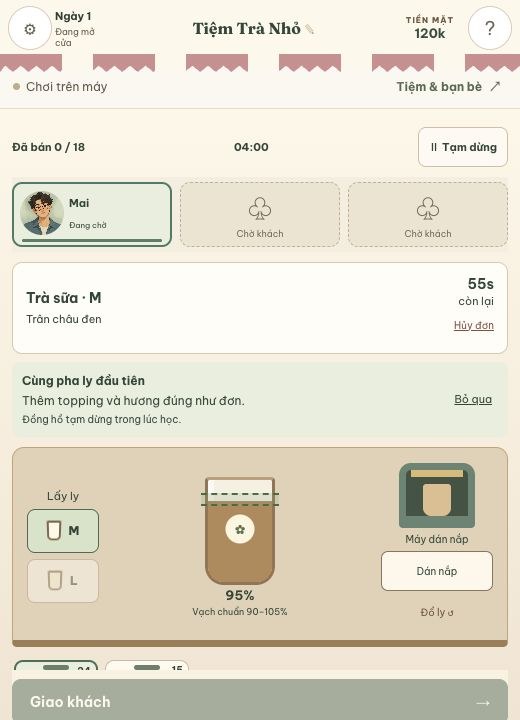
If a friend asks you to run a bubble tea shop in Tiệm Trà Nhỏ, you already know roughly what to expect. Customers order drinks, you make them and at the end of the day you see whether you made a profit. The invitation can be short because the setting is familiar. The browser cuts down the next step: you can try it on a phone or computer, and the local save mode needs no sign-in.
Niệm Phật Online also runs in a browser, though newcomers pick a server and create a character. The link raises a different question: what does a virtual temple look like, and what can you do inside it? Players can meditate, count prayer beads or tap a wooden percussion instrument in a 3D temple. The merit points on screen track in-game activity. The familiar setting makes the invitation easy to understand before a new player learns the controls.
What can you send back after playing?
Tiệm Trà Nhỏ can create an end-of-day image with cups sold, profit and customer ratings. A friend who has never played can still read it. A disappointing shift can start a conversation about buying too many toppings or remaking orders. A friend can try a shift of their own and send their result back to the same chat. The link gets them started, and the picture keeps the conversation going.
With Niệm Phật Online, the story might come from something players saw inside. Vietnamese newspaper Tuổi Trẻ reported comments about finding a place to sit and other players getting to golden lotus flowers first. A small incident like that is easy to describe, and it can make another person curious enough to see the temple for themselves.
What brings players back?
A game that is easy to share still needs something interesting to do after the first visit. In Tiệm Trà Nhỏ, that comes down to small decisions. How many pearls can you sell before they expire? Is it time to add a drink to the menu when orders still go wrong? If the first shift ends with leftover ingredients, the next one gives you a chance to plan better.
That is how a browser game can outlast its first appearance in a group chat. The first visit may start with a friend's story. The next day, players can come back because they have a story of their own and want to see how many more cups they can sell.
Sources: Tiệm Trà Nhỏ · Niệm Phật Online · Tuổi Trẻ · Kenh14