My Hero Academia Final Season (Boku no Hero Academia FINAL SEASON) is season 8 and the last season of the anime adapted from Kohei Horikoshi's manga, produced by Bones Film. It runs 11 episodes, aired from October 4 to December 13, 2025, and closes an anime that began on April 3, 2016. This My Hero Academia Final Season review looks at how those 11 episodes wrap things up, whether the visuals justify the effort and who should watch.
The first thing to know is that the season does not try to reinvent anything. It has one job: end the war between Deku, All Might and Shigaraki's alliance with All For One, and it throws everything at that job. Anyone who has followed the series from the start will find that it pays its debts fairly. Anyone who has not should start at season 1.
Quick facts about My Hero Academia Final Season
| Item | Details |
|---|---|
| Original work | Kohei Horikoshi (Shueisha, Jump Comics) |
| Studio | Bones Film (production supervised by Bones) |
| Key staff | Chief director Kenji Nagasaki, director Naomi Nakayama, series composition Yosuke Kuroda, character design Yoshihiko Umakoshi and Hitomi Odashima, music Yuki Hayashi |
| Broadcast | October 4 to December 13, 2025 (Japan time), 11 episodes (episodes 160 to 170 of the anime), on ytv and NTV |
| Opening and ending | "THE REVO" (Porno Graffitti) and "I" (Bump of Chicken) |
| Where to watch | Crunchyroll (outside Asia); in Southeast Asia, check your regional catalog |
| User scores | MyAnimeList 8.71/10 (188,569 ratings, rank 62), AniList 87/100 (read October 3, 2026) |
| OtaHub score | 8.7/10, Great |
Story: a season devoted to the final battle
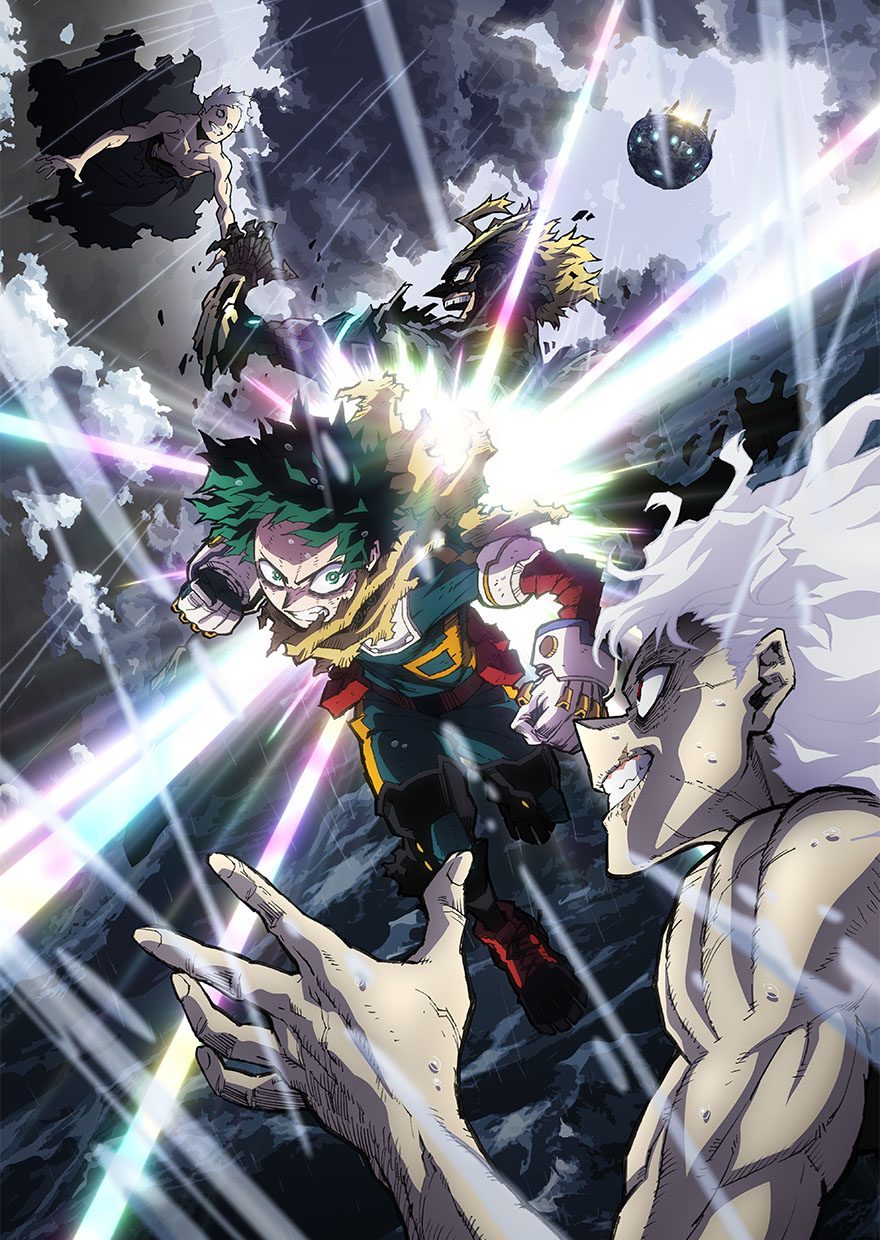
According to Bones' own synopsis, the season begins in the spring of Deku's second year at U.A., as the heroes and the villains led by Shigaraki and All For One enter the decisive fight across Japan. The two main fronts are Deku, using One For All at full power, against Shigaraki, who has absorbed All For One's consciousness, and a rejuvenated All For One against All Might in his armor.
Season 8 adapts manga volumes 40 to 42, chapters 399 to 430. Compared with the 21 episodes of season 7, this one has only 11, so there is almost no run-up: the show goes straight to the battlefield. That suits a final season, and it keeps the pacing tighter than the build-up stretches of the previous season.
What separates this fight from many shonen finales is that its focus is not only on moves. The recurring question is whether a hero can save the human part of an enemy instead of simply beating them. That is the thinking that made Deku who he is from episode 1, and the season puts it through its final test. OtaHub will not say how it ends; you will want to see that part yourself.
Pacing and adaptation choices
Horikoshi was closely involved. According to information confirmed in July 2025, he wrote additional original scenes that are not in the manga. That shows the team was doing more than redrawing the manga in motion, and gives readers who know the ending something extra to watch.
The most divisive stretch is Deku vs Shigaraki. It leans on inner conflict and dialogue more than a pure duel; FandomWire said episode 5 had more talk than action, then praised episode 6 for a better balance of emotion and blows. If you watch shonen mainly for non-stop fighting, the rhythm may test your patience. If you are attached to these two characters, it is the most rewarding part.

Visuals and music: where the season spends its effort
This is the highest-scoring area. Bones keeps Umakoshi and Odashima's character designs, the team includes a dedicated 3DCG director, and in the official promotional art, the rain, rubble and energy effects are drawn with real care. Episode reviewers noticed it too: FandomWire called episode 8 one of the most complete shonen episodes, and ANN praised the animation of episode 163.
On the audio side, Yuki Hayashi returns as composer as in earlier seasons. The opening "THE REVO" is by Porno Graffitti, the band that also performed the season 1 opening, and the ending "I" is by Bump of Chicken. The Japanese voice cast stays familiar: Daiki Yamashita (Deku), Kenta Miyake (All Might), Koki Uchiyama (Shigaraki), with All For One played by Akio Otsuka and Hiroshi Kamiya.
Rewatch value, and who must watch first
For fans, the rewatch value is high: many threads are closed, and details planted back in the early seasons are worth looking for on a second viewing. The flip side is that the season explains almost nothing again, because it assumes you remember the previous 159 episodes. That is why OtaHub's Lasting Value score sits a little below the visuals and story.
After the main season, the series also has a special episode adapting chapter 431, aired on May 2, 2026, outside these 11 episodes. This review covers season 8 only.
Strengths and weaknesses
Strengths
- Art and staging in the key episodes drew plenty of praise in episode reviews.
- Goes straight into the final battle within 11 episodes, with little filler.
- Horikoshi helped write extra original scenes.
- Keeps the Japanese voice cast and Yuki Hayashi's music.
Weaknesses
- Newcomers can hardly watch it on its own.
- Deku vs Shigaraki has more talk than blows, which can divide viewers.
- Many threads have to close in 11 episodes, so some characters inevitably get little time.
- Few surprises for anyone who has read the manga.
What critics and viewers say
Anime News Network ran a review for each episode of the season. The writer (Bolts) praised episodes 163, 167 and 170 for animation, for resolving the climax without bloat and for a message of kindness and optimism. On ANN's community scale, those three episodes score 4.6, 4.3 and 4.5 out of 5. FandomWire reviewed episode by episode too: episode 5 was described as having more dialogue than action, episode 6 was praised for balance and episode 8 was ranked among the most complete shonen episodes. In Japan, Kanto-region viewership ratings ranged from 3.1% to 4.5%, peaking with the finale.
Viewer scores are high as well: MyAnimeList gives 8.71/10 from 188,569 ratings and ranks it 62nd, and AniList gives 87/100 (figures as of October 3, 2026). OtaHub's 8.7 sits right in that range, but weighs in how much the season depends on the earlier ones.
OtaHub score
The overall score is the weighted average of the four criteria, with up to ±0.2 editorial adjustment. See our review standards.
Who should watch My Hero Academia Final Season?
Watch it if you have followed Deku and Class 1-A through the earlier seasons, want to see the final battle staged beautifully, or are thinking about rewatching the whole series knowing where it ends.
Think twice if you have seen none of it, cannot spare time for the previous 159 episodes or only want a purely action-driven duel. Newcomers should start at season 1 and come back to season 8; OtaHub's My Hero Academia profile collects the seasons and scores to help you plan.
FAQ
How many episodes does My Hero Academia Final Season have?
It has 11 episodes, aired from October 4 to December 13, 2025 on ytv and NTV. They are episodes 160 to 170 counting from season 1, so the finale is also the 170th episode of the whole anime.
Where can I watch My Hero Academia Final Season?
Crunchyroll licensed it outside Asia and streamed it alongside Japan, with an English dub from October 18, 2025. In Southeast Asia, MyAnimeList lists Ani-One Asia; catalogs differ by country, so check what your region offers.
Do I need to watch the earlier seasons first?
Practically, yes. The season opens in the middle of the final battle and continues straight from season 7, so if you do not know who All Might, One For All, Shigaraki and All For One are, most of the emotion will not land.
How much of the manga does the final season adapt?
Season 8 adapts manga volumes 40 to 42 (chapters 399 to 430), with a few original scenes added by Kohei Horikoshi. A special episode adapting chapter 431 aired on May 2, 2026.
Sources: Bones work page (staff, cast, synopsis), official anime site, Crunchyroll, Wikipedia (air dates, episode count, adaptation), MyAnimeList and AniList (user scores, read on October 3, 2026), Anime News Network and FandomWire (episode reviews). The score is OtaHub's editorial judgement, graded under the Review Standards.