Hollow Knight: Silksong is a metroidvania from Australian indie studio Team Cherry, released on September 4, 2025, more than six years after it was first announced on February 14, 2019. You play Hornet, a fan-favourite side character from the original, who is captured and carried to the kingdom of Pharloom, then climbs to the Citadel at its peak to find out why. This Hollow Knight: Silksong review looks at two things: where the game beats expectations, and why it will not suit everyone.
The short version: this is one of the best games the genre has seen in years, but Team Cherry does not hold your hand, and you should know that before you buy. The rest of the review shows where the difficulty lives.
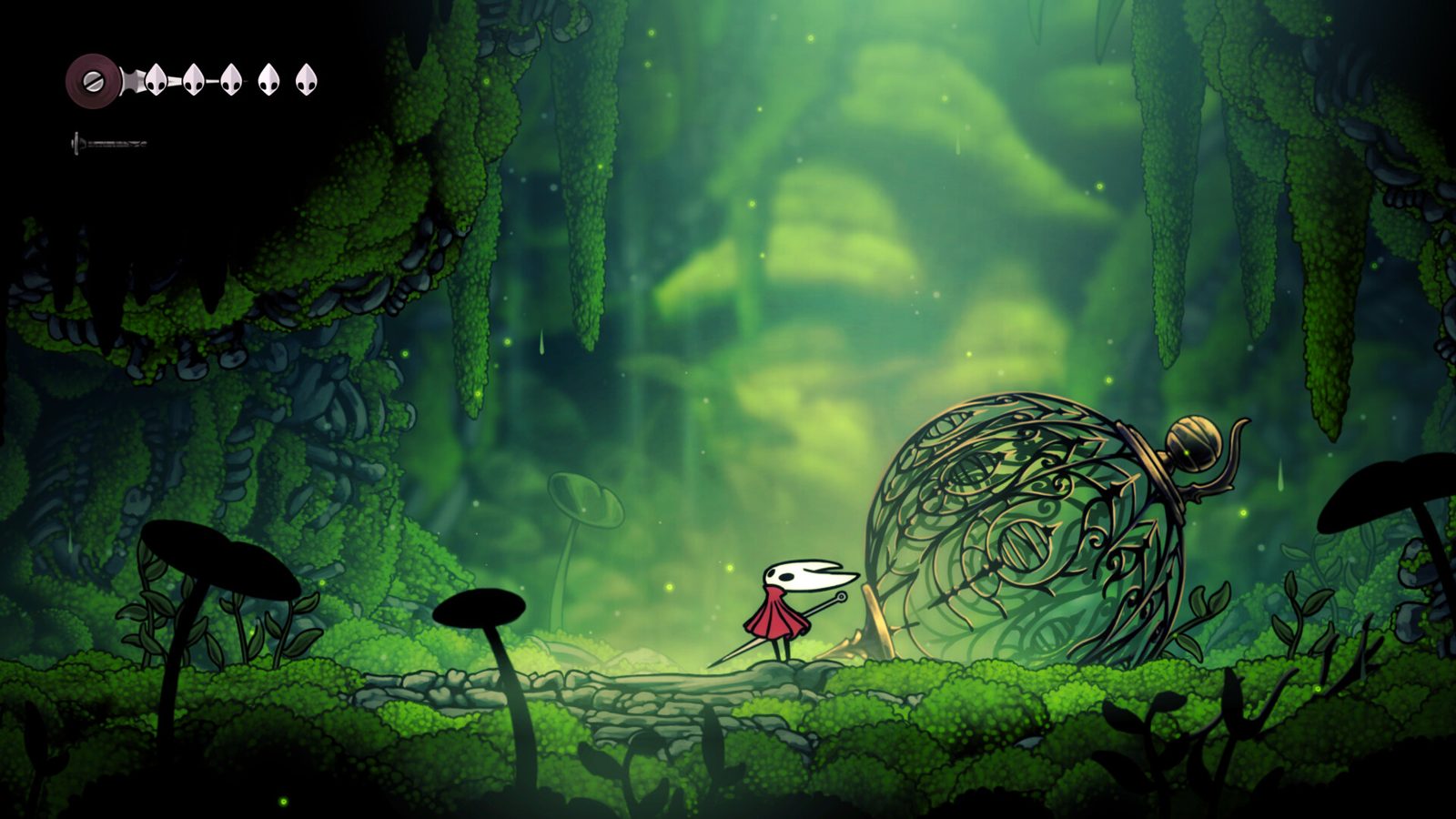
Quick facts about Hollow Knight: Silksong
| Item | Details |
|---|---|
| Developer, publisher | Team Cherry (Australia); directors Ari Gibson and William Pellen, music by Christopher Larkin |
| Release | September 4, 2025 on PC, Switch, Switch 2, PS4, PS5, Xbox One, Xbox Series X|S (in Game Pass from day one) |
| Genre | 2D action-adventure metroidvania |
| Price | $19.99 on Steam, 220,000 VND in the Vietnam region (October 3, 2026); one-time purchase, no gacha |
| Where to play | Steam; other stores are listed on the official site |
| Critic score | Metascore 90 on PC (49 reviews, Metacritic, October 3, 2026); console versions range from 90 to 94 |
| Steam user reviews | Very Positive: 89.5% of 424,302 reviews (October 3, 2026) |
| Sales | More than 7 million copies as of December 15, 2025 (per Wikipedia) |
| OtaHub score | 9.4/10, Excellent |
Story: Hornet talks more, and so does the world
The original's Knight was silent. Hornet has a voice of her own, blunt and a little sharp. She is voiced by Makoto Koji in a made-up insect language with no real words, and critics singled out her short lines as a plus. The plot follows someone dragged into a fight that was never hers: a holy site that demands pilgrimage, ancient silk weavers and a bigger force that slowly comes into view.
Team Cherry still tells its story the old way. You collect scraps from NPCs, scenery, items and a few journal lines, then piece them together yourself. Pharloom has more characters than Hallownest, and more of them will talk to Hornet and give her jobs, so the world feels warmer even though it is full of bells, prayers and shadows. OtaHub is not spoiling the ending here, because the best parts are the discoveries you make yourself.
Gameplay: fast, precise and demanding
Hornet is much faster and more agile than the Knight. She runs, dashes, jumps and stabs with her needle, and the silk she earns by fighting fuels her healing Bind. Crests such as the Hunter Crest change how she attacks, and Tools open up more ways to fight and set up a battle.
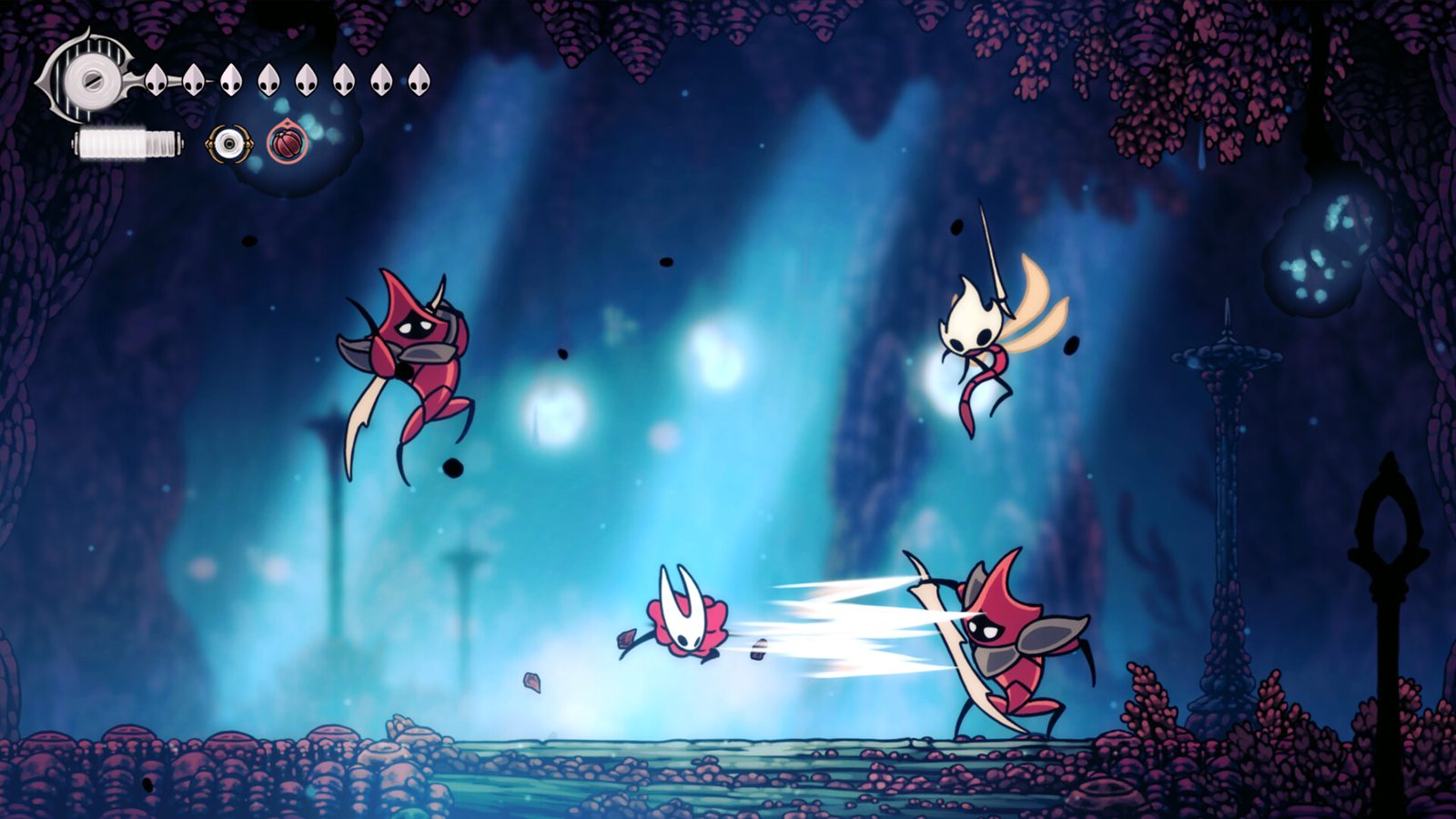
The map and the rhythm of exploring
Exploration is the game's strongest suit. Pharloom opens vertically as well as horizontally, linked by shortcuts and loops back to earlier areas. The route is not always clear: you buy maps, mark them and rely on your own memory. You will get lost now and then, but finding the right path usually pays off with a real "so that was it" moment. Rosaries as currency and the benches scattered around give you footholds between the hard stretches.
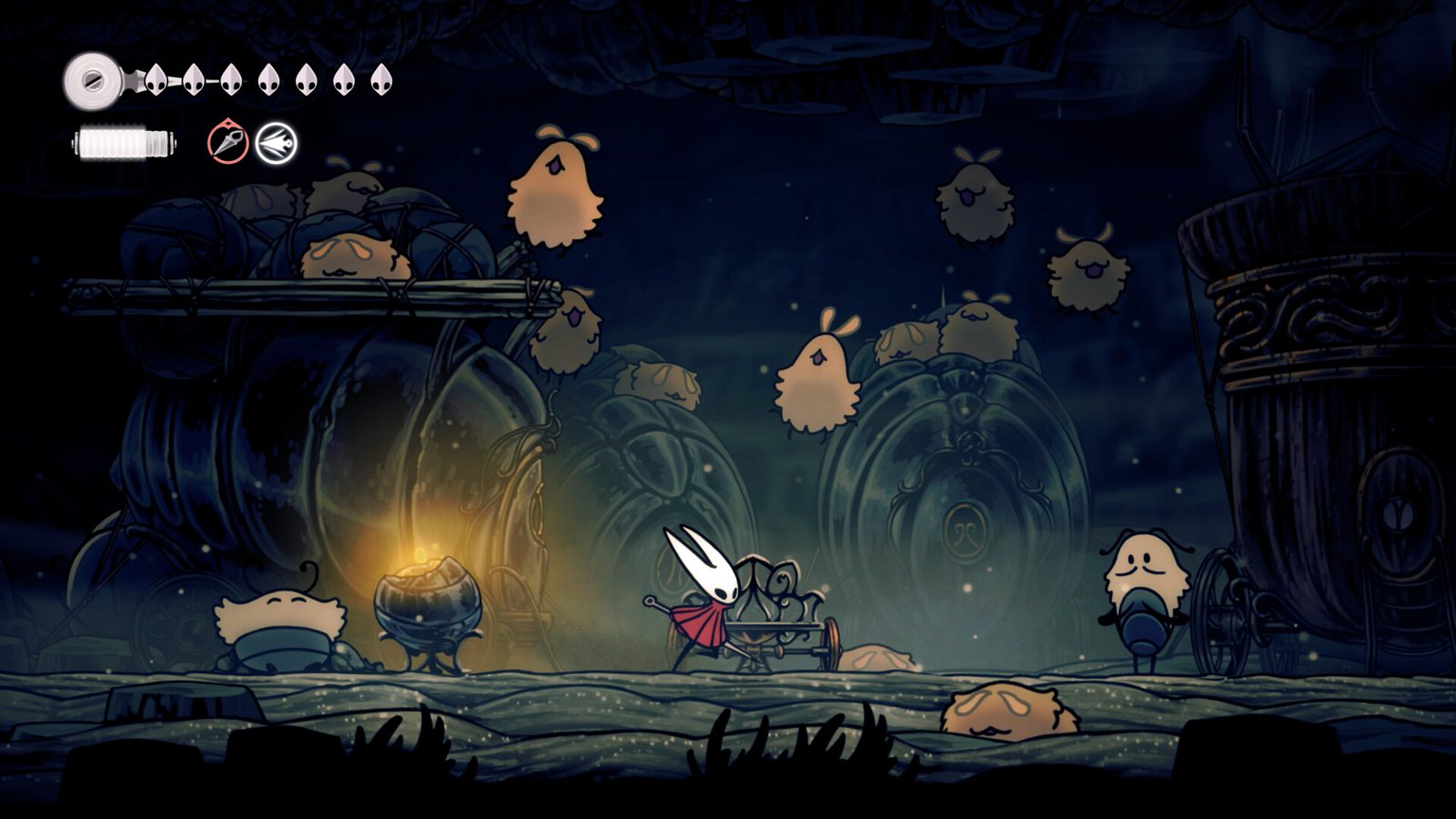
Difficulty: Silksong's biggest debate
Most critics agree Silksong is harder than the original. Enemies hit harder, many areas are dense with traps, and Hornet needs a more exact diagonal pogo (bouncing off enemies with a downward strike). The most irritating part is the runback: after losing to a boss you may need to cross a long stretch full of enemies before you can try again.
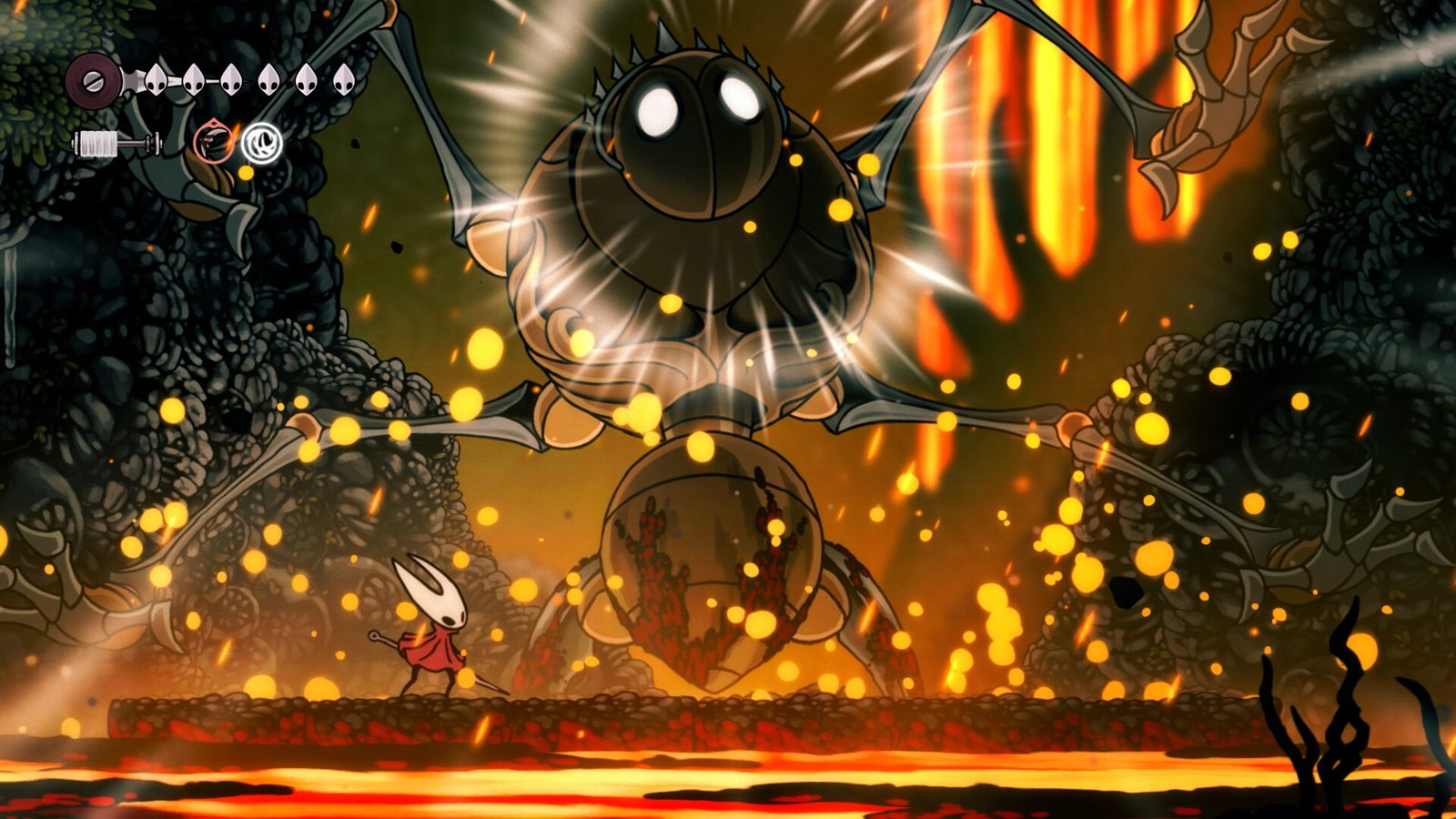
Team Cherry responded in part. A September 10, 2025 patch eased Moorwing and Sister Splinter, lowered Sandcarver damage and raised the Rosaries you earn. Later patches (September 18, October 7, November 10, 2025 and March 24, 2026) mostly fixed bugs, made small balance tweaks and added options. Ari Gibson and William Pellen have explained that Hornet is stronger, so enemies had to be redesigned to match. The reasoning holds up, but a few boss fights still ask for more of your time than they need to. That is the one thing keeping the game from 9.5.
Visuals and music: the near-perfect part
Hand-drawn 2D art, a colour palette for each region and layered backgrounds make Pharloom more beautiful than Hallownest. Each area has its own colour theme and pace: damp mossy green, caves under cold light, then a fiery gold-orange pit. Hornet's animation is fluid and every strike has weight. Christopher Larkin returns with melancholy strings and driving boss themes, which many reviews single out. This is the least contested part of the game.
Strengths and weaknesses
Strengths
- Hand-drawn art, music and atmosphere in each region rank among the genre's best.
- Hornet moves with agility, and Crests and Tools give combat real choice.
- A big world with shortcuts, side quests and secrets; plenty of content for a one-time purchase.
- $19.99 price, free content updates, no gacha or microtransactions.
Weaknesses
- High damage, and a few bosses are very strict for your progress at that point.
- Long runbacks to some bosses are tiring and break the flow.
- Vague direction makes it easy to get lost before you have a map or markers.
- The Simplified Chinese translation drew complaints at launch; Team Cherry released a beta using a fan translation.
What critics say
On Metacritic, Silksong holds a Metascore of 90 on PC (49 reviews) and 90 to 94 on console versions, "Universal acclaim" (as of October 3, 2026). According to Wikipedia, OpenCritic records 97% of critics recommending it. By outlet: IGN, GameSpot, Game Informer and Destructoid gave 9/10, Eurogamer and NME 5/5, Nintendo Life 10/10 and GamesRadar+ 4/5. Video Games Chronicle was a dissenting voice at 3/5, arguing that mixing Soulslike and metroidvania design makes each half undercut the other, though it praised the art and the feel of movement.
Steam players agree: 89.5% of 424,302 reviews (379,757 positive) are positive, "Very Positive" (October 3, 2026), and English-language reviews alone sit at 93.2%. Commercially, the game peaked above 580,000 concurrent Steam players in its first days, sold more than 7 million copies by December 15, 2025, and won Best Action/Adventure Game at The Game Awards 2025.
OtaHub Score
The overall score is the weighted average of the four criteria, with up to ±0.2 editorial adjustment. See our review standards.
Who should play Hollow Knight: Silksong?
Play it if you love exploring, will learn boss patterns and accept dying a lot to open up each route. Fans of Hollow Knight will be happy: Silksong is bigger, prettier and faster.
Think twice if you want an easy ride, little backtracking, or a relaxed metroidvania. You can also read OtaHub's news on the free Sea of Sorrow expansion, which promises new areas, bosses and tools in 2026.
Frequently asked questions
When did Hollow Knight: Silksong come out, and on what platforms?
It launched on September 4, 2025 on PC (Windows, macOS, Linux), Nintendo Switch, Switch 2, PlayStation 4 and 5, Xbox One and Xbox Series X|S. The Xbox version was in Game Pass from day one.
How much does Hollow Knight: Silksong cost?
On Steam it costs $19.99, or 220,000 VND in the Vietnam region (checked October 3, 2026). Console versions are priced per storefront.
Do I need to play Hollow Knight first?
No. Silksong is a new story about Hornet in a different kingdom, and newcomers can follow it. Veterans will spot more callbacks and settle into the combat rhythm faster.
Is Silksong harder than Hollow Knight?
Yes, most critics agree. Enemies hit harder, many bosses sit behind a long walk back, and Team Cherry eased a few early bosses in a September 10, 2025 patch. Maps and tools let you choose how to get through the hard parts.
Is the Sea of Sorrow expansion out yet?
Team Cherry has announced Sea of Sorrow as a free expansion with new areas, bosses and tools, due in 2026. As of October 3, 2026, OtaHub could not confirm a specific release date.
Sources: official Hollow Knight: Silksong site, Steam page (price and user review counts read on October 3, 2026), Metacritic, OpenCritic, Video Games Chronicle, Wikipedia (outlet scores, awards, sales), Hollow Knight Wiki (patch history) and Multiplayer.it (Team Cherry on difficulty). Scores are OtaHub editorial opinion, graded under the Review Standards.