Journey to the West gave me a reason to look forward to Black Myth: Wukong from its earliest footage. An action RPG full of monsters, magic and landscapes drawn from Chinese mythology sounded like an adventure I would love. Once I began playing, the environments and energetic fighting gave that excitement plenty of justification.
As I continued, however, the things I liked did not quite become the fulfilling journey I had imagined. Excellent individual fights could be followed almost immediately by another obstacle demanding a fresh round of learning. I wanted more opportunities to explore or enjoy the progress I had just made before getting stuck again. Wukong remains worth playing, but completing it did not erase the feeling that I had hoped for more.
A familiar mythology without enough narrative guidance
Black Myth: Wukong is not a straightforward retelling of the pilgrimage. You play the Destined One, a monkey travelling to recover relics associated with Sun Wukong. That premise lets Game Science revisit familiar figures and events while developing the relationships left behind by the original story.
I appreciate its affection for Journey to the West. Monsters, locations and encounters give the adventure a distinctive identity, especially when you already recognise something of Wukong’s history. Pigsy also helps connect the game to a character many readers and viewers will know before they begin.
The difficulty is that the storytelling expects too much of that familiarity. Characters are not always introduced thoroughly, and the motivation carrying the journey forward can feel indistinct. Understanding the immediate objective does not necessarily mean understanding why a particular meeting matters or what history the people involved share.
For someone unfamiliar with the novel, that gap could be greater still. A recognisable name can enrich a scene only after the game has given players a reason to care about it. I wanted the game to spend more time establishing these relationships so that their important moments would have weight without relying so heavily on outside knowledge.
There is betrayal, violence and moral ambiguity, but they did not give me the emotional depth I expected. The more recent God of War adventures made me care more about their characters and themes. Wukong has excellent material to work with, yet its delivery does not fully realise that potential.
Landscapes that keep the journey appealing
The visual presentation is much more consistently satisfying. Forests, deserts and snowy mountains give the journey variety, while temples and ruins establish places that feel worth investigating. I like how the mythology sits within detailed landscapes and buildings rather than becoming an indistinct backdrop for the next fight.
Areas such as the Pagoda Realm and Flaming Mountains each feel like a distinct place. Their architecture and atmosphere give the adventure a different character as it moves forward. Those changes matter in a combat-heavy game, because taking in a new place provides some relief after a demanding encounter.
The enemies receive similar care. Their appearance and movement can make a new confrontation interesting before I understand how to approach it. Even when the pacing starts wearing me down, the presentation encourages me to see what lies ahead.
Fast combat with useful options to explore
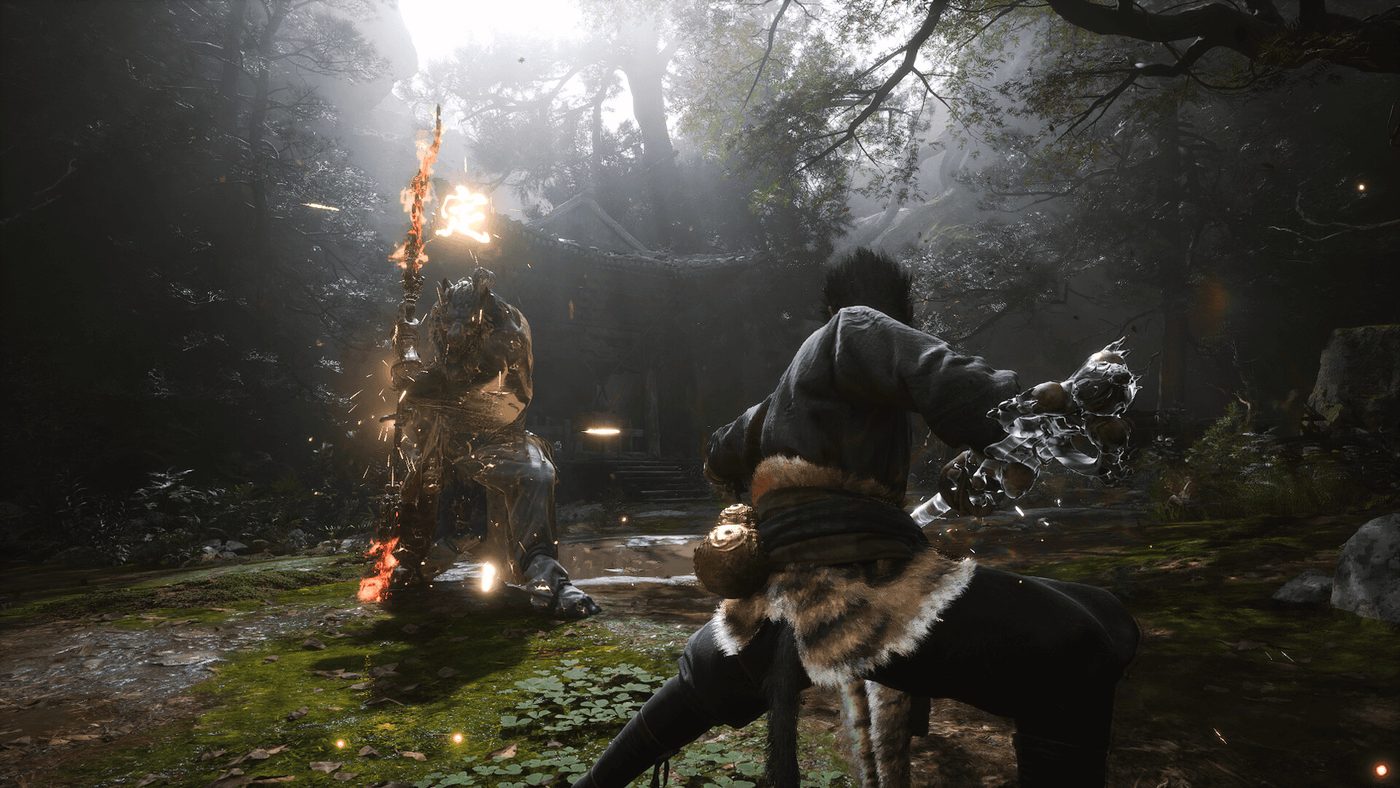
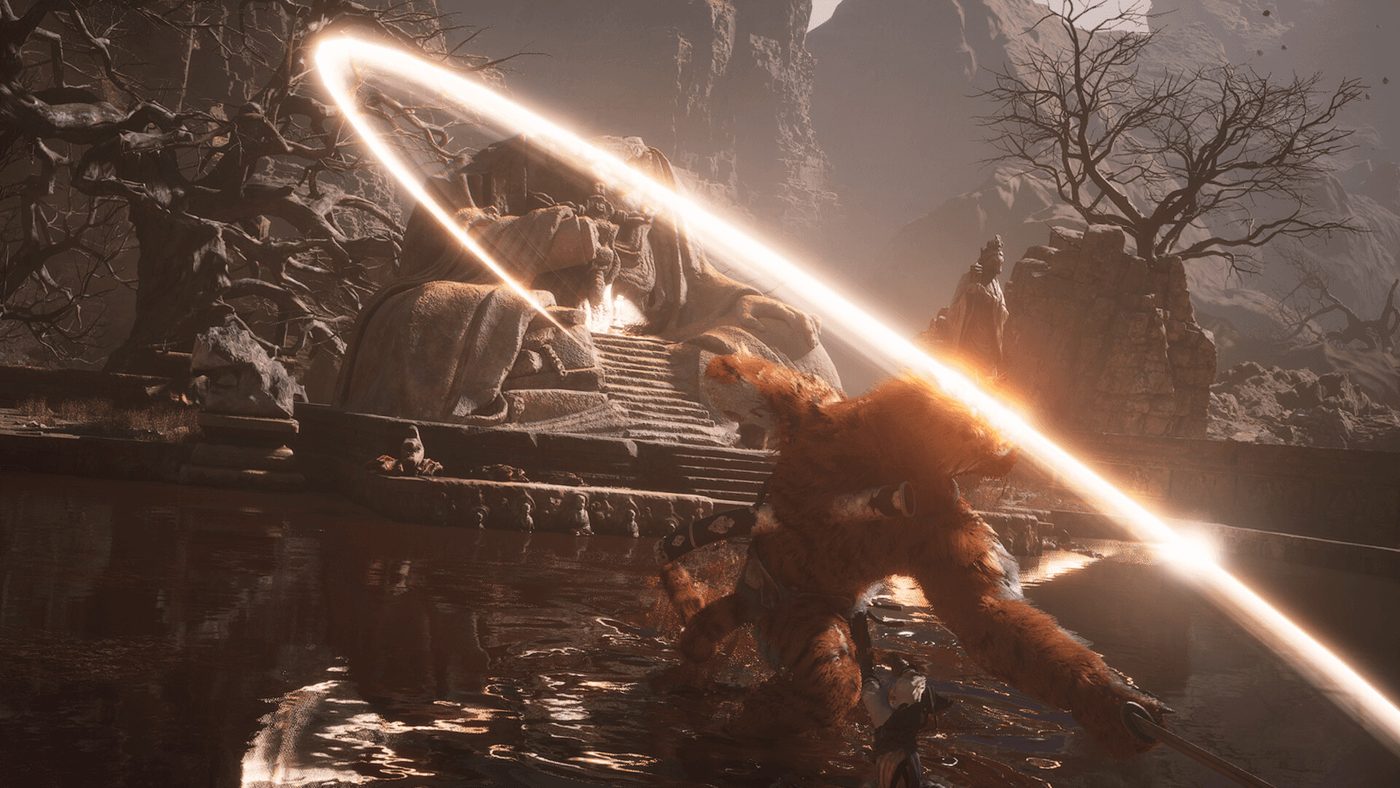
When a fight comes together, I understand why so many players love this game. Attacks and dodges flow quickly, while magic supplies alternatives to waiting for a narrow opening. Learning an enemy’s rhythm and making good use of a chance to strike can feel tremendously satisfying.
Staff stances, spells and transformations offer ways to adjust your approach. Immobilising an opponent can create an attacking opportunity, while a transformation changes what you can do for a limited period. When one plan fails, changing skills gives another attempt a different purpose rather than asking me to repeat the same unsuccessful sequence.
I would still distinguish Wukong from a typical soulslike. Its difficulty and shrine checkpoints invite comparisons with Dark Souls, but dying does not leave your currency behind for retrieval before it disappears. Much of the tension therefore rests within the encounter itself rather than extending to a resource recovery run afterwards.
Character progression also has different limits. Levelling and adjusting skills are possible, but grinding for a little longer does not always provide a reliable answer to a boss that has stopped your progress. Eventually, you need to understand that confrontation and change how you fight. Being different from Souls is no problem in itself, though it makes the arrangement of those challenges particularly important.
Too little breathing room between difficult bosses
My biggest reservation concerns how closely the difficult encounters can follow one another. At times I worked through a demanding fight only to meet another opponent shortly afterwards that required new learning, revised skills or another approach. Individually, these confrontations can have good ideas. Together, they can make progress exhausting.
After a prolonged challenge, I want some time to use what I have learned. A manageable stretch of exploration or an opportunity to experiment with a new combination of abilities would help me feel the character’s improvement. Wukong sometimes moves on to the next obstruction before that sense of achievement has much chance to settle.
This is why difficulty did not always translate into excitement for me. I am happy to learn an encounter, but I want the wider adventure to have more variation in intensity. When I am repeatedly held at the next obstacle, my attention narrows towards getting past it. The world and combat options have less space to contribute to the journey around that problem.
Players who primarily want a succession of boss fights may enjoy that structure more than I did. There is real satisfaction in working out a winning approach, particularly when a confrontation rewards the tools available. I would have preferred more room to explore and enjoy growing stronger between the hardest tests.
Strong audio and a very good PC experience
I was very happy with the music and sound during this playthrough. They work well alongside the visuals, helping the mythological setting retain its appeal even when the pacing starts wearing me down. The audio remains one of the strengths I appreciate after finishing the journey.
The PC experience was also very good for me. Play was smooth, and no significant technical issue became a major reservation about the game. Reliable operation matters in combat that depends on watching attacks and responding with a dodge. I could concentrate on my decisions rather than feeling that the machine was getting in the way.
My frustrations are therefore chiefly about the design’s pacing. A game can run smoothly while its sequence of difficult encounters becomes tiring, just as impressive scenery can coexist with a story that needs clearer development. Good technical performance lets the strengths come through, while enjoyment of the journey still depends on how its challenges are arranged.
Worth considering for a combat-focused adventure
On October 16, 2026, the standard edition was listed at $59.99 on the US Steam store. That is a regional price, so check the store attached to your account before buying.
There is worthwhile value here for someone seeking fast combat, demanding enemies and a setting steeped in Journey to the West. Strong visuals, sound and my smooth PC experience make the presentation rewarding. The fighting also provides enough useful options for overcoming a tough opponent to feel satisfying.
The important consideration is whether its structure suits you. Anyone wanting clearer narrative development and longer stretches of exploration between major confrontations may share my disappointment. Finishing the game left me with several things I appreciated, but not the sense that the whole adventure had become as compelling as its best parts suggested.
Verdict
Black Myth: Wukong offers excellent fighting at its best and a beautifully realised mythological setting. I appreciate what Game Science has done with Journey to the West, and I enjoy the combat when its abilities and evasive movement come together. Its closely packed difficult bosses and dependence on existing knowledge nevertheless kept the journey from meeting my expectations. It is worth playing for demanding action, while anyone seeking a more relaxed rhythm of adventure should consider those reservations before buying.
Engaging combat in a less fulfilling journey
Visuals, audio and the PC experience are strong. Fluid fighting offers useful choices, but relentless bosses and unclear storytelling weaken the overall adventure.
OtaHub recommendation: Worth buying if you enjoy learning demanding boss fights.
Reviewed on PC after completing the original game. This review discusses the premise and systems without revealing the ending. Technical impressions apply to the machine used.
Author material: the author’s earlier review. Game information and US pricing: Steam.
Images: Game Science.