In-Depth · Culture & Context · No spoilers
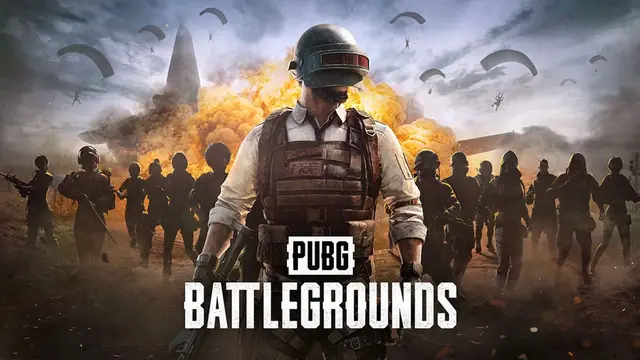
On September 23, 2026, KRAFTON, the company behind PUBG: BATTLEGROUNDS, banned Vietnamese pros Himass and TanVuu from its tournaments for life. Many Vietnamese gamers deleted the game soon after. The ban was only the spark. The event had no rules for what it staged, KRAFTON admitted process mistakes yet kept the heaviest penalty, and the PC version has no publisher in Vietnam to soften the blow.
Quick context
- September 17: PUBG Asia Stars 2026 opens. It is an exhibition (a friendly event, not an official ranked tournament) for 48 players, made up of pros, streamers and partners from six regions, with a $70,000 prize pool. Korean streamer Soopi accuses two Vietnamese players of using information from livestreams.
- September 19 to 20: KRAFTON removes Himass and TanVuu from the event, revokes their PUBG Vietnam Partner status (a partnership title with PUBG in Vietnam) and cancels the third day.
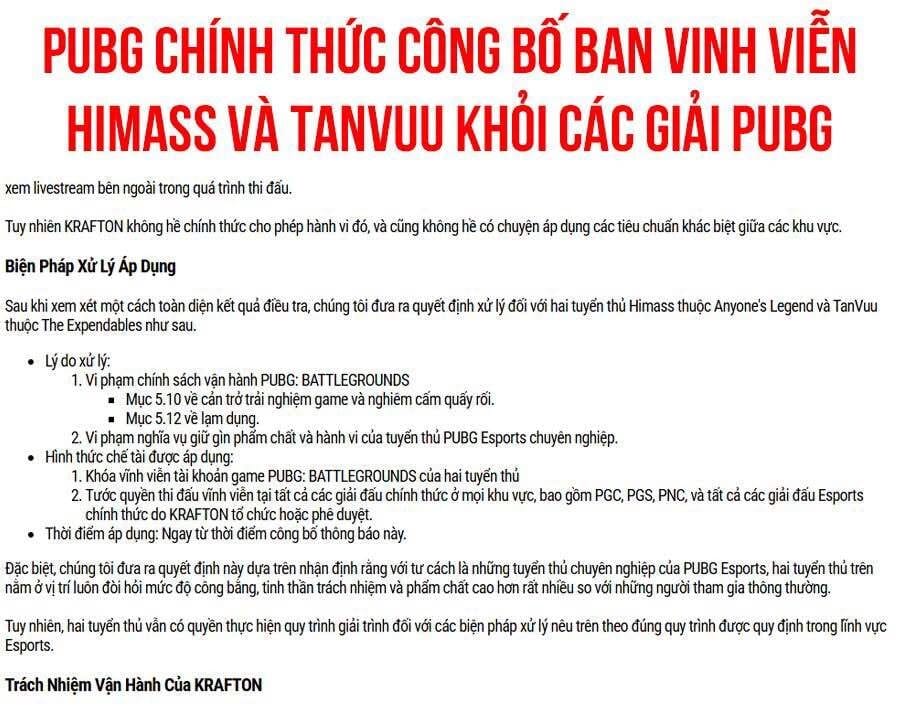
- September 23: KRAFTON concludes the two used outside information and another participant's stream. It locks their accounts permanently and bars them from all events it organizes or sanctions (PGC, PGS, PNC). They keep the right to submit an explanation.
- September 24: PUBG's Vietnamese channels close and the PUBG Vietnam Series (PVS) 2026 Phase 2 is postponed indefinitely. September 28: Korean media quote KRAFTON saying it still plans to maintain the Vietnam market.
- Information as of October 5, 2026. Many figures below are reported by the press, and OtaHub names the source each time.
What Was PUBG Asia Stars, and Why Did It Lack Rules?
PUBG Asia Stars 2026 was not an official ranked event. According to press roundups, it was a showcase with 48 players from Korea, China, Japan, Thailand, Taiwan and Vietnam, played over three days.
What made it unusual is that players competed and streamed live at the same time. Competing and streaming are two trades with their own rules. Put side by side, they overlap in a place nobody wrote rules for, and in OtaHub's view that was the first gap.
A domestic news report said that the event combined competition with interactive livestreaming without a mandatory broadcast delay, meaning the picture was not held back from the match as it happened. The initial rules also did not clearly say that interacting with streams was a violation. The report added that some players reportedly asked the organizers beforehand. That last part is a press claim, and OtaHub could not verify it.
What KRAFTON admitted itself is clearer. According to a domestic news report, the company said it failed to provide clear guidance and measures when the incident first arose. It also said it communicated the rules in a delayed and inconsistent way. Afterwards, per Scamany, it lengthened the broadcast delay and tightened monitoring.
In OtaHub's view, missing rules do not make a behavior right. They do, however, let the same behavior look like a violation to KRAFTON and like a loophole to the players, and much of the later dispute revolves around that gap in perception.
What Did KRAFTON Admit, and Why Did It Still Ban the Two for Life?
Things moved fast. From September 19 to 20 the company removed the two players before verification was finished. According to Press the Game, an early apology appeared on September 21.
In the timeline compiled by Scamany, KRAFTON confirmed around those days that the two had checked out-of-game information through personal stream content. It was still reviewing whether they had directly watched another participant's stream. On September 23 the final finding arrived: they used out-of-game information and another participant's stream to make decisions.
In the same notice, KRAFTON said that failing to provide guidance from the start caused confusion and conflict. It also said it had not protected participants from attacks. It apologized to Soopi and pledged to ask for the removal of false posts aimed at her (per Inven Global). Similar allegations against other players were investigated and led to no penalties.
TanVuu's team GAM x TE objected to the penalty. They argued that the event allowed personal broadcasting and that the rules at the time did not state this conduct was a violation. Anyone's Legend, Himass's team, pledged to support an appeal (a request to review the decision) through official channels.
In OtaHub's view, what Vietnamese fans found hard to accept was not the penalty but the imbalance. One side admitted missing rules, missing guidance and uneven communication between Korean and Vietnamese. The other received a lifetime ban, the heaviest outcome the system has.
Who Are Himass and TanVuu, and Why Did the Reaction Run So Hot?
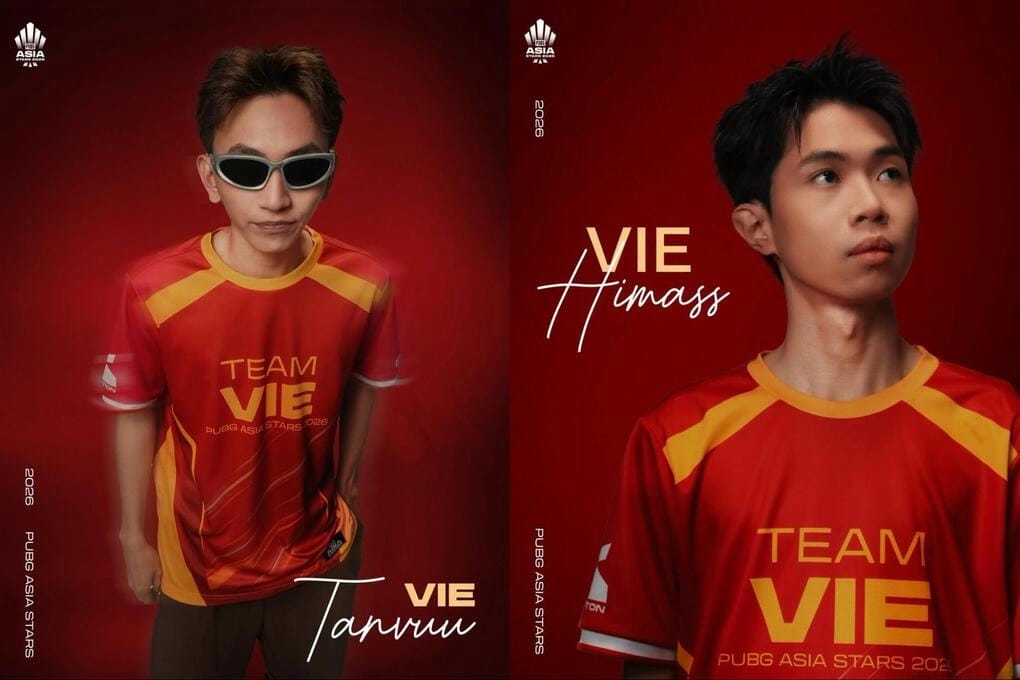
Himass (Lã Phương Tiến Đạt, born 2003, plays for Anyone's Legend) and TanVuu (Trần Tấn Vũ, born 2005, plays for GAM x The Expendables) were faces of the Vietnamese team that won the PUBG Nations Cup 2025. Himass was also named the tournament MVP.
According to Asia Times, cited by a domestic news report, Vietnamese viewers made up 58.1% of total Nations Cup 2025 viewership, the highest share of the whole event. In OtaHub's view, for a community that proud, a lifetime ban touches more than two people. It touches the audience's feeling of "that is our team."
The players' own reactions showed it. Himass posted "Officially unemployed" on Facebook, drawing about 52,000 likes and 3,800 comments per a domestic news report. By September 26 he had written a message thanking PUBG for the money, fame and travel and saying he would stop there, according to another domestic news report.
TanVuu, per the same outlet, told a domestic news outlet he was disappointed and wanted to focus on streaming rather than competing. Streamers such as RAMBO also criticized KRAFTON for letting Korean streamers and players post videos attacking Vietnamese players, according to Press the Game.
What Did Vietnamese Gamers Do After the Ban?
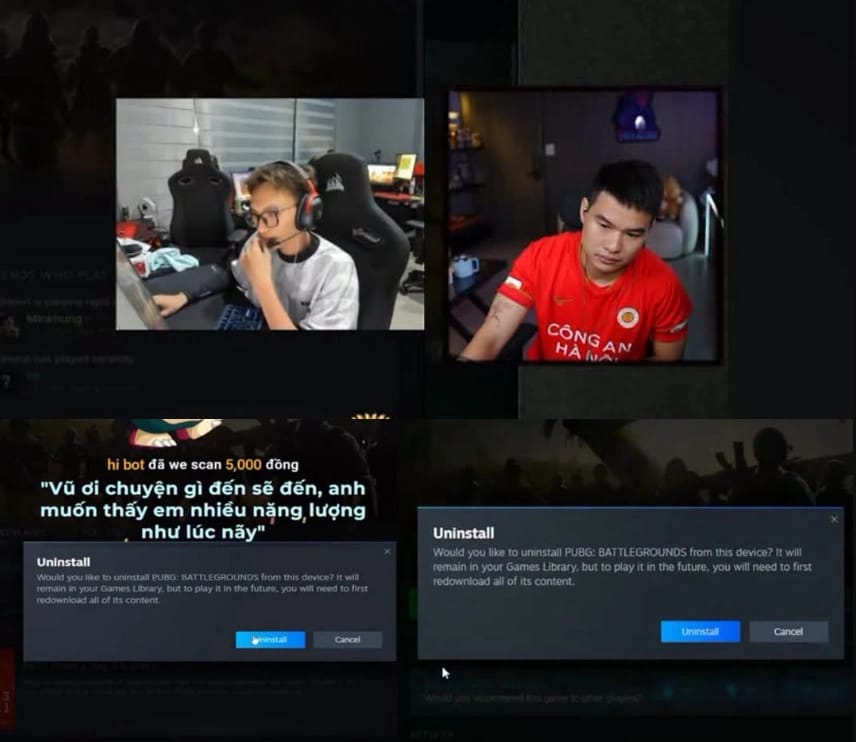
They deleted the game, and many did it in public. TanVuu deleted PUBG during a livestream on September 22. Độ Mixi, a well-known streamer, announced he was deleting the game and would have nothing more to do with it. According to a domestic news report, PewPew also removed it and stopped making content about it.
RAMBO and DJChip left PUBG as well. Some internet cafés were reported to follow, though OtaHub has seen no independent figures on the scale.
On September 24 a petition site called Justice For PUBG VN appeared. Per a domestic news report, it passed 4 million signatures by the morning of September 25. It asked for evidence to be disclosed, one standard for all participants and a proportionate penalty. That figure has no independent counting mechanism, so it is best read as a measure of emotion.
The reaction did not stop at Vietnam. According to another domestic news report, users on China's Hupu forum, Reddit and Thai communities asked why a violation at an exhibition event should end a career. Per a domestic news report, Korean media such as Inven expressed surprise at the wave of uninstalls.
In OtaHub's view, deleting the game carries weight because of how PUBG PC spread in Vietnam: through streamers and internet cafés, not through a publisher. When they withdraw, what is lost is not only a few hundred thousand installs. It is also the layer that brought the game to new players.
Why Did Nobody Absorb the Shock for PUBG PC in Vietnam?
Because the PC version has no local publisher, meaning no domestic company stands between the developer and the players. According to a domestic news report, only PUBG Mobile (published by VNGGames) is licensed in Vietnam. The PC version is played through Steam or the Epic Games Store without a local publisher.
The report, citing domestic publishers, said KRAFTON refused to adjust content to fit local rules. On September 23, a domestic outlet cited reports that authorities were considering measures to stop unlicensed PUBG PC from being offered. Vietnamese language support was also reported removed on Steam.
That is why what Vietnamese players saw as "PUBG Vietnam" was mostly the product of the community and a few organizers. Per Inven Global, that meant a Facebook page that once had about 4.7 million followers, a YouTube channel with nearly half a million subscribers, and a PVS run by the agency 500Bros since 2020.
On September 24 those channels closed. The Facebook page left a note that updates would move to PUBG.COM. PVS 2026 Phase 2, scheduled for September 4 to October 4, was postponed indefinitely, according to a domestic news report.
KRAFTON responded through Korean media on September 28 that it still plans to maintain the Vietnam market and that nothing has changed, per a domestic news report. As another outlet noted, however, the statement had not been posted on the company's official channels.
Meanwhile Delta Force has a seat waiting. According to domestic press, Garena has published it legally in Vietnam since July 2025, and another outlet noted that Himass began playing it. Reports of teams moving en masse to Delta Force remain unconfirmed.
Another Angle
Reading "trust collapsed because of how it was handled" skips one side. KRAFTON reviewed broadcast footage, participant videos, in-game data and replays. It concluded the two used information that normal play would not provide. For a publisher, a lifetime ban for information cheating is a precedent meant to protect a tournament's credibility. Exhibition or not, fairness is still fairness.
Soopi, who raised the accusation, was also the target of attacks. They went far enough that KRAFTON apologized and promised legal support for her.
Moreover, Vietnamese players leaving is so far measured by visible acts, not player counts. A domestic outlet recorded KRAFTON's shares falling from 231,000 won (September 1) to 198,000 won (September 25). But it also noted the company's Q2 2026 revenue rose 94.9% year over year, and the market has many other variables.
The licensing issue also predates the ban, so not every swing in PUBG PC's Vietnam standing can be pinned on two players. OtaHub keeps anything easily inflated at unconfirmed. PUBG has not officially left Vietnam, and PVS has not been declared canceled, only postponed.
In Short
This piece shows that trust did not collapse over one penalty alone. The penalty landed on three weak points: the tournament's rules, the publisher's handling, and the way the game is distributed in Vietnam. It does not show how many players actually left, nor can it say PUBG is finished here. That will be clearer with independent data and when KRAFTON acts rather than only speaks. Until then, three things are worth watching: whether PVS returns, whether the Vietnamese channels reopen, and how the two players' appeal is handled.
Sources: Domestic news report (KRAFTON admits shortcomings), Domestic news report (KRAFTON shares), Domestic news report (Himass, reaction outside Vietnam), Domestic news report (Asia Stars), Domestic news report (PUBG PC licensing), Domestic news report (Himass reaction), Inven Global (the ban), Inven Global (PUBG disappears from Vietnam), Domestic news report (Justice For PUBG VN petition, KRAFTON response), Domestic news report (streamers deleting the game, Delta Force), Domestic news report (PUBG PC publisher), Press the Game. Information as of October 5, 2026.