In-depth · Story & Themes · Spoilers
A boy sees the world almost entirely in silver, yet the craft he wants to learn runs on colored ink. Most fantasy stories would send in a miracle to cure him. In Witch Hat Atelier, Coco does something harder: she changes how information reaches him, so he can still do what he wants. OtaHub reads that choice as the key to how the story treats disability and queer love.
Quick facts about this piece
| Work | Witch Hat Atelier, a manga by Kamome Shirahama |
|---|---|
| Anime | Produced by Bug Films, airing since April 6, 2026 |
| Angle | How the story treats disability and queer love |
| Characters discussed | Tartah, Beldaruit, Custas, Galga and Atwert |
| Spoilers | Yes, covering the manga’s Silver Eve section and one detail about Custas |
| Main sources | Anime Corner’s interview with Shirahama (September 1, 2026) and Anime Feminist’s analysis (August 19, 2020) |
How does Coco help Tartah when he cannot tell colors apart?
Tartah is Nolnoa’s grandson and works in the apothecary shop. He has a condition called silverwash, which leaves him seeing the world in something close to silver and unable to recognize colors. Magic in this world is drawn with colored ink, and herb powders have to be identified by eye, so from childhood he has been told he can never become a witch.
Anime Feminist’s analysis (Dee, 2020) sums up the turning point in volume 3 of the manga. Coco is an outsider to the witch world herself, so she comes up with a different kind of spell. It shows the complete original plant behind a pile of ground powder, which lets Tartah recognize the herb by its shape instead of its color.
The anime adapts this carefully. Episode 8 introduces Tartah’s condition, and episode 10, “A Promise in Silver,” puts him in the moment where he has to find the right medicine. According to Inbetween Drafts’ episode review, the show uses washed-out tones to give viewers a sense of his everyday life, and the scene where he identifies the medicine is praised for its animation.
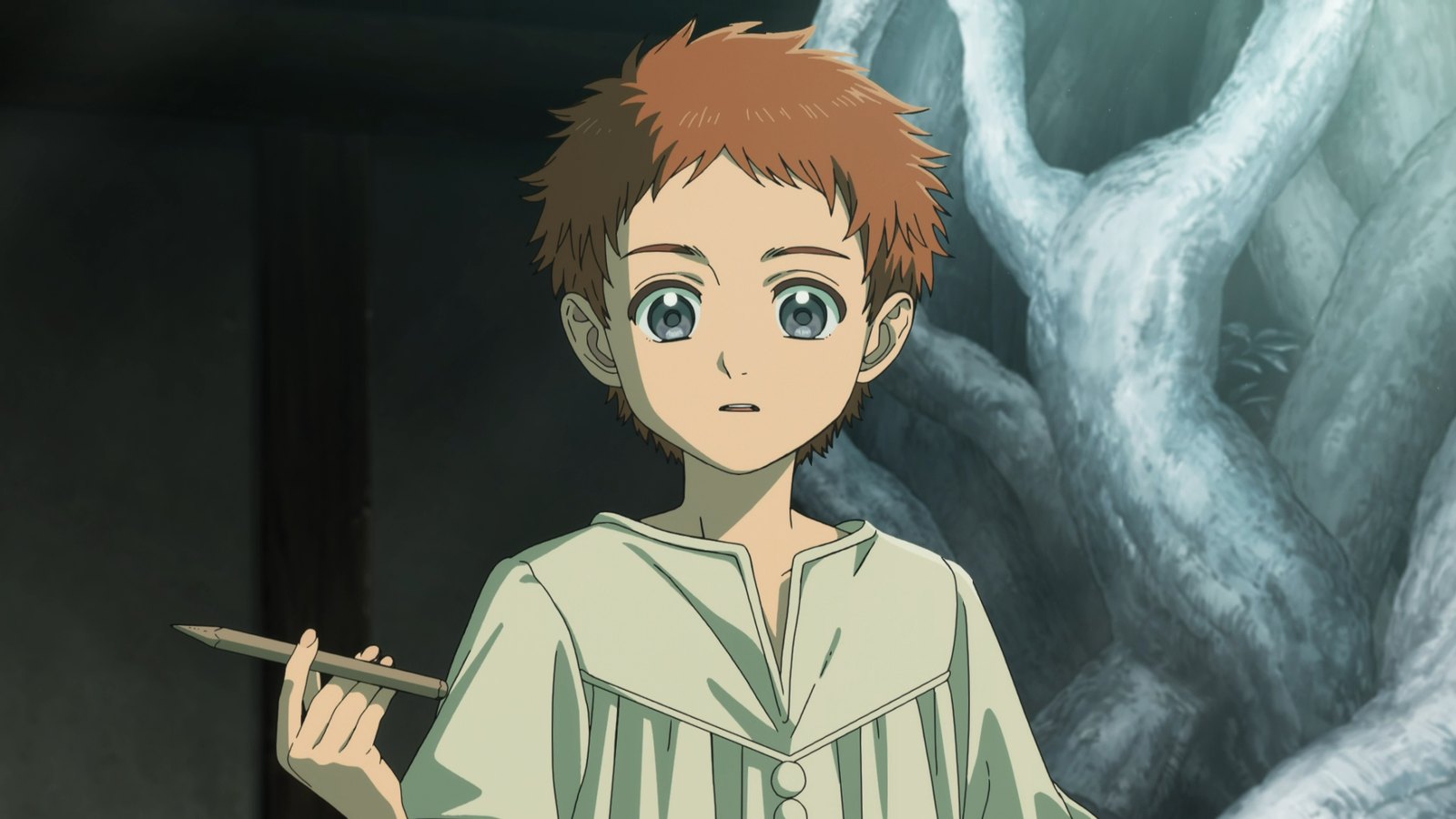
The result matters most. Coco’s spell lets Tartah work in the shop and train, yet his silverwash stays. The story does not repair the person. It repairs the way information is delivered. Anime Feminist describes this approach as accommodating difference rather than asking someone to overcome it.
What does the sealchair say about how this world is designed?
Beldaruit is one of the Three Wise Ones who sit on the witch world’s ruling council, and he is also Qifrey’s former teacher. Qifrey is the witch now teaching Coco. Beldaruit has brittle bones, moves around in a magic sealchair and often hides behind illusions. In volume 6 of the manga, Anime Feminist notes, he says education must be flexible.
According to that analysis, the line also sits underneath the way Qifrey teaches. He takes only four apprentices so he can give each of them a lesson of their own instead of forcing everyone into one mold. So Beldaruit’s chair and each apprentice’s custom lessons come from the same idea, which is that the world should be shaped to fit the person using it, not the other way around.
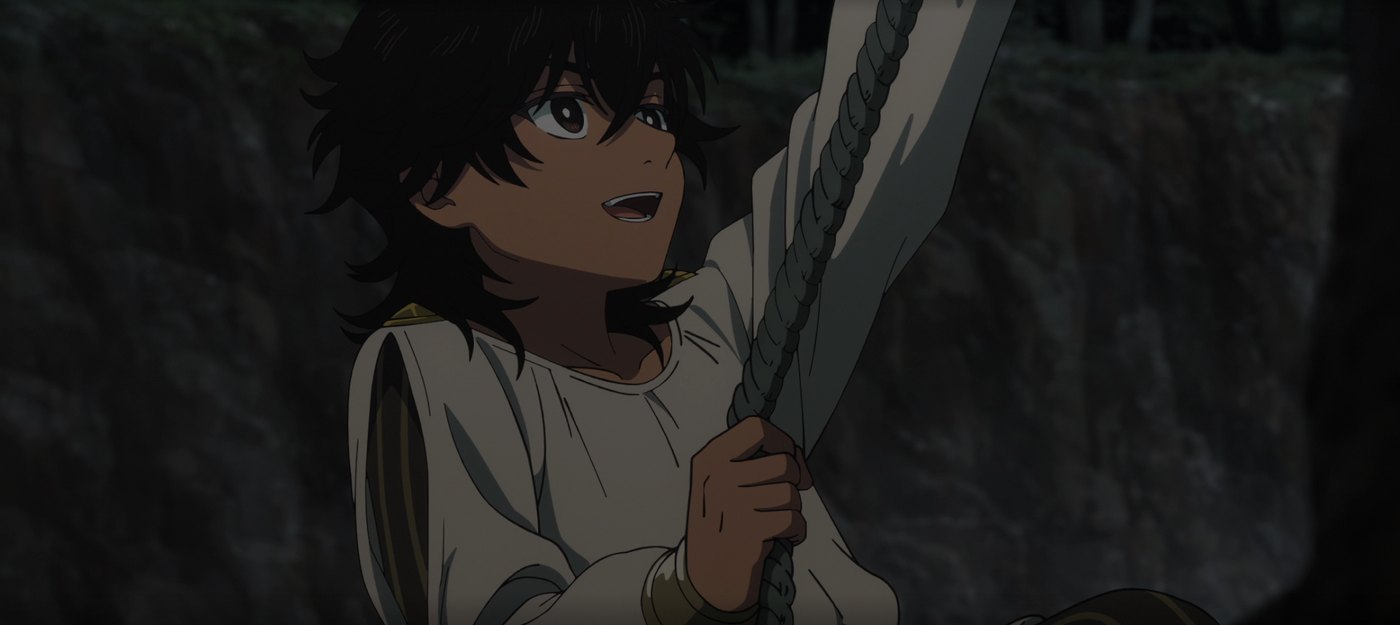
Custas shows the same idea in a younger character. He is a traveling minstrel who lost the use of his legs in an accident and gets around in a sealchair. In the story, the chair is an ordinary part of daily life, not a stopgap while everyone waits for a cure.
Why is Custas the hardest test of the “no cure” reading?
This section spoils Custas’s storyline. Custas is not content with the chair alone. He wants to study apothecary work so he can fix his legs, and that wish makes him easy prey for Ininia, a witch from the faction opposing Qifrey. According to Wikipedia, the new legs he ends up with turn out to be parasitic Silverwood sprouts that threaten to consume him, and his foster father Dagda has to pay a heavy price to stop it.
OtaHub sees the story testing its own premise here. It never denies that Custas has every right to want healthy legs. But the shortcut through forbidden magic costs enormously, while the supportive solutions, such as sealchairs and Coco’s spell for Tartah, respect the person using them and never ask them to become someone else. That is OtaHub’s reading, not something the author states outright.
How does the love between Galga and Atwert appear?
Galga is a member of the Knights Moralis, the knights who enforce the witch world’s laws, and Atwert is his partner. In the manga’s Silver Eve section, Ininia erases Galga’s memories. Under the law, someone in that state is sent to the isle of Adanlee, the island of oblivion, and the magic that could restore his memories is forbidden.
Community summaries say Atwert is neither Galga’s family nor his teacher, so he has no standing to take responsibility for him. His answer is to take Galga on as his apprentice, which keeps Galga with him even though Galga no longer remembers him. In OtaHub’s view, the telling detail is that their love is never turned into a topic that needs explaining. What gets tested is the witch world’s legal system, while two men loving each other is treated as plainly natural.
What did Shirahama say about including these characters?
In an interview at Anime Expo 2026, published by Anime Corner on September 1, 2026 and conducted through an interpreter, Shirahama was asked why depicting disabled people, LGBTQIA+ people and minority groups matters to her. She answered, in OtaHub’s translation of the English text, that not having those representations would feel very unnatural to her.
She added that she is happy when readers feel represented, but hopes for a day when it becomes so ordinary that nobody needs to feel special gratitude for it. The interview never names Tartah, Beldaruit, Galga or Atwert. Custas appears only when she says she would have loved to explore him and Dagda further. Linking her words to each character is therefore OtaHub’s reading.
The other side: where does this approach fall short?
Anime Feminist raises a worry in its own piece. Coco’s help for Tartah has a whiff of the able-bodied savior, where one person treats another’s difference as a problem to solve. According to that analysis, Beldaruit eases the worry, because Coco is neither the beginning nor the end of the story’s chain of inclusion.
OtaHub sees two more limits. First, the tools in the story are magic, so the real-world cost and difficulty of building them are glossed over. Second, this piece relies on English-language sources and does not include direct responses from disabled readers, so it cannot say how well they feel the portrayal works.
In short
This piece shows that Witch Hat Atelier answers disability with assistive tools and flexible teaching rather than a magical cure. Coco’s spell helps Tartah without erasing silverwash, and the sealchair is simply part of daily life for Beldaruit and Custas. Galga and Atwert, likewise, come through in the world’s rules instead of a speech about queer love.
It does not show that every character is written perfectly, and it has not measured how people in these communities respond. What the author says publicly is that she hopes this presence becomes ordinary. Whether the story gets there is a question each reader can answer by reaching the Silver Eve section.
FAQ
Which characters in Witch Hat Atelier are disabled?
This piece covers three: Tartah, Beldaruit and Custas. Tartah has silverwash, which keeps him from telling colors apart. Beldaruit has brittle bones and moves around in a magic sealchair. Custas lost the use of his legs in an accident and also uses a sealchair.
Is Tartah cured of silverwash?
No. Coco invents a spell that lets him recognize a medicinal plant by its original shape instead of its color. The spell helps him work, but it does not remove his silverwash.
What did Shirahama say about including these characters?
In an Anime Corner interview published on September 1, 2026, she said that leaving them out would feel very unnatural, and that she hopes for a day when readers no longer feel special gratitude for it.
Sources: Anime Corner: interview with Kamome Shirahama (September 1, 2026); Anime Feminist: “Thinking Outside the Circle” (Dee, August 19, 2020); Inbetween Drafts: episode 10 review, “A Promise in Silver” (June 4, 2026); Wikipedia: list of Witch Hat Atelier characters. Details on Galga, Atwert and Custas come from Wikipedia and community summaries; OtaHub has not checked each chapter against the printed volumes.