In-depth · Story & Themes · Spoilers through the final chapter
Black Clover (known in Vietnam as Thế Giới Phép Thuật) is not only a story about magic, fiery battles or Asta’s journey to become the Wizard King. Behind its colorful world of magic lies a society with sharp class divisions, where bloodline and innate magic power decide how much a person is respected.
In the middle of that society, Asta is almost the exact opposite: a peasant with not a trace of magic who still wants to stand at the very top. So why does Black Clover keep talking about class discrimination, and what does Asta’s journey say about it? This article walks through how class is built, the characters who represent each level, and why author Yūki Tabata asks that question from the very first chapters.
Quick facts
| Item | Details |
|---|---|
| Series | Black Clover, Yūki Tabata |
| Manga | Weekly Shonen Jump, then Jump GIGA, February 16, 2015 to May 1, 2026, 38 volumes |
| Anime | Studio Pierrot, season 2 airs from October 3, 2026 |
| Four classes | Royals, nobles, commoners, peasants |
| Society’s yardstick | Bloodline and innate magic power |
| Key characters | Asta, Yuno, Noelle, Zora, Magna, Mereoleona, Fuegoleon |
How is class built in Black Clover?
Clover Kingdom society can be summed up as four classes: royals, nobles, commoners and peasants. Noelle herself lists all four in chapter 103, during the Star Awards Festival.
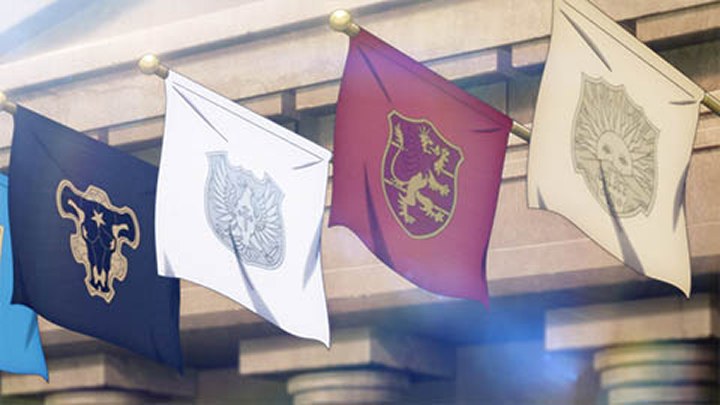
- Royals: the three great families Kira, Silva and Vermillion, who often hold very large amounts of magic power. Many of them lead Magic Knight squads, like Nozel Silva and Fuegoleon Vermillion.
- Nobles: the upper class, with wealth and status, and often a habit of looking down on those below.
- Commoners: people in the middle of society who can still become Magic Knights but are rarely respected as much as nobles.
- Peasants: the lowest class, usually living in poor border regions like Hage Village, where Asta grew up.
What makes this system special is that class is tied not only to money or political power but also to magic power. Royals and nobles usually have larger amounts of magic, so magical strength and birth reinforce each other.

Magic and bloodline: a loop of privilege
Because magic is largely innate, a child born into a royal or noble family already has an advantage in status, education and opportunity. Those advantages help them hold important positions, which in turn entrench privilege for the next generation. Peasants run the other way: they are respected less and find it harder to reach positions of power.
This loop is the foundation that lets class discrimination in Black Clover run through the whole story, rather than being the issue of just one arrogant villain.
Royals and nobles: privilege comes with prejudice, but they are not all alike
Black Clover shows the dark side of privilege most clearly through the Silva family. Noelle Silva is the second daughter of this royal family, but because she cannot control her magic, she is mocked and cast out by her own siblings. At the banquet after the War Merits Conferment Ceremony (chapter 23), Solid pours a drink over her head, while Nozel keeps blaming her for disgracing the family. When she first meets Asta in chapter 5, Noelle also calls him a “little peasant insect with your paltry magic,” showing that prejudice runs so deep that someone rejected by her own family still carries it.
Even so, the series does not paint the upper class as a single block:
- Mereoleona Vermillion picks both Asta and Zora for her team in the raid on the Eye of the Midnight Sun base (chapter 135). When Zora asks whether she minds going in with people of low birth like them, she answers that status does not matter, they are there because they are strong.
- Fuegoleon Vermillion is known for having no prejudice, judging people by their true worth, and he steps in to stop Nozel when Asta stands up to the Silva family at the banquet (chapter 24).
- Mimosa Vermillion, Noelle’s cousin from the Vermillion royal family, and the noble Klaus Lunettes both treat Noelle with sincere respect. Klaus even speaks up to rebuke Solid at the banquet.
- Even Nozel, the coldest toward Noelle, later admits he is afraid of losing her as he lost their mother, and apologizes for years of poor treatment (chapter 176).
So Black Clover’s message is not as simple as “nobles bad, commoners good.” The problem lies in a system that turns innate advantage into a measure of human worth, not in which class a person is born into.
Commoners and peasants: given a chance, but not treated as equals
The path of the Magic Knight is open to commoners and peasants alike, but entering the system does not mean the system respects you.
Magna Swing is a peasant from Rayaka Village in the border regions, yet through effort and fighting spirit he still becomes a Black Bulls Magic Knight. In chapter 5, after landing a hit on Magna, Noelle immediately invokes her royal status, while Magna pays it no mind at all. It is a small detail that shows prejudice creeping into even everyday clashes.
The most painful case is Zora Ideale. His father, Zara Ideale, was the first peasant Magic Knight and, as told in chapter 129, was murdered by his own squadmates for being a peasant who dared stand beside nobles. From then on Zora hunts corrupt knights. The line he throws in Langris Vaude’s face, that “you are no Magic Knight,” shows that for Zora the title has to come with character, not birth. Notably, Zora has a large amount of magic power despite being a peasant, meaning that being looked down on by society is not at all the same as lacking ability.
Asta and Yuno: two children from Hage, two ways society treats them
Asta and Yuno were both left in front of a church in Hage Village and grew up like brothers, so their social starting points are nearly identical. The biggest difference is that Yuno has a huge amount of magic power, while Asta has none at all.
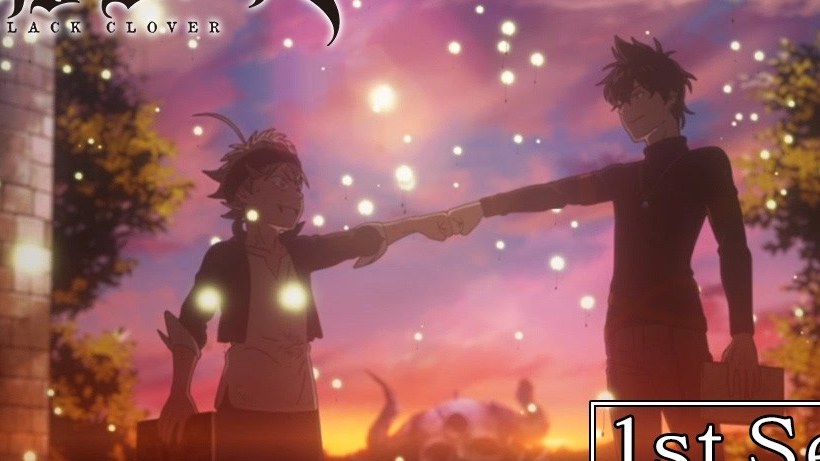
The selection exam in chapter 3 shows how the system reacts to that difference. After Yuno crushes a noble candidate, all nine captains want to recruit him, and Yuno chooses the Golden Dawn, the squad seen as the strongest in the kingdom. When it is Asta’s turn, no captain raises a hand. Yami Sukehiro of the Black Bulls explains it is because of Asta’s unusual kind of magic, and then Yami himself takes Asta into the squad.
Same peasant origins, but one is fought over by the whole system while the other is almost passed over. This pair shows the real yardstick of Clover Kingdom society: whoever has a lot of magic is respected, and whoever has none is pushed aside.
The Black Bulls: where class lines fall back
The Black Bulls are seen as the worst of the nine Magic Knight squads, a gathering place for misfits. That is exactly why it is a place where every class stands in the same line: Asta is a peasant with no magic, Noelle comes from the royals, Magna and Zora are peasants, and captain Yami Sukehiro is a foreigner from Hino Country (Land of the Rising Sun).

In this squad, birth no longer decides a person’s worth. The clearest change is in Noelle. In chapter 5 she still calls Asta a peasant insect. By chapter 103, at the Star Awards Festival, she is the one telling little Emma that royal or noble, commoner or peasant, everyone can have fun together, and that people who look down on others because they think they are better have shallow hearts. She still carries her royal pride, but the way she sees other people has changed completely.
The Black Bulls are not a classless society in any absolute sense, since the squad’s reputation as the worst shows that prejudice outside remains fully intact. What the squad proves is that when people are judged by their actions and by trust in one another, those once looked down on can become a central force defending the kingdom.
Anti-Magic: power outside society’s yardstick
The irony is that Asta, who has no magic power, wields Anti-Magic, the power that nullifies magic, found in his five-leaf grimoire. The biggest weakness that makes society dismiss him turns into a special advantage in combat.
Seen purely as a shonen power, Anti-Magic only helps Asta fight. But on a thematic level it means more: Asta does not overcome his limits by becoming someone with more magic, but fights with a power that sits outside the very standard the Clover Kingdom uses to measure human worth. He does not need to turn himself into a noble to be recognized, he proves that someone outside that class can stand level with them.
So why does Black Clover keep talking about class discrimination?
Class discrimination in Black Clover is not just there to build noble villains for the protagonist to defeat. It helps the series do three things:
- Build a world with weight. Birth, bloodline and magic really do create differences in life chances, so conflicts like Noelle with the Silva family, or Zora with his father’s former squadmates, have a reason to exist.
- Set the stage for Asta’s journey. Without a class system, becoming the Wizard King would be just a story of personal advancement. The Clover Kingdom’s injustice gives that goal added meaning about opportunity for those born at a low starting line.
- Ask a question instead of giving a simple answer. Each character is a different way of facing prejudice: Asta proves himself through willpower, Noelle learns to let go of the prejudice she carries, Zora carries hatred for corrupt knights, and Mereoleona and Fuegoleon show that even among the elite some judge people by ability.
The big question behind all of it is: if where a person is born can decide their opportunities, then what truly decides a person’s worth?
Where to watch and read Black Clover
- Anime: Black Clover season 2 airs from October 3, 2026 and streams on Crunchyroll in Southeast Asia with Vietnamese subtitles.
- Manga: Yūki Tabata’s series ended in May 2026 after 11 years, with the final volume 38 released on August 4, 2026 in Japan. The official English edition is on Shueisha’s MANGA Plus.
Another view: does Black Clover really break the class system?
There is an opposite reading, and it deserves a fair hearing. Asta’s strength does not come from effort alone: Anti-Magic lives in a five-leaf grimoire tied to a devil, an exceptional gift rather than something anyone could have. Yuno, once seen as the “genius peasant”, is later revealed to carry the royal blood of House Grinberryall of the Spade Kingdom (chapter 233). Read this way, the story still quietly admits that rising above your station takes something special you were born with.
In OtaHub’s view, that critique has a point but does not undo the theme. What Black Clover criticizes is not that people differ in talent, but that society uses bloodline and mana as the only yardstick for who deserves respect. Devil or not, Asta was pushed aside long before he had the chance to prove anything.
In short
Black Clover keeps talking about class discrimination because it is the frame that holds the whole story up: it gives the world weight, gives Asta’s journey meaning, and gives every character a way to confront prejudice. This article has shown how that system is built and how the characters change inside it. What it cannot settle is whether the series truly proposes a new order or only shows individuals rising above the old one. According to the series wiki, at the end Asta becomes the 29th Wizard King and the first peasant to hold the title, an answer that is more symbolic than a reform.
If you are watching season 2, pay attention to how each character reacts to the word “peasant”. It is the best compass for understanding what Black Clover is really trying to say.
FAQ
Is there really class discrimination in Black Clover?
Yes. The Clover Kingdom is made up of royals, nobles, commoners and peasants, and status is tied tightly to a person’s innate magic power, so people of low birth are often looked down on even when they are capable.
How are the classes in Black Clover divided?
Four classes from top to bottom: royals (the three families Kira, Silva and Vermillion), nobles, commoners and peasants. The yardstick is not only wealth or power but also magic power.
Why is Asta looked down on in Black Clover?
Asta is a peasant who grew up in Hage Village and has no magic power, in a society that judges people by magic. At the selection exam (chapter 3), no captain wants to take Asta in except Yami Sukehiro of the Black Bulls.
Are the Black Bulls the weakest squad?
In the early story the Black Bulls are seen as the worst of the nine Magic Knight squads, but they later become a central force in defending the kingdom.
Where can I watch Black Clover?
Black Clover season 2 airs from October 3, 2026 and streams on Crunchyroll in Southeast Asia with Vietnamese subtitles. The original manga ended in May 2026 after 38 volumes.
Sources: Black Clover (manga by Yūki Tabata, Shueisha); Black Clover Wiki: Noelle Silva, Zora Ideale, Chapter 3, Chapter 103, Chapter 135; Anime Corner; Anime News Network.