In-Depth · World & Lore · Light spoilers (the opening of the story)
In Gachiakuta, trash is more than a backdrop. The series turns a question about value into a rule of the world: who decides what gets thrown away, and what a discarded thing can become. Kei Urana's manga has run in Weekly Shonen Magazine since 16 February 2022, and Bones Film's anime began on 6 July 2025. In my reading, its power system and the way it chooses its antagonists answer that question together.
What does this world throw down below?
Above is the Sphere, a floating structure the size of a country. The wealthy live there, and around its edge live the "tribesfolk", a group regarded as descendants of criminals and looked down on. Both groups dump their rubbish into the Pit, a bottomless stretch of land below. Anyone convicted of a crime is thrown down there too, as a death sentence.
The protagonist, Rudo Surebrec, grew up in the Sphere's slums with his foster father Regto and made a living by picking up things other people threw away. He hates the upper class's wastefulness, where even new items get discarded. One day Rudo comes home to find Regto murdered. He is convicted on the spot simply because he is a tribesman, and he is thrown into the Pit.
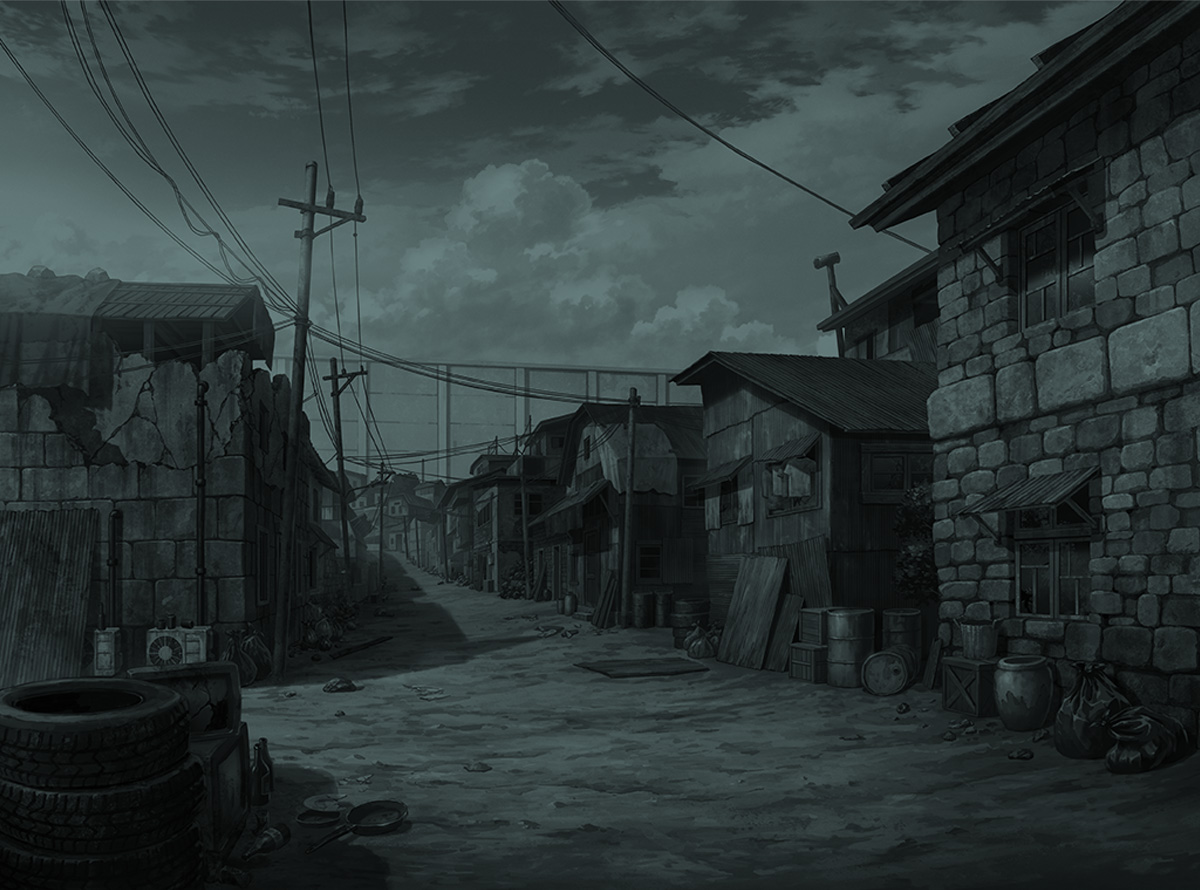
What stands out to me is that the same motion is used for objects and for people. The Pit takes rubbish, and the Pit takes the condemned. Yet it is not empty: a whole society lives down there and calls the place the "Ground", something the people of the Sphere do not know. What was labelled trash still has a life of its own.
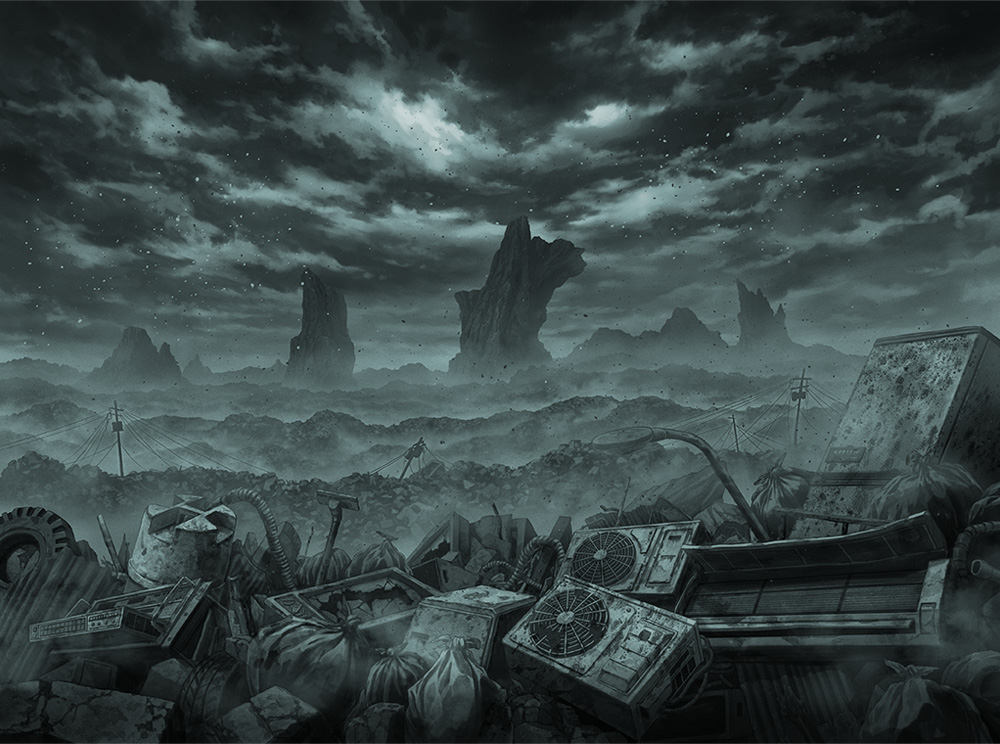
Why does power come from discarded things?
Down in the Pit live monsters called Trash Beasts, born from Anima, an energy built up from thoughts and emotions. They regenerate, so ordinary weapons do not hurt them. Only people called Givers can fight them, using Vital Instruments (a "living weapon", roughly). Givers form teams known collectively as the Cleaners, who hunt the trash monsters.
A Vital Instrument is not a weapon made in advance. It is an everyday object awakened by Anima from the Giver's own body, drawn from the Giver's feelings toward that object. The longer someone has cared for it, the stronger it becomes, because it carries the owner's experience and outlook.
This rule has two consequences. First, strength is measured not by birth or price but by the time a person has given to an object. Second, Trash Beasts and Vital Instruments both come from Anima: on one side feelings that were abandoned turn into monsters, on the other feelings that were cherished turn into weapons. That is my reading, but it fits the rule the story sets out: the same material goes in two directions depending on how people treat it.
The idea has roots in the author's own life. According to Wikipedia, Kei Urana once snapped a pen she loved as a child and felt as though the pen were pleading with her. In an interview with Kodansha, she says she wants Vital Instruments to be objects readers already know, and she deliberately avoids things that look like weapons from the start, such as guns or swords. That is why the weapons still look like everyday items, and it is what lets the idea of "something discarded that still has worth" stand up.
Why does the antagonist resemble the hero?
Rudo joins the Cleaners through Enjin, who saved him from monsters right after he fell. He follows them because he wants revenge on those who convicted him. Rudo does not accept out of high ideals, and that matters later.
The opponents worth discussing in the manga are the Raiders, led by Zodyl. A simple version of the story would make the Raiders villains for Rudo to defeat. This one does not. In an interview with Kodansha, Urana says that so far Gachiakuta has no "purely evil" characters. Zodyl and Rudo share many circumstances, but the people around them shaped their thinking and their sense of justice in different directions. I leave out further detail about those circumstances to avoid spoilers. She also says she wants to draw antagonists as people whose values are incompatible with the protagonist's, not as complete villains.
To me, this is where the story keeps its theme from turning into a slogan. If the antagonist were simply bad, the story would stop at "the rich are bad, the poor are good". When the antagonist shares the hero's circumstances, the question changes: both in pain, what does each person choose to do with it? Rudo, who is seeking revenge, is not outside that question either.
How do graffiti and line art carry the theme?
The graffiti is designed by Hideyoshi Andou. According to Anime Corner, Urana started the series alone. While the two were talking online about work, the idea came up of putting Andou's art behind the characters as backgrounds. She says she was not sure at first that mixing manga with graffiti would work, but she enjoyed doing something nobody had done.
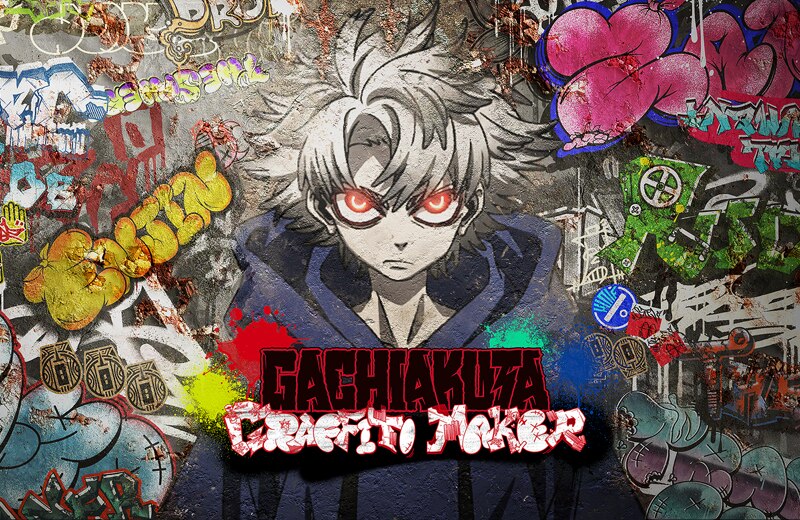
In the story, according to Wikipedia, graffiti is a way for characters to express themselves, set themselves apart and stay safe, and also a storytelling device for readers. I read it as writing on a wall that nobody gave permission for, which suits a world where many people are shut out of official places. That is my reading, not something the author says.
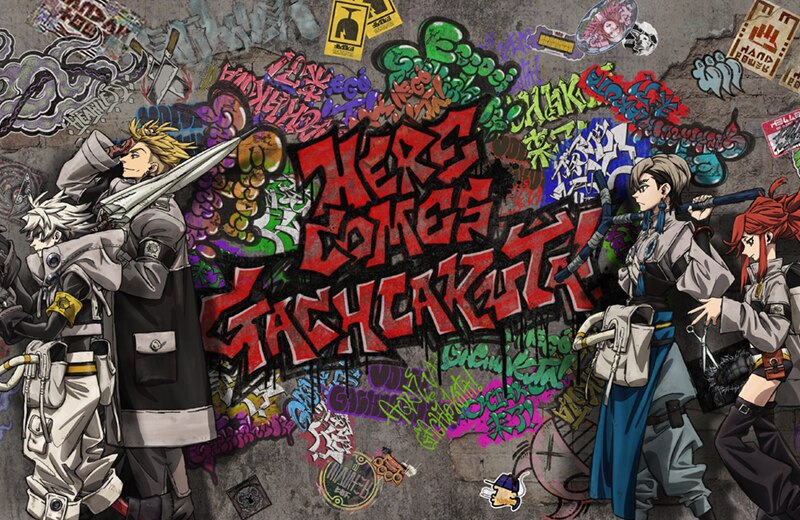
The line art also points back to where rubbish comes from. Urana told Kodansha that she designs Trash Beasts according to where they live: on a highway, the monsters carry motorbike parts and signboards. Every beast has a few white plastic pieces, and she tries to make it hard to tell whether they have feelings at all.
That design was also recognised in the anime. At the 10th Crunchyroll Anime Awards, held in Tokyo on 23 May 2026, Gachiakuta won Best Character Design and Best Background Art.
Another view: is it just a familiar shonen?
The series is well regarded: the manga won the 50th Kodansha Manga Award in the shonen category, announced on 11 May 2026. But some people look straight at its weak points. The Encyclopedia of Science Fiction praises how the story handles social inequality and Rudo's psychological depth, then notes that the premise of a wealthy upper tier living above a world of discarded things is fairly familiar in science fiction. It also criticises a few fight scenes that go on too long and humour that is uneven.
The frame is familiar too: a character joins an organisation, trains, then fights monsters, in the usual shonen pattern. I do not deny that. But what is new lies not in the premise but in the rule. Because of Anima, the question "what has value?" has consequences in the middle of a fight: a cherished object is strong, and a monster born from neglected feelings is frightening.
One limit should be stated plainly. The manga is still running, with 19 volumes released as of July 2026, so I only discuss what has been published. This article cannot say how the series will answer its question about value.
So what deserves to be thrown away?
So far, Gachiakuta has not offered a neat answer. What it shows is that an object's value lies in how someone cares for it, while the person who decides to throw it away often looks through the lens of status. Rudo was thrown down by a hasty verdict, and he carries both his respect for old things and his anger. The story places those two things side by side instead of making him choose one.
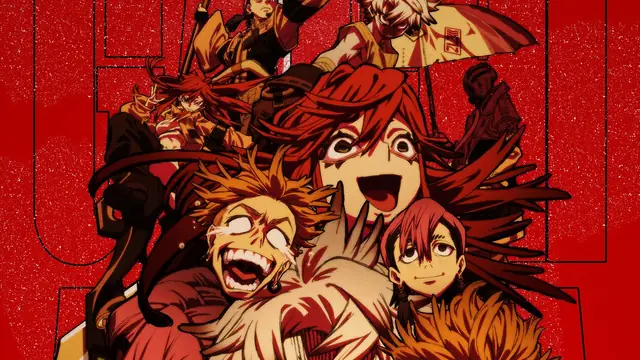
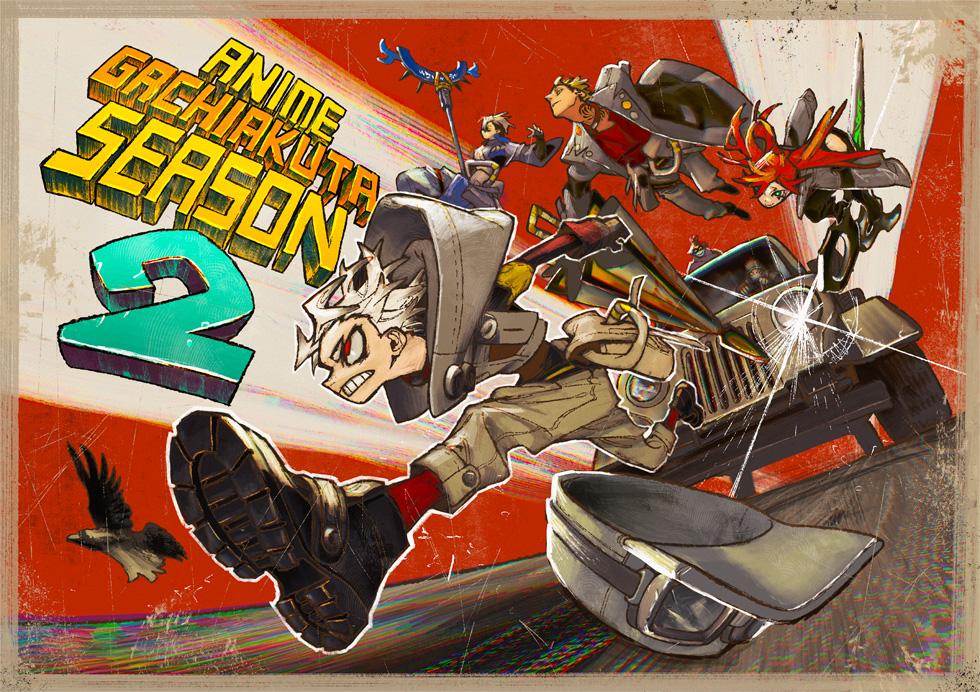
Cover image: the anime's official key visual, cropped from the original on gachiakuta-anime.com. Sources: Wikipedia: Gachiakuta · K MANGA (Kodansha): Talking Shop with Kei Urana, part 1 · K MANGA (Kodansha): Talking Shop with Kei Urana, part 2 · Anime Corner: interview with Kei Urana, Hideyoshi Andou and Naoki Amano · Anitrendz: Gachiakuta at the 50th Kodansha Manga Awards · ComicBook: Crunchyroll Anime Awards 2026 results · Official anime site.