In-depth · Design & Craft · No spoilers
The appeal of ONE PIECE: Grand Gourmet is easy to understand: cook with Sanji, welcome familiar characters and build a floating restaurant of your own. But a game built around reading, selecting and placing objects needs those activities to feel comfortable. For OtaHub, that is the useful question behind the early complaints, rather than whether dissatisfied buyers understand Kairosoft.
One Piece has plenty to offer around a dinner table
Grand Gourmet puts players to work at Baratie Number Two alongside the Straw Hats. Food, decoration and customers’ preferences take the place of combat as the main activities. It gives familiar characters a reason to meet over a meal instead of requiring another opponent to move things forward.
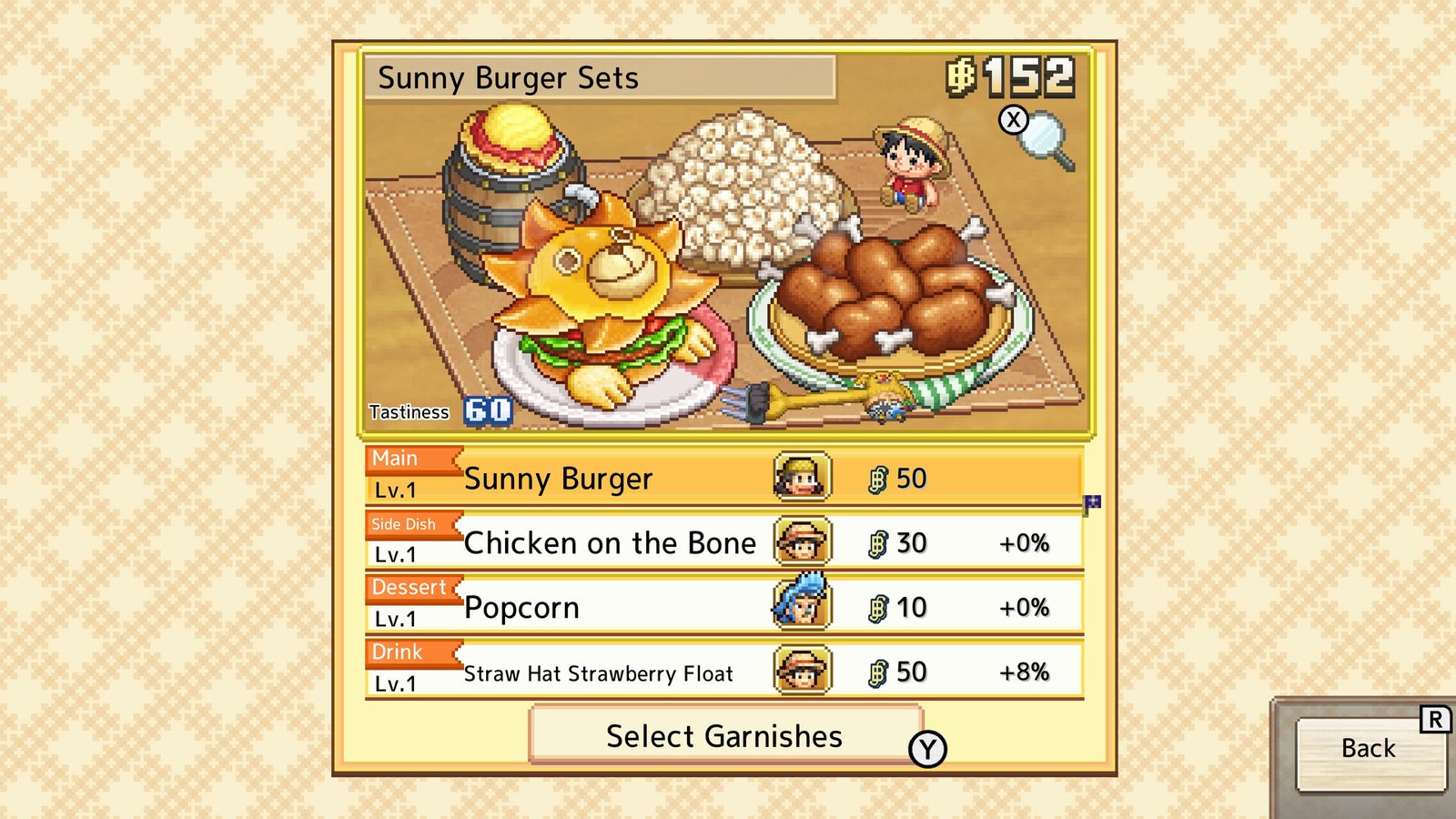
The Sunny Burger set illustrates the appeal. Its main dish resembles the Sunny’s lion figurehead, with other food and drinks arranged around it. Recognising the reference can be a pleasure in itself, and it makes the idea of discovering further dishes more inviting. It is a way of giving the setting a presence in the objects players handle rather than limiting the connection to a logo or a character portrait.
The official description promises more than 400 characters and over 200 furniture, building and decorative items. Those numbers offer opportunities for amusing combinations, but they cannot establish lasting appeal on their own. What matters is whether a new visitor makes players want to read the dialogue, look for a suitable dish and create a corner of the restaurant that feels appropriate for them.
Menus can interrupt the relaxed mood
Steam reviewer MossWoods criticises selecting and arranging objects with a mouse, while SoleSurvivor objects to the mismatch between the pixel world and its text boxes. Both are interested in the restaurant idea, which complicates the suggestion that complaints simply come from buyers expecting an action game.
In a management game, menus are places where players repeatedly work. Reading a dish’s name, finding information and choosing what to add are part of the activity rather than pauses between the interesting moments. A charming sprite can make someone smile, but it does not remove the need to find a command comfortably. Attention spent figuring out how to issue an instruction is attention unavailable for imagining the restaurant.
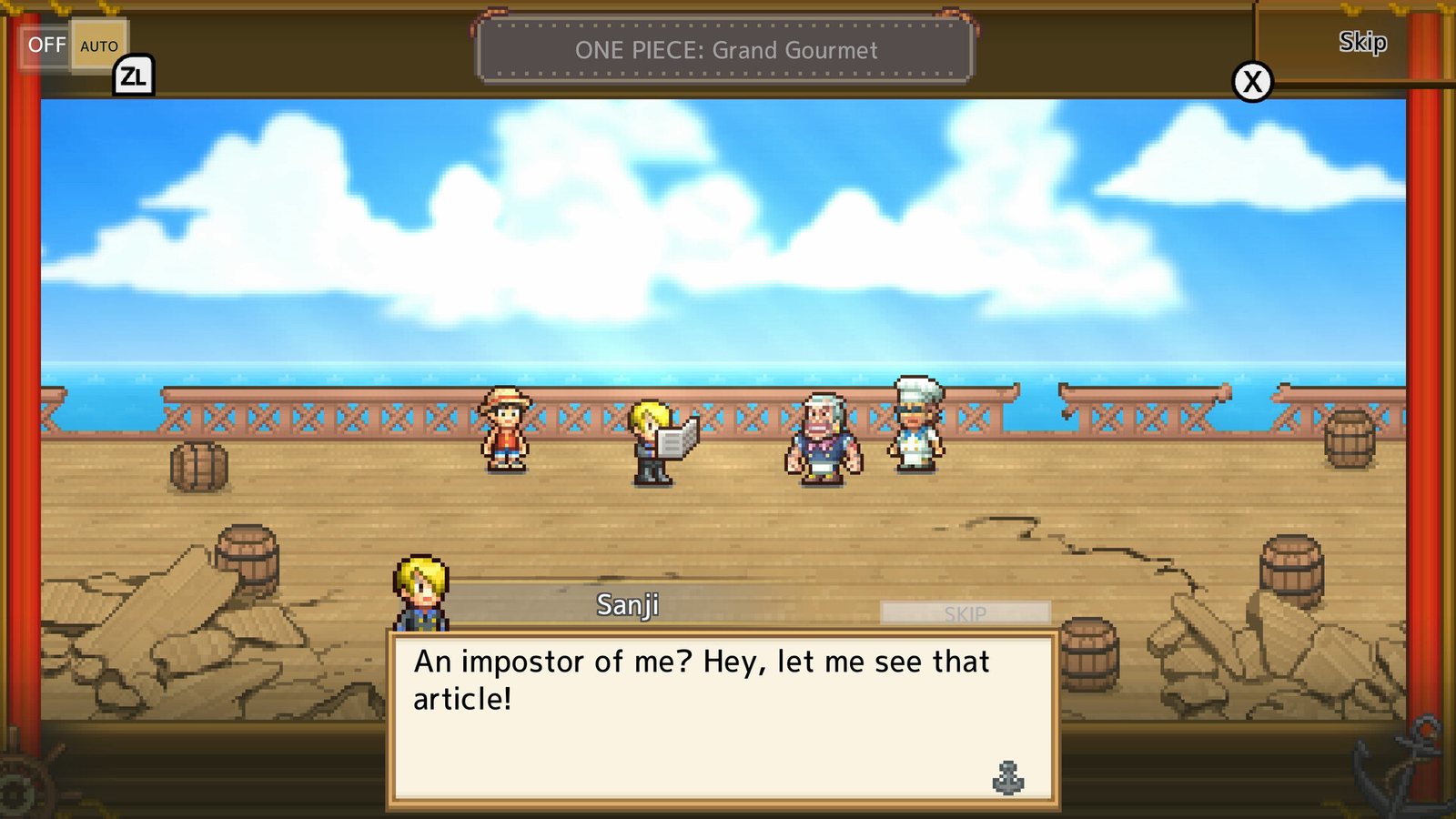
The Sanji dialogue screenshot shows crisp pixel characters and scenery beside a large text panel with smooth lettering. Some people may prefer that contrast for readability, while others find it visually disconnected. OtaHub does not think pixel art requires a pixel font. The more useful test is whether the text is easy to follow and the windows make the next action understandable.
Decorating should make experimentation comfortable
MossWoods specifically reports having to drag the view to select objects and wanting furniture storage. That raises a relevant question for a restaurant-building game: how comfortably can someone change their mind about a design?
A lamp may look promising on its own and then obscure another detail beside a table. That is the moment to try somewhere else. If selecting, moving and undoing are comfortable, experimenting becomes part of the pleasure. If those actions feel awkward, a player may abandon an idea and keep a layout they do not particularly like.
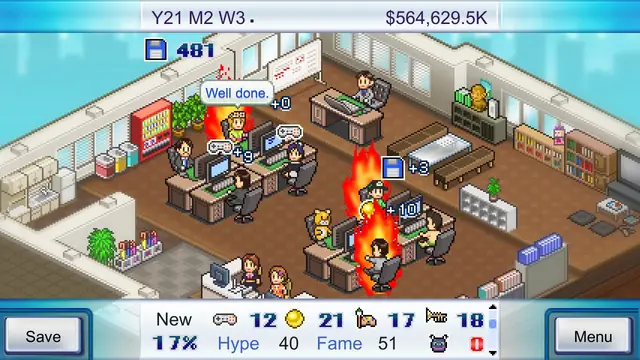
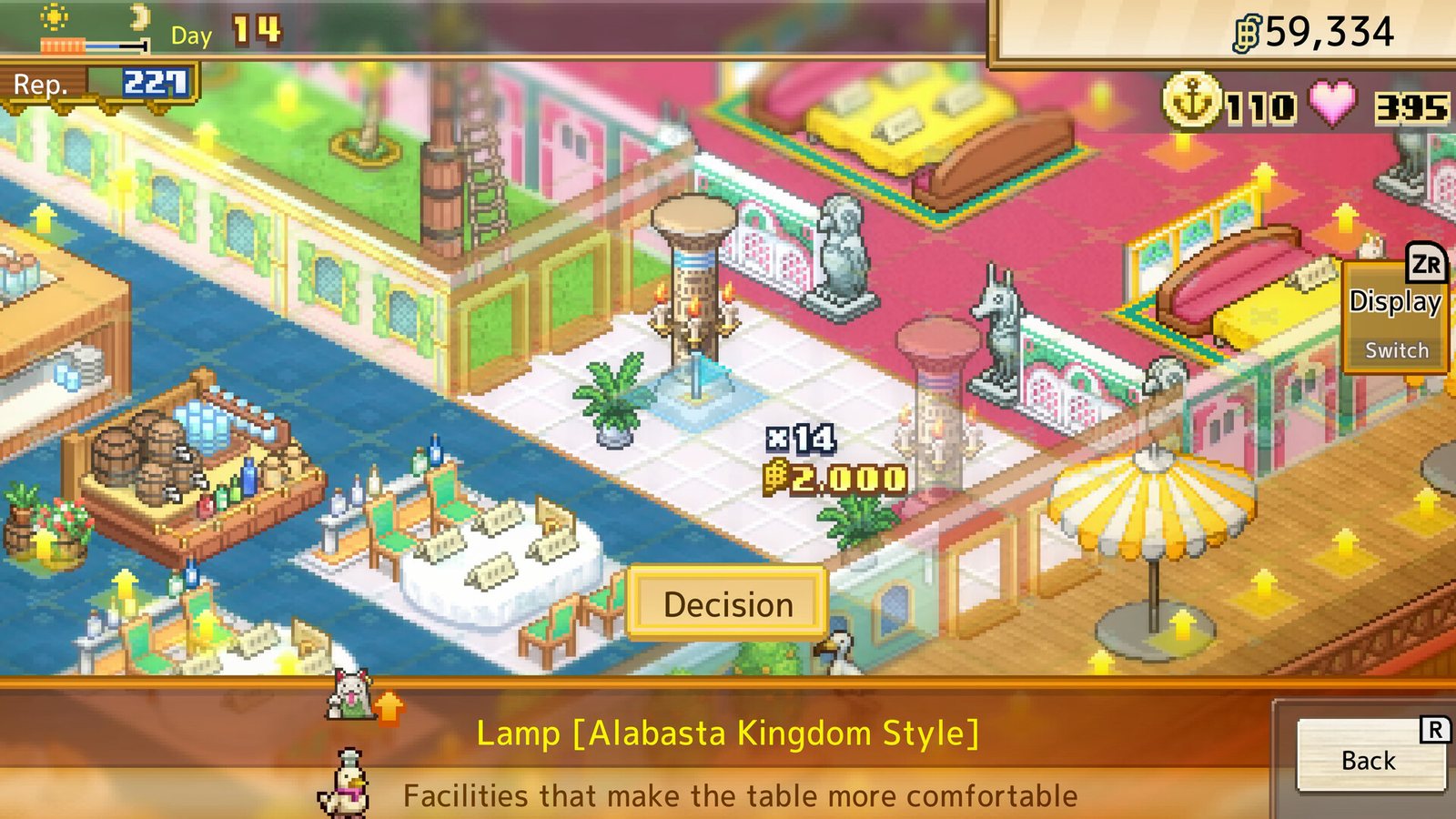
The decorating screenshot places an Alabasta-style lamp among tables, seating, walls and accessories. There is material here to combine in different ways. For OtaHub, a large catalogue therefore makes clear selection and placement tools more valuable. Adding further unlockable objects cannot, by itself, resolve frustration with handling the ones already available.
The update gives players more control over reading
The October 23 Steam update, version 1.0.7, adds an automatic text-progression toggle for certain text and adjusts the display order of certain graphical elements. Players can now advance the supported text at their own pace. The announcement refers to certain text, rather than every conversation and screen.
Being able to advance at one’s own pace is useful in an information-heavy game. It gives players a chance to finish reading an instruction or notice a joke before moving on. That also creates room for the One Piece material to register instead of passing by as another notification.
Reading controls and decorating tools nevertheless address different activities. The announcement does not describe changes to object selection, rotation or storage. Recognising the improvement does not require assuming it resolves those separate complaints.
Another view: familiar Kairosoft design has its appeal
Rorro recommends the game and enjoys combining One Piece with Kairosoft’s familiar approach. That familiarity has value. Someone seeking a particular style of simulation may reasonably want more of it rather than a wholesale reinvention.
Not every One Piece game needs to become a large adventure. Expanding a small restaurant, adding dishes and watching familiar guests arrive may be exactly the experience a player wants. A mobile release does not establish poor quality, and a dense interface will not feel difficult to every person who encounters it.
Newcomers, however, do not have to learn a developer’s history before expecting understandable controls. An identity can live in the rhythm of expansion, the character art and the relationships between systems. It need not depend on accepting awkward commands. Keeping what returning fans enjoy and making the game easier to approach are compatible ambitions.
Conclusion
For OtaHub, Grand Gourmet needs to make players want to care for their restaurant, whether that means following a conversation or trying a different layout. The text update addresses part of the difficulty. If management and decorating tools also improve in response to specific feedback, the One Piece material will have more opportunity to keep players engaged with the activities that brought them to the restaurant.
Sources: Bandai Namco — game introduction · Steam — description and screenshots · Steam — MossWoods, SoleSurvivor and Rorro · Official version 1.0.7 announcement. Checked October 24, 2026. This is design analysis using public material and player feedback, not a review based on OtaHub’s own playthrough. Images: Kairosoft / Bandai Namco; ©Eiichiro Oda / Shueisha, Toei Animation.