In-depth · Characters · Spoilers through Wano
When Sanji calls Robin for help in Wano, people outside the Straw Hats can mistake his predicament for weakness. For a character so accustomed to putting himself in danger, admitting that he needs someone else is a meaningful decision. He allows a crewmate to see his limits and trusts her to do something he cannot.
Sanji has never lacked courage. His recurring difficulty is accepting that protecting people does not give him sole responsibility for their safety. His generosity makes him indispensable to the crew, yet it can also encourage him to discard his own wishes before anyone has asked him to. One Piece explores that tension through relationships rather than treating every sacrifice as automatically admirable.
A meal and an obligation
At Baratie, feeding Gin without payment establishes a practical principle. Sanji sees someone hungry and responds as a cook before deciding whether that person deserves his assistance. He does not require a promise of good behaviour before providing a meal. That willingness to help without a guaranteed reward is central to his appeal. Official reference.
It is also risky. Kindness cannot guarantee that the recipient will behave kindly in return. Readers can admire Sanji's decision while worrying about its consequences. Acknowledging the danger does not make his generosity foolish by definition, but ignoring it would make the choice far less interesting.
His obligation to Zeff creates a different problem. His gratitude initially keeps him from pursuing All Blue. A relationship that gave him a future has become a reason to postpone it. Remaining at Baratie forever would prove devotion at the expense of a dream that matters to both men. Leaving requires Sanji to accept that gratitude need not consume the rest of his life.
Protecting people without consulting them
Whole Cake Island gives Sanji serious reasons to fear a return to the crew. Zeff is vulnerable to threats, his biological family faces danger, and Sanji has hurt his captain. These pressures deserve to be taken seriously. His predicament cannot fairly be reduced to an inability to ask a simple question.
Nevertheless, deciding that everyone would be better off without him creates another injury. He chooses a future for his friends and tries to make them accept it. They lose the opportunity to tell him what risks they are willing to take or to help find another solution. Protection becomes a responsibility he exercises alone, even though its consequences belong to other people too.
That is why his conflict with Luffy hurts beyond the immediate confrontation. Sanji sees what he can give up. Luffy sees a friend deciding to disappear from their lives. The same sacrifice looks different depending on who must live with the absence it leaves behind.
Luffy needs an honest answer
The reunion meal, filled with foods his friends enjoy, undermines Sanji's attempt to reject them. Caring for the crew remains part of how he works, even while he tries to stay away. For a cook, remembering what people like to eat communicates attachment with a specificity that a general declaration could not replace. Official reference.
Admitting that he wants to return to the Sunny does not solve the external threats. It gives his friends an honest starting point. Wanting to save his family and wanting to continue his own journey can coexist, however inconvenient that makes the situation.
Luffy's insistence matters because Sanji cannot be protected properly if his own wishes are excluded from the discussion. Forgiveness is part of the reunion, but so is recovering his right to imagine a future after the crisis. His friends need to know what that future should contain.
Robin is allowed to protect him
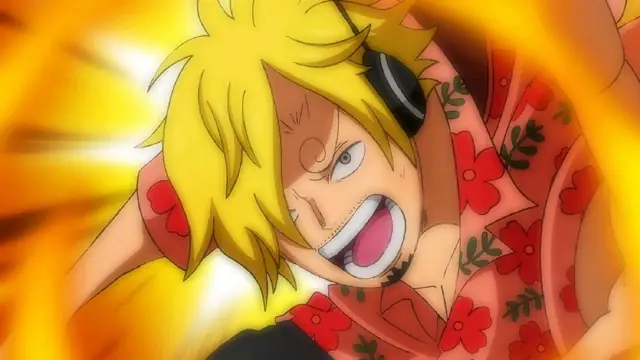
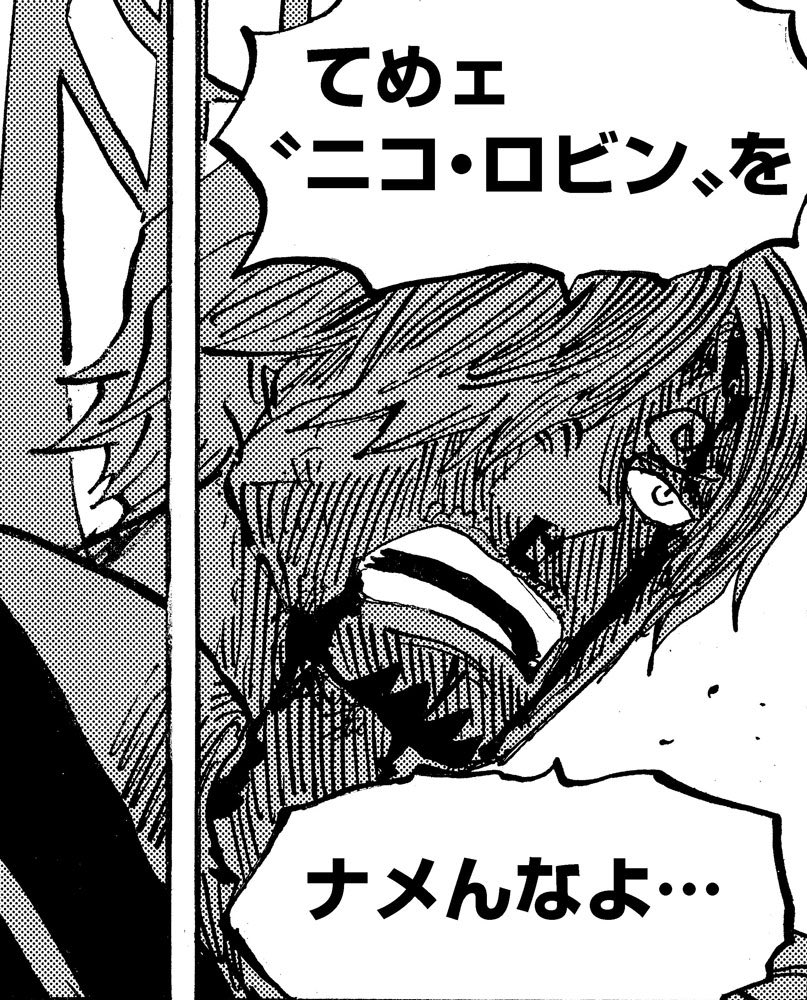
The call for help in Wano offers a different response to danger. Captured by Black Maria, Sanji calls Robin, who arrives to rescue him. He does not suddenly abandon his principles or become someone unwilling to make an effort. He recognises that another member of the crew can address the situation trapping him. Official reference.
Asking also acknowledges Robin's agency. She is capable of entering danger and deciding what to do there. Keeping her away solely because he wants to protect her would place his concern above her abilities and judgement. Trust requires making room for what the other person can contribute.
One scene does not prove that Sanji has permanently overcome every destructive habit. His stubbornness remains part of the character. It does, however, demonstrate a healthier way of belonging. He need not earn his place on the ship by enduring everything alone.
Another view: kindness is also a choice
Sanji also has professional pride, curiosity about ingredients and a dream connected to the pleasure of cooking. Reducing him to a wounded man who helps others would neglect these sources of enjoyment and ambition. Sacrifice matters precisely because he has a life he wants to lead.
His childhood mistreatment helps explain why acceptance carries weight, but it should not become a universal explanation for his behaviour. Generosity is also a principle he chooses. Treating every act of kindness as a symptom would deny him the agency that the story repeatedly asks his friends to recognise.
The answer is therefore not for Sanji to care less. It is for him to stop treating himself as the first person who can be left behind. Accepting Luffy's help and calling Robin allow friendship to work in both directions. The cook who looks after everyone else's meals can also expect those people to bring him home safely.
Conclusion
Sanji’s kindness matters because it is his choice. Learning to ask for help lets him keep that kindness without treating his own future as the first thing to sacrifice. The crew needs its cook to return, not merely to make everyone else’s escape possible.
Sources: One Piece official, One Piece official, One Piece official, One Piece official, One Piece official, One Piece official, Official Luffy and Sanji PV. ©Eiichiro Oda/Shueisha, Toei Animation.