In-depth · Production & Behind the Scenes · No spoilers
Kairosoft is a Japanese developer known for pixel-art management games about running a business, building a village or opening a shop. Game Dev Story on iPhone in 2010 is a recognizable milestone, but that approach took shape on PC much earlier. In OtaHub’s reading, the thread connecting these games is their ability to turn familiar work into small decisions with visible results.
A game development company might sound like a subject for industry insiders. A secondhand bookshop hardly suggests a grand adventure. Kairosoft finds playable decisions in both: choosing what to sell, hiring people and saving for the next investment. Its history becomes more interesting when those ordinary tasks are treated as the starting point of a design, rather than as entries in a release calendar.
A secondhand bookshop near a railway station
In a 2018 interview with DenFamiNicoGamer, Kazuyuki Usui recalled making The 古本屋, a secondhand bookshop management game, in 1996 at the age of 14. A shop near Higashi-Kurume station provided the inspiration. Its owner could read during quiet periods, a working rhythm that interested Usui enough to become a game.
That detail explains the choice of subject better than a general claim that Kairosoft likes cute things. The developer looked at a specific job and asked what the person running the place had to decide. A shop has stock, customers and money to manage. Those elements can create playable situations without battles or an elaborate plot.
The date marks the beginning of Usui’s game-making, not automatically the incorporation of Kairosoft as a company. Those are separate events. What matters here is that this interest in management existed well before smartphones became the home of the studio’s best-known games, starting with work its creator observed in daily life.
Running a game company was already a PC idea
Kairosoft’s official PC product page still presents Game Dev Story II DX as a free game included in the October 2001 issue of TechWin. It describes managing development through hiring, planning meetings, debugging, technology research and hardware licensing. Running a game company was already the central premise of this PC title.
The connection to the later mobile game goes beyond a similar name. Product development gives the player a sequence of decisions: a project needs people, time and preparation before it can be sold. That structure makes an unfamiliar profession understandable. You do not need to know how to program to understand why staffing and fixing bugs matter to a finished product.
The move to phones carried an existing idea into another setting. That continuity helps explain why Game Dev Story has a coherent subject. Its office characters make the workplace feel alive, while managing projects gives the player a reason to care about what happens there.
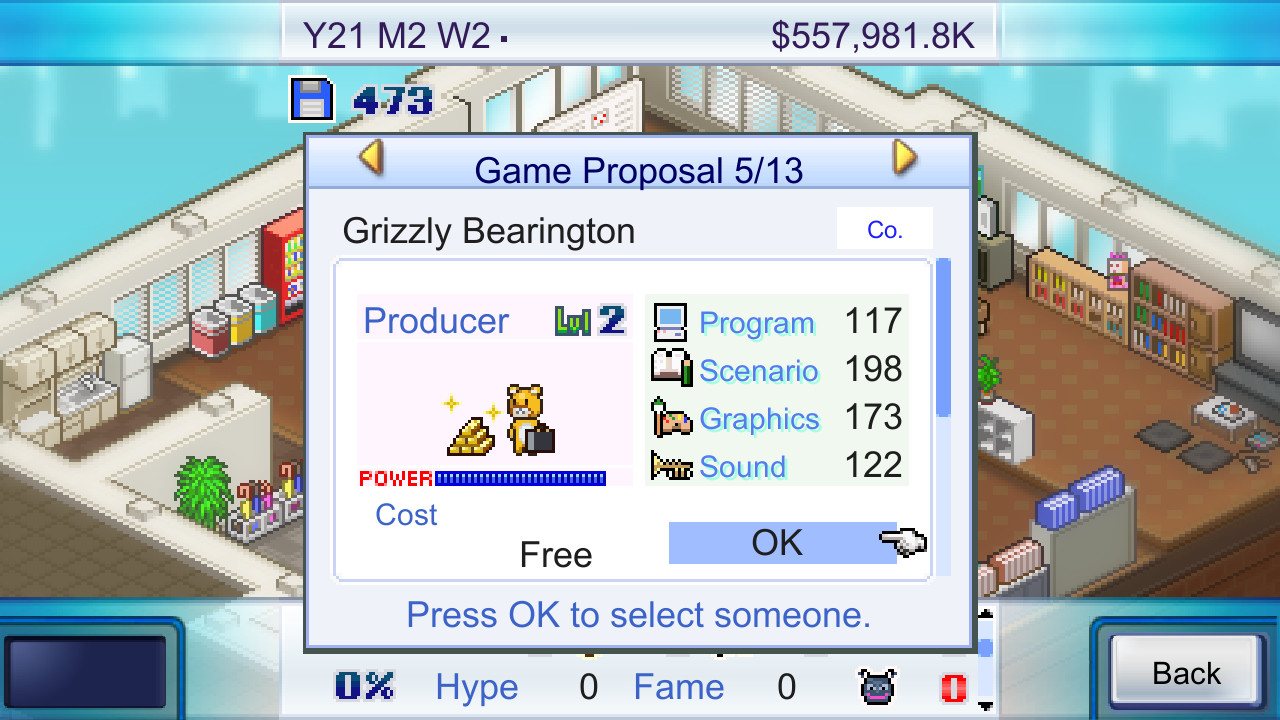
Game Dev Story makes work understandable
The App Store version history lists version 1.0.0 on October 9, 2010. The English Android release followed in December, as reported by Droid Gamers. These were separate steps in bringing the game to smartphone audiences.
The official introduction describes hiring and training staff, combining game genres and themes, unlocking development options and eventually creating a console. The choices form a chain: the team affects the product, the product brings in money, and that money opens possibilities for the next project.
For OtaHub, the useful design choice is how readable those consequences become. The game provides a few immediate questions. Is a new employee worth the available money? Should the next investment improve the team or support a different product? The decisions create goals without requiring the player to learn everything a real studio does.
Simulation still needs to be distinguished from accuracy. In a December 2010 WIRED interview, developer Ron Gilbert discussed both Game Dev Story’s appeal and its departures from reality. His comments show how a game about a profession can interest a practitioner despite simplifying the work.
A familiar structure, a different responsibility
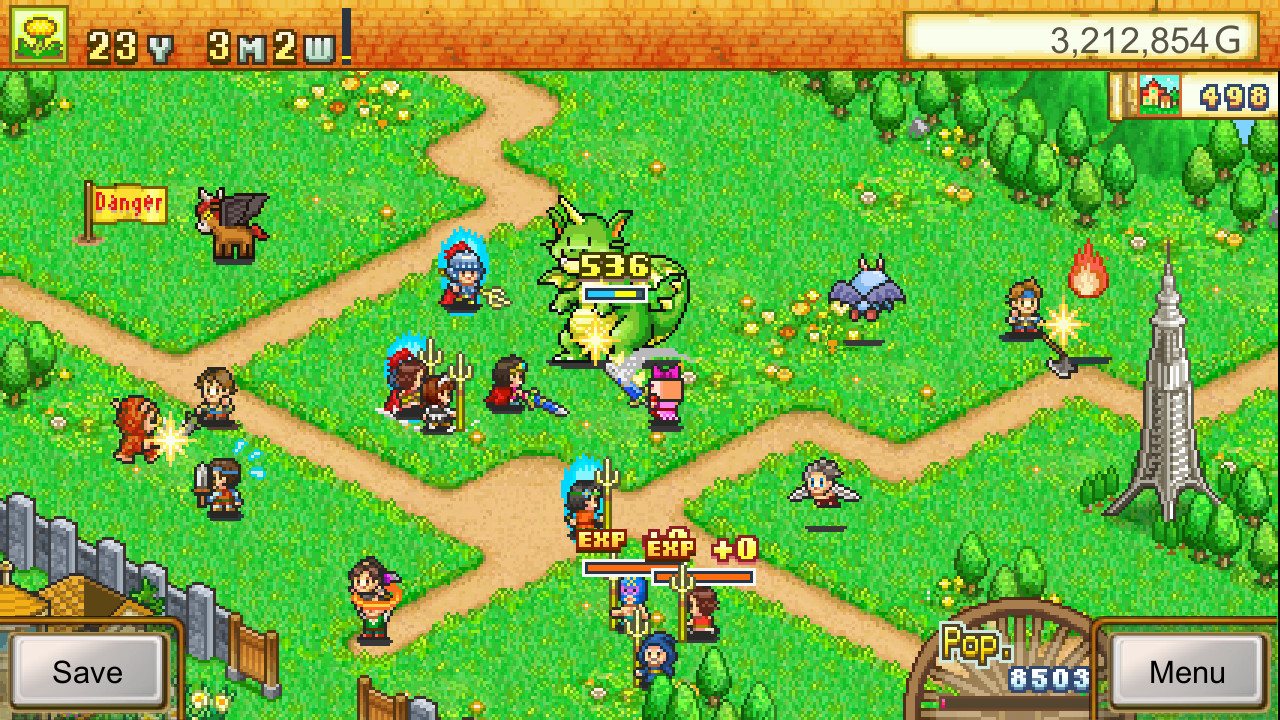
Dungeon Village illustrates a change of focus. Players build a village for adventurers, provide training facilities and develop a place where visitors can settle. Adventurers fight monsters and bring back money and loot. Management is tied to the growth of a community rather than to a series of projects inside an office.
Both games let players watch a small operation expand through investment. Their central responsibility changes, however: Game Dev Story focuses on staff and products, while Dungeon Village focuses on a settlement and the people it attracts. In OtaHub’s reading, a different management subject gives a new theme substance beyond replacing names and character sprites.
The production process provides another relevant detail. In the second part of the 2018 interview, Kairosoft said that the person proposing an idea often led its development, with a typical team of one programmer and one or two artists. This describes practice at the time of the interview. It helps explain how a subject could become a project, with its originator directly involved in turning that idea into a game.
Older games travel further while new subjects arrive
The 2018 interview also records Game Dev Story reaching Switch in October that year. Its Steam page lists a release date of March 27, 2022. These releases show an established product continuing to reach players on other platforms long after its mobile version. A PC release also recalls the environment in which its predecessor existed.
For OtaHub, the interesting point is the longevity of a clear playable premise. A new audience can understand the goal even when the game arrives on a different machine. The releases document the continuation of a product. Explaining the studio’s business results would require separate evidence about revenue, costs and markets.
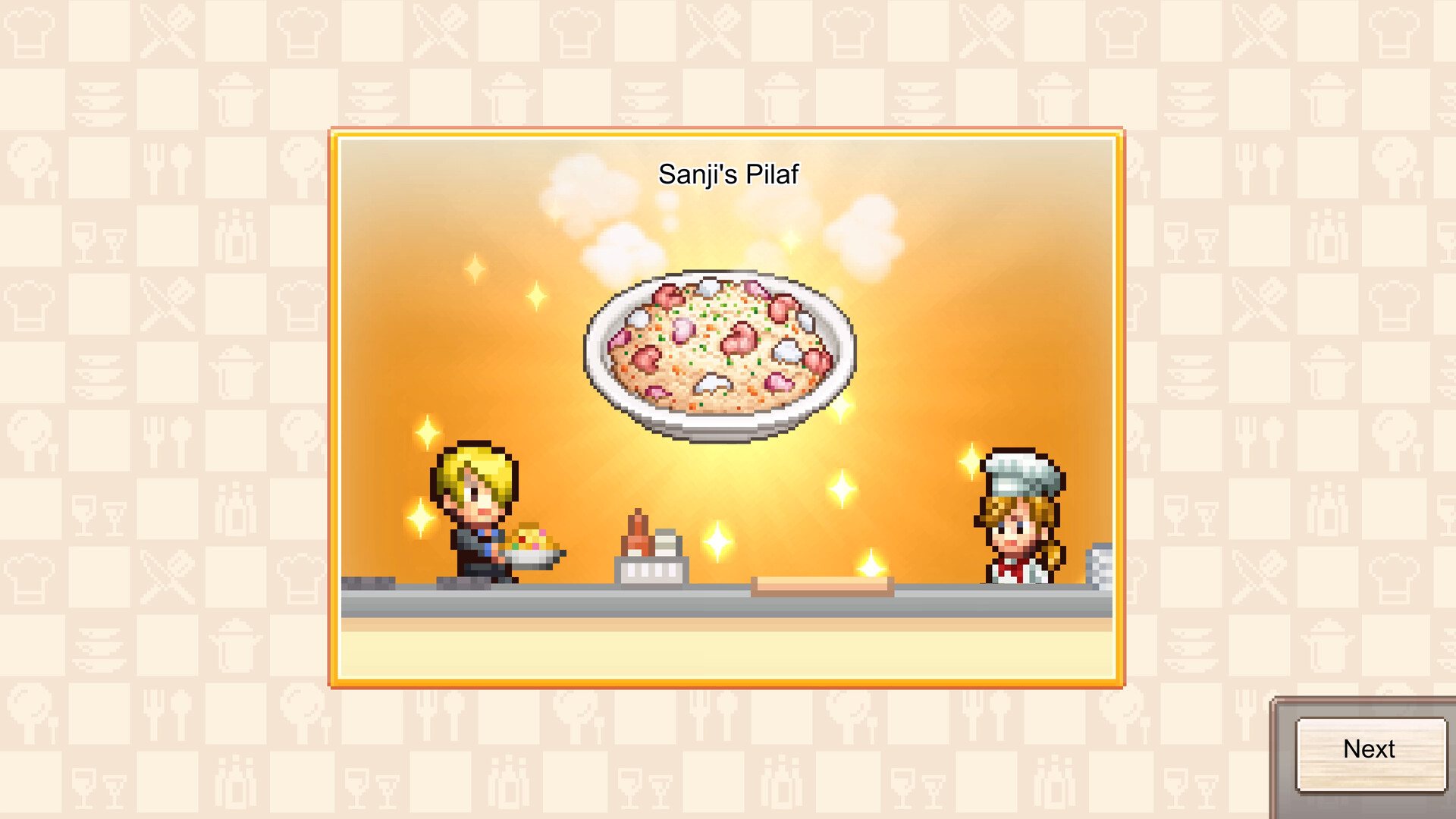
Recognizable fictional worlds have also entered this approach. Kairosoft’s Doraemon dorayaki-shop game involves combining ingredients and serving Fujiko F. Fujio characters. Its shop setting adds the pleasure of recognizing familiar characters and objects. It predates ONE PIECE: Grand Gourmet, showing prior experience with bringing a fictional world into management play.
According to Bandai Namco’s announcement, the Kairosoft-developed ONE PIECE: Grand Gourmet is scheduled for October 23, 2026 on Switch 2, Switch, Steam, iOS and Android. Its restaurant setting brings another recognizable world to management play. At this article’s update date, it has not launched; assessing its quality requires the actual product.
Another view: familiarity can become repetition
A recognizable approach has a limit. Someone already accustomed to hiring people, improving facilities and waiting for results may want a larger change. For OtaHub, a new theme becomes meaningful when it changes the decisions that matter. If a new product changes the scenery while leaving those decisions untouched, experienced players may find little novelty. This is a way to examine individual games, rather than a predetermined verdict about the entire studio.
Conversely, familiarity can be what a newcomer wants. An understandable job and a compact goal make it easier to start without learning too many systems at once. Choosing a Kairosoft game can therefore begin with a subject you want to manage, followed by a closer look at that title’s systems and platform version. The studio’s reputation helps identify its style, while the individual product determines whether it suits you.
Conclusion: everyday work becomes a recognizable identity
From Usui’s secondhand bookshop to the company in Game Dev Story, Kairosoft has found subjects in work that can be broken into manageable choices. The PC and mobile games, followed by later platform releases, show that approach continuing across different environments. Game Dev Story is a clear starting point for understanding it: running a workplace becomes a set of playable decisions. Whether each subsequent game offers enough depth and novelty remains a question to examine separately.
Frequently asked questions
What is Kairosoft?
Kairosoft is a Japanese game developer known for pixel-art management simulations.
When did Game Dev Story launch on phones?
The iOS version launched on October 9, 2010. The English Android release followed in December 2010.
Has ONE PIECE: Grand Gourmet launched?
Not as of this article’s October 10, 2026 update. Bandai Namco has announced an October 23, 2026 release.
Sources: DenFamiNicoGamer: Kairosoft interview (December 18, 2018); DenFamiNicoGamer: development process; Kairosoft: Game Dev Story II DX; Kairosoft: Game Dev Story; Apple: version history; Droid Gamers: Android release; WIRED: Ron Gilbert; Steam: Dungeon Village; Steam: Game Dev Story; Kairosoft: Doraemon game; Bandai Namco: ONE PIECE: Grand Gourmet.