The GameCube Arrived in the Middle of a Fierce Rivalry
The Nintendo GameCube launched in Japan in September 2001, before arriving in North America in November of the same year and in Europe in 2002.
It was also Nintendo’s first console to use optical discs instead of traditional cartridges. The GameCube was equipped with an IBM Gekko processor and optical disc technology developed with Matsushita’s involvement.
At the time, the console market was entering a period of intense competition. Sony’s PlayStation 2 had already built a strong position, while Microsoft was preparing to enter the market with the Xbox.
The GameCube therefore had to compete in a race where hardware power, graphics and the ability to attract third-party developers were becoming increasingly important.
Nintendo, however, chose a rather different path.
A Purple Console Unlike Any Other
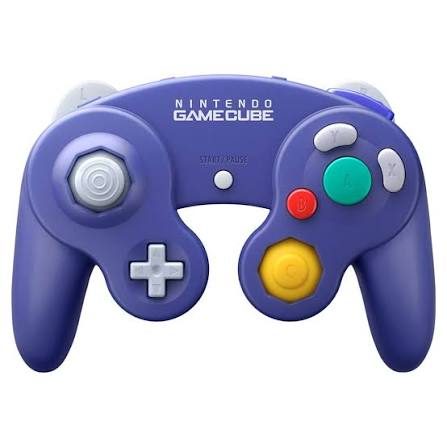
The GameCube was fairly small compared with many consoles of its time. Its box-shaped design and signature purple color made it instantly recognizable.
The controller also drew attention. It used a large main analog stick, asymmetrically arranged buttons and a prominent green A button in the center.
This design set the GameCube apart from consoles with more powerful-looking designs at the time.
Yet that very difference became part of the GameCube’s image many years later.
Instead of racing to create a console with a complex design, Nintendo focused heavily on the gameplay experience and on products with its own distinct character.
The GameCube Had a Host of Memorable Games
Although it didn’t match the PlayStation 2’s sales, the GameCube still had a highly regarded game library.
Early on, the console already had Luigi’s Mansion and Super Smash Bros. Melee. Nintendo then continued bringing major franchises to the GameCube, such as The Legend of Zelda, Metroid and Super Mario.
Luigi’s Mansion was especially notable as one of the GameCube’s launch titles. Instead of putting Mario at the center, Nintendo chose Luigi and made him the star of a ghost-hunting adventure.
After that, the console’s library kept growing with titles such as:
Super Mario Sunshine
The Legend of Zelda: The Wind Waker
The Legend of Zelda: Twilight Princess
Metroid Prime
Eternal Darkness: Sanity’s Requiem
Viewtiful Joe
Donkey Konga
Super Monkey Ball
This was also a period when Nintendo worked with many outside partners, including Sega. A Nintendo console having games from Sega was quite remarkable for gamers of that generation.
More Than Just Familiar Franchises
What makes the GameCube memorable isn’t just its big franchises.
The console also became a testing ground for many unusual ideas. Eternal Darkness: Sanity’s Requiem used a “sanity” mechanic to directly affect the player’s experience. As the character gradually lost their grip on reality, the game could create effects that made players doubt what was happening on screen.
Meanwhile, Viewtiful Joe used a comic book and cartoon-inspired visual style to create a distinctive experience.
Donkey Konga went even further by using a bongo drum controller instead of a traditional gamepad.
These games show that the GameCube wasn’t just a console for flagship franchises but also a platform where Nintendo and its partners experimented with new ideas.
The GameCube Marked the End of an Era
Despite its many standout games, the GameCube didn’t achieve the commercial position Nintendo had hoped for.
The console sold significantly fewer units than the PlayStation 2 and had to compete with the Xbox in an ever-expanding market.
However, this period also coincided with Nintendo beginning to change its approach to the games market.
In the preceding years, competition between console makers had increasingly focused on graphics and hardware power. Nintendo gradually realized that continuing the technology race wasn’t the only way to grow the market.
This laid the groundwork for bigger changes in the hardware generations that followed.
From GameCube to the Wii and Nintendo DS
After the GameCube, Nintendo introduced the Nintendo DS and the Wii.
The Nintendo DS focused on two screens and touch controls. The Wii, meanwhile, made motion controls a central part of the experience.
This was an important shift in Nintendo’s hardware strategy. Instead of only competing directly with Sony and Microsoft on power, the company looked to reach wider audiences through new ways to play.
Looking back, the GameCube became a milestone between two eras: a Nintendo still strongly focused on traditional gamers, and a Nintendo starting to look for different paths.
25 Years Later, the GameCube Is Still Remembered
The GameCube may not be Nintendo’s most commercially successful console, but many years after its launch, the little purple machine still holds a special place in gaming history.
Its distinctive design, unusual controller and many beloved games have made the GameCube one of the consoles the community looks back on most fondly.
More importantly, the GameCube is tied to a period of transformation for Nintendo. From a company competing directly in the hardware race, Nintendo gradually shifted to a strategy focused on new ways to play.
From the GameCube to the Nintendo DS and then the Wii, this direction opened a new chapter in the history of Nintendo’s hardware.
Although it struggled against its competitors, the GameCube is remembered today for the very things that made it different: a small purple console, a unique controller and a game library that left its own mark on Nintendo’s history.
Source: Compiled from multiple reports.