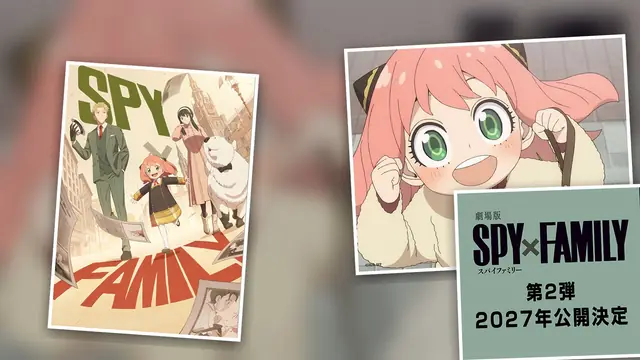
A spy needs a wife and child for a mission, only to adopt a telepath and marry an assassin. SPY x FAMILY begins with that unlikely arrangement: Loid and Yor conceal their identities, while Anya knows both secrets and has to pretend she does not.
The Forger family becomes endearing because people brought together for separate reasons gradually begin to care about each other. School, parenting and trips together give that change room to develop, alongside dangerous assignments. Across three seasons, the characters remain the strongest attraction, though viewers waiting for the espionage plot to move quickly may grow impatient.
Quick facts
| Studio | WIT Studio and CloverWorks |
|---|---|
| Season 3 director | Yukiko Imai |
| Source manga | Tatsuya Endo, Shonen Jump+ / Shueisha |
| Episodes / seasons | Three TV seasons: 25, 12 and 13 episodes, 50 in total |
| Years aired | 2022, 2023 and 2025 |
| Japanese cast | Takuya Eguchi (Loid), Saori Hayami (Yor), Atsumi Tanezaki (Anya) |
| Music | (K)NoW_NAME |
| Where to watch | Netflix Vietnam title page; check seasons and subtitles in your account |
Scope of this review
This assessment covers the three television seasons, comprising 50 episodes, and excludes Code: White. It is an editorial assessment based on official episode material and the cited criticism, rather than a first-hand viewing diary. Plot disclosures are marked below. Mission numbers refer to the anime’s continuous episode numbering, not manga chapters.
Story and script: how does a pretend family become worth caring about?
Loid, known as Twilight, needs to reach a target through Eden Academy. He adopts Anya and marries Yor so he can present himself as an ordinary father. Anya’s education is part of Operation Strix for him, while keeping her new family matters more to her than his mission. Yor also needs the marriage to conceal her work as an assassin, but wants to become a good mother despite her unfamiliarity with that life.
Those different priorities allow one event to produce both comedy and affection. Loid tries to keep a plan intact, Anya helps using what she hears in his thoughts, and Yor worries about fulfilling her role. Even an ordinary situation can become a conflict because each person understands it differently.
The Eden interview in Mission 4, season 1, offers a clear example. Loid prepares the family to answer questions, but teachers begin assessing their conduct as soon as they enter the school. Henderson sets further tests to judge whether the Forgers belong at Eden. Anya is therefore not the only one being tested: the adults must also demonstrate that they can look after her.
That shared challenge gives viewers a reason to want the family to succeed together. The series is strongest when the mission brings them closer in this way. When a detour adds only another joke or supporting character, Loid’s larger objective waits. The delay matters more if espionage is your main reason for watching.

Characters and voice acting: why does knowing so much still get Anya into trouble?
Anya knows her parents’ secrets without understanding everything as an adult would. Hearing Loid’s plan may prompt her to help through a child’s reasoning, turning something discreet into an awkward situation. The gap between what she knows and what she understands gives the comedy a basis in character rather than relying entirely on funny faces.
The Japanese performance also keeps her recognizably young. In Anime Feminist’s assessment of the premiere, Dee praises Atsumi Tanezaki’s slightly gravelly, wavering delivery rather than a conventionally high, cute voice. For OtaHub, that choice suits a child who tries to appear knowledgeable but can still be frightened by what she hears.
Loid and Yor provide different kinds of uncertainty. He can handle spy work but must learn to be a father; she can fight but lacks confidence as a mother. Anya does not have to carry the comedy alone. The adults’ efforts to do something right for their daughter give the family reasons to stay together beyond protecting their cover.
Mission 32, season 2 episode 7, gives Yor a substantial conflict. During the cruise protection assignment, she asks why she continues fighting. Meanwhile, Loid chooses souvenirs to please Anya and tries to become a fun father. The tasks differ, but both concern people they want to care for. Season 3 puts more emphasis on Loid and Anya; Yor fans may miss a sustained storyline comparable to the cruise.

Animation and visuals: how do comedy and action support each other?
The images need to reveal what characters conceal while their spoken words remain ordinary. Anya reacts to thoughts her parents have not voiced, while Loid tries to look confident when family life confuses him. Expressions help tell the story by showing the difference between a character’s appearance and the situation underneath.
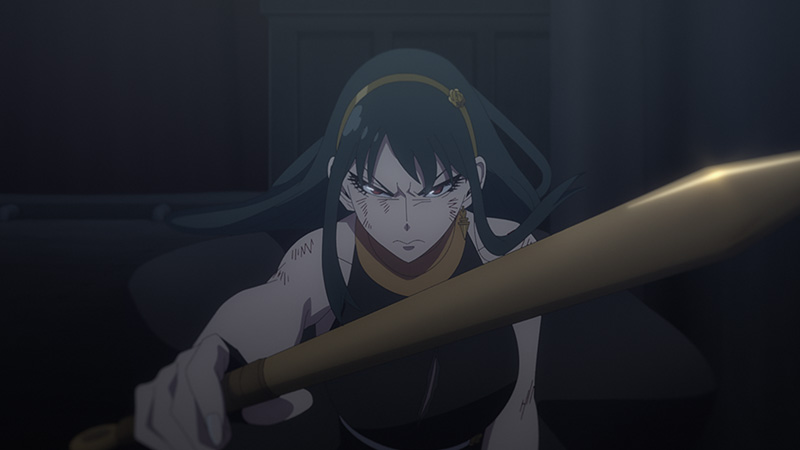
The cruise supplies a particularly clear contrast. In Mission 33, season 2 episode 8, Loid and Anya watch fireworks while assassins surround Yor during her protection assignment. The same ship is a holiday setting for father and daughter and a battleground for Yor. Putting these scenes together makes her secret tangible: her family is close by without knowing what she faces.
For OtaHub, this gives the action a purpose beyond displaying combat ability. Yor’s battle connects to the ordinary life she wants to preserve, while the holiday scenes show what could be threatened. The strength lies in linking the family through images even when its members occupy separate scenes.

Music and sound: what is there beyond the opening themes?
The soundtrack’s jazz character suits the mixture of espionage and comedy. Dee at Anime Feminist also praises that fit in the premiere. For OtaHub, this is a strength of the opening: the series establishes a spy-story atmosphere while leaving room for small family complications.
The cruise also uses a song within an episode, beyond the opening and ending themes. Until the End by (K)NoW_NAME appears in Mission 34, season 2 episode 9. The official site offers a lyric video with anime footage, allowing viewers to revisit the song alongside its accompanying images. It gives soundtrack listeners a specific sequence to seek out, rather than only a composer’s name.
Season 3 uses Spitz’s Hi o Mamoru as its opening and Lilas Ikuta’s Actor as its ending, according to the official listing. The songs give each season recognizable musical markers. The sound assessment here rests chiefly on the premiere and the verified insert song; it does not establish the mixing quality of every scene across all 50 episodes.
Direction, pacing and adaptation: accessible, but does it test your patience?
Family stories are easy to follow when the characters have an immediate task: getting into Eden, making a child happy or completing a protection assignment. The series does not need to explain a large intelligence network whenever it wants to build a climax. Viewers arriving for comedy and relationships can therefore follow its action as well.
Accessibility does not mean episodes can be watched in any order. The season 2 cruise and season 3 bus storyline run across several episodes, with later developments depending on what happened earlier. Start with season 1 and continue in sequence. Reading the manga first is unnecessary because the anime introduces its characters and mission.
Operation Strix creates a different expectation: viewers want to know how close Loid is getting to his target. Detours into school life or supporting characters can be enjoyable on their own while postponing that larger question. This matters if you prefer a season to end with a substantial change in circumstances rather than another opportunity to spend time with characters you already like.
Anya knows the danger but still needs help
Spoilers for the mid-season bus incident; its resolution is not disclosed.
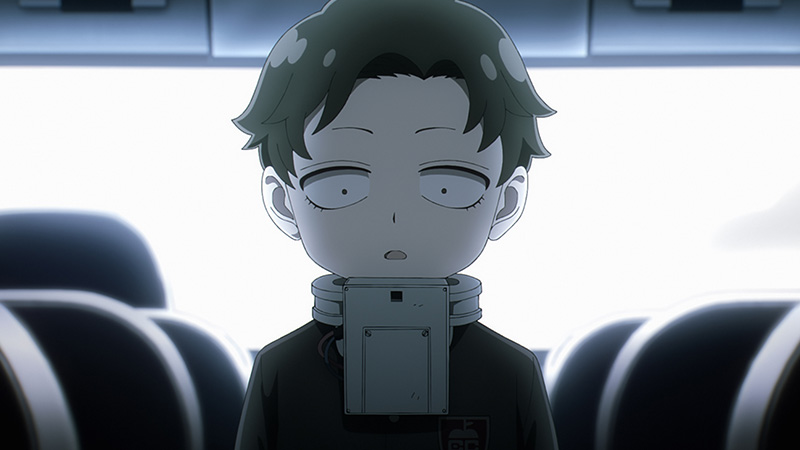
In Mission 44, Red Circus has taken control of a bus carrying Eden pupils. Anya reads a captor’s thoughts to learn its destination, then works with Becky’s quick thinking to send a distress message outside. Knowing more than her classmates does not let her escape the danger on her own.
Her telepathy now serves a different purpose from the household jokes. It supplies information she can act on, but she still depends on others and faces risks as a child. That gap creates tension and brings the danger of the espionage world directly into school life.
For Vietnamese viewers
- Where to watch
- Netflix has a Vietnam title page for SPY x FAMILY. Accessed publicly from Vietnam, it lists three seasons and T16; check episodes, subtitles and playback in your account before subscribing.
- Order
- Season 1, season 2, then season 3. Code: White is outside this score.
- Age suitability
- Violence, war and danger involving schoolchildren require consideration. T16 is the checked Netflix page's label, not a universal classification.
What critics say, and where OtaHub differs
Charles Hartford at But Why Tho rates season 3 8/10, praising Loid’s past and the mixture of comedy and action while noting limited progress in Operation Strix. OtaHub agrees that the family remains appealing enough to hold viewers, but considers the stalled mission a substantial drawback for those following the espionage story. Hartford evaluates season 3 alone, whereas this article covers three seasons, so the scores do not describe the same scope.
Appeal and rewatch value: who should watch SPY x FAMILY?
Watch if you enjoy characters who conceal secrets while trying to care for each other. The comedy requires no expertise in espionage: school, parenting and attempts to behave appropriately provide plenty of interesting situations. Action brings periods of greater tension rather than keeping everything at the pace of daily life.
If you want an intelligence operation to make a major advance each season, the series may frustrate you. It gives the Forger family priority over completing the mission quickly. Check age suitability before choosing it for younger children, as it includes war, violence and danger involving pupils.
Strengths and weaknesses
Strengths
- Unequal information supports comedy and family relationships
- The central trio complements each other, with a substantial cruise role for Yor
- Expressive animation and action staging support situations
Weaknesses
- Operation Strix develops slowly
- Attention across family members is uneven
- Longer arcs need sequential viewing
OtaHub score
- Story & Script · 8.5Family situations connect to the mission and supply clear goals, but the larger story moves slowly.
- Characters & Voice Acting · 9.2Anya, Loid and Yor have different wishes that complement each other; the cruise gives Yor a distinct conflict.
- Animation & Visuals · 9.0Expressions reveal concealed thoughts; cruise imagery links family life and danger.
- Music & Sound · 8.6Jazz suits the spy-comedy tone, while insert songs such as Until the End give individual sequences a musical marker.
- Direction, Pacing & Adaptation · 8.5Storylines have clear situations and reward viewing in sequence, but detours prolong the wait for the main mission.
- Impact & Rewatch Value · 9.0Relationships and misunderstandings remain appealing, though espionage-focused viewers may lose patience.
OtaHub recommendation: Worth watching
FAQ
Do I need to read the manga first?
No. The anime introduces its premise in season 1; watch the seasons in order.
Does the score include Code: White?
No. The 8.8 score covers the three TV seasons only.
Is it suitable for young children?
Do not assume so. Violence, war and danger involving pupils require checking the age classification of your service.
Sources: SPY x FAMILY: Mission 4; Mission 32; Mission 33; Mission 44; Until the End / (K)NoW_NAME; Season 3 music; Dee / Anime Feminist; Charles Hartford / But Why Tho; Netflix Vietnam. Episode images: official anime site. Edited October 13, 2026.