What makes Split Fiction engaging is how much attention it asks you to give the other player. Each character has different abilities, so completing your own task also means understanding what your partner is doing. Even crossing a level can require a glance at the other half of the screen. Hazelight uses that dependence to make this feel like a genuinely shared adventure.
The game keeps introducing new ideas across Mio’s science-fiction stories and Zoe’s fantasy worlds. Those settings are not usually my favourites, yet curiosity about the next challenge kept me playing. We had to retry some sections repeatedly, particularly near the end, but the satisfaction of overcoming them together mattered more to me than the weaknesses in the story.
Both players have a part to play
Split Fiction rarely treats cooperation as simply putting two players against the same enemies. Each character often has a different ability, making one person's progress depend on the other. Looking across to your partner's half of the screen helps you understand their position and what you need to do next. The split screen remains when playing online because both perspectives provide useful information.
Mio's science-fiction worlds lean toward action and chases. An early wall-walking sequence shows how Hazelight uses perspective to change an otherwise familiar activity. You still move and jump, but have to interpret the space from a different angle. Zoe's fantasy settings leave more room for observation, puzzles and experimenting with abilities. Alternating between these approaches gives the adventure breathing room between its faster sections.
I liked how frequently the mechanics changed without requiring an entirely new set of basic skills each time. Double jumps, dashes and climbing provide a familiar foundation. The new challenge is combining those actions with the abilities available in a particular level. That balance makes each world feel different while letting you build on what you already know.
The last level was the hardest part for my girlfriend and me. We died quite a few times before getting through it. That is worth flagging for players less comfortable with action games, because being confident in earlier stages does not guarantee an easy finish.
Generous checkpoints and quick respawns reduce the waiting between attempts. They keep the less experienced player involved rather than turning failure into a long spell of spectating. I still loved the adventure overall, but a partner who gets discouraged by repeated failures may find this stretch demanding.
The friendship works better than the twists
Mio and Zoe visit a publisher looking for an opportunity for their work, only to become trapped in a machine exploiting writers' ideas. One writes science fiction, while the other prefers fantasy. That premise gives the adventure a natural reason to move from technological cities to worlds of dragons and magic.
I enjoyed how the story brings the two women closer as they work toward escaping. Their fictional worlds also connect to their lives and personal problems, giving exploration more meaning than a tour of impressive scenery. Their relationship made me want to keep going even though these settings initially fell outside my usual tastes.
The storytelling has weaknesses. The early arguments about genres feel a little manufactured, and the villain is not as compelling as the adventure built around him. Several developments are predictable. Nevertheless, a familiar story can remain engaging when its characters and activities make the journey worthwhile. Here, I enjoyed following the protagonists more than trying to anticipate a surprising plot twist.
Worlds with an identity of their own
Mio's cities use neon lighting and technological structures, while Zoe's worlds turn toward foliage, castles and fantastical creatures. These contrasts give each chapter an immediately recognizable setting. Although this kind of fiction rarely interests me on its own, the connection between the scenery and the activities inside it made these places inviting.
Hazelight also builds action around camera placement and split-screen presentation. Seeing the same situation from different positions can explain what the two players need to do together. Changes of perspective provide variety, though they also ask players to take a moment to get their bearings rather than assuming every section will follow the same visual rules.
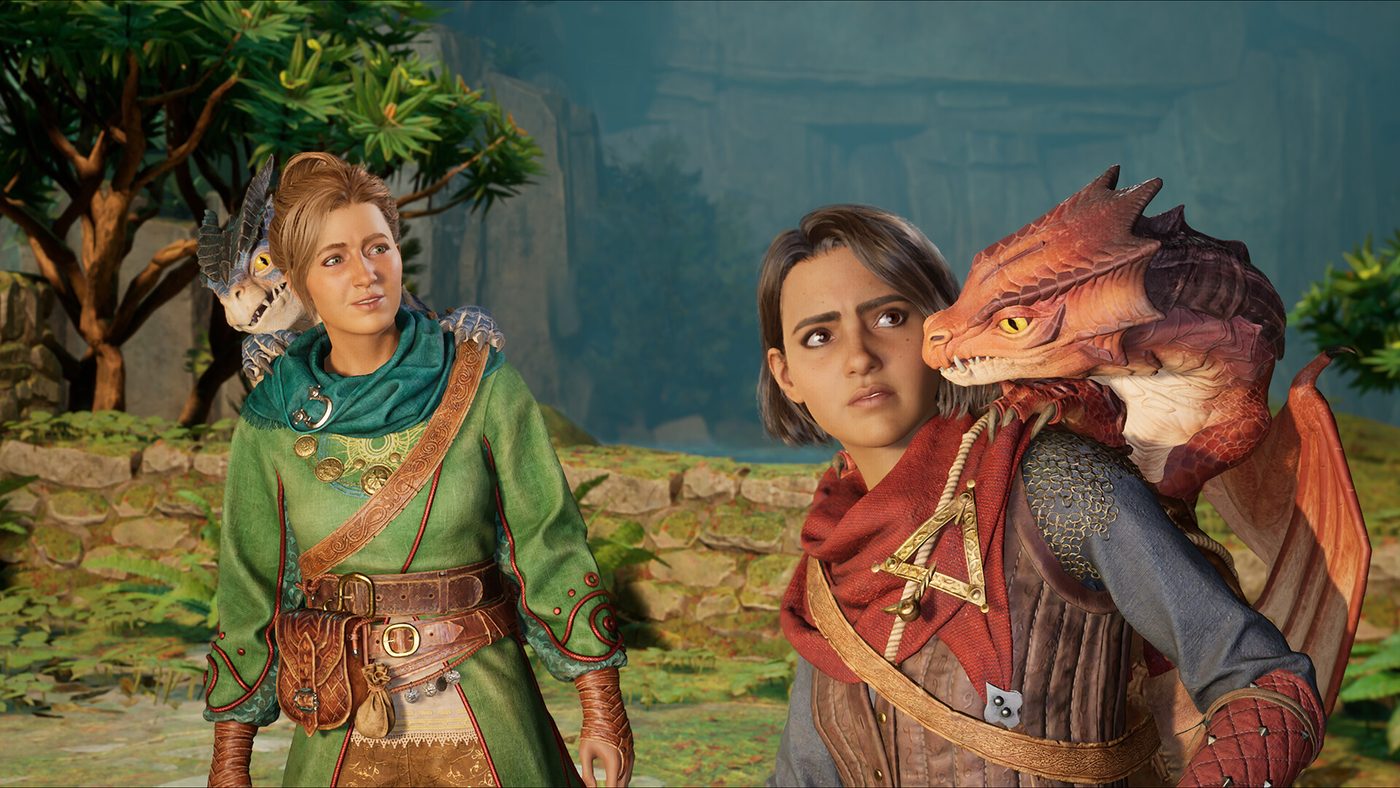
Sound was one of my favourite parts of the game. It felt exceptionally lively and believable even when the setting was entirely imaginary. Environmental audio and action effects give weight to what happens on screen, so the busy sequences have more to draw on than visual spectacle alone.
The music follows the changing worlds and supports the different moods of action and quieter passages. Its strength is what it adds while playing, rather than depending on a single theme memorable enough to name afterward. The voice performances also keep the protagonists engaging when their dialogue is less convincing, helping familiar story beats retain some emotional appeal.
PC performance keeps the adventure moving
I did not encounter lag or stuttering that interfered with my completed PC playthrough. That matters in a game regularly asking for precise jumps and quick cooperation. When we failed, I could focus on our inputs and teamwork instead of wondering whether the computer had interrupted an action.
This observation is not a measured framerate benchmark or a guarantee for every PC configuration. On the computer I used, however, performance was not a compromise I had to make to enjoy the adventure. Nearby checkpoints and fast respawns also kept retries moving, especially during the final stretch where we failed repeatedly.
One purchase for a shared adventure
The main adventure offers considerable mechanical variety, while optional Side Stories draw on unfinished ideas from Mio and Zoe's writing. They let Hazelight explore stranger situations without stretching a full main chapter around every idea. Their role is to add surprises rather than simply increase the number of objectives on a checklist.
Switching characters is a reason to return, as is finding optional paths missed the first time. But hours alone are not my main reason to recommend the purchase. The value of this playthrough was sharing a complete adventure with my girlfriend. If you need something to play alone whenever you have a spare evening, Split Fiction cannot fill that role.
The standard edition was listed at 899,000 VND on Steam Vietnam when checked on October 16, 2026. Friend's Pass lets an owner invite a second player to the full adventure without buying another copy. You can play on the same machine or online, with cross-platform play supported. Steam does not list Vietnamese, so players interested in following the story should consider their comfort with one of the supported languages.
Verdict
Split Fiction is one of the games I would readily recommend playing with someone close to you. Different character abilities and changing level mechanics give both players a meaningful role, while excellent visuals and sound make its worlds inviting throughout. The story is predictable and the final stretch asks for patience, but the pleasure of working through those challenges together outweighs the frustration. For me, its greatest value was having a complete adventure to share.
Cooperation that stays inventive
Changing abilities, excellent audiovisual design and smooth PC play make a rewarding adventure for two, despite predictable plotting and demanding final challenges.
Recommendation: Buy now if you have someone keen to play through the adventure with you. Both players need patience for the harder final sections.
Reviewed on PC after completing the main story with my girlfriend. Performance impressions concern the PC used for this playthrough. No major story or ending spoilers.
Sources: previous review supplied by the author, EA: cooperative play and Friend’s Pass, Steam Vietnam: price and languages.
Images: Electronic Arts / Hazelight Studios. Official promotional images.