In-Depth · Design & Craft · Light spoilers (up to the Mask of Truth reward)
The mask quest in The Legend of Zelda: Ocarina of Time looks like a delivery job, yet three of its four deals barely earn anything. In OtaHub’s reading, its real reward is a reason to go back and read the NPCs you have already met. This piece looks at how that design works and where it weakens.
Quick context before the argument
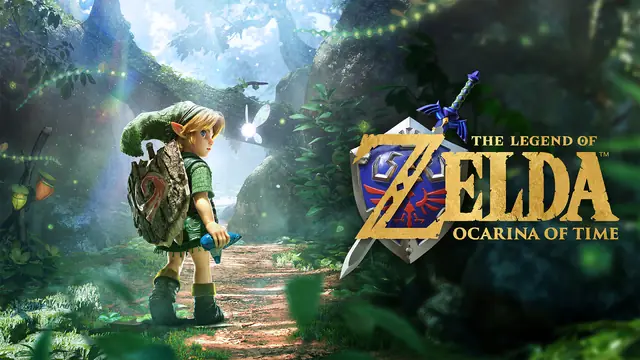
- Version covered: the remake on Nintendo Switch 2, exclusive to the console. Nintendo’s official page describes overhauled visuals, orchestral music, voice acting and expanded cutscenes.
- The quest: borrow a mask from the Happy Mask Shop, sell it to the right NPC, return to repay the loan, and only then borrow the next mask. It can only be done while Link is a child.
- Sources: this piece relies on Nintendo’s page and guides to the remake. OtaHub has not played the whole chain itself, so it does not describe the feel of playing it as if it had.
How does the quest work?
The shop sits in the Market of Hyrule Castle Town and only opens during the day. If the shelves are empty, you show Princess Zelda’s Letter to the gate guard at Kakariko Village. He is also the first buyer: he wants the Keaton Mask for his son.
The chain has four masks. The Keaton Mask costs 10 Rupees to borrow and sells to the Kakariko guard for 15. The Skull Mask costs 20 and sells to the Skull Kid in the Lost Woods for just 10. The Spooky Mask costs 30 and sells to the boy in the Kakariko Graveyard, and according to most guides breaks even. The Bunny Hood costs 50 and sells to the Running Man in Hyrule Field. After repaying all four, you can borrow the Mask of Truth and three other masks for free.
The key detail is that you must repay the loan even when you take a loss. No deal can be skipped to move on.
If it is not about money, what are the deals for?
Look at the numbers. The first deal earns 5 Rupees. The second loses 10, so you need Rupees on hand to cover it. The third breaks even. Only the Bunny Hood is significant, and even that figure is unclear: according to one guide, in the original the Running Man paid enough to fill your wallet, while in the remake he pays one Gold Rupee worth 200. Guides disagree on the conditions and the amount, so this piece does not fix that number.
The design tells players that money is not the main point. The bigger reward lies elsewhere: you are forced to go see people you have already met. The guard, the Skull Kid and the graveyard boy are NPCs already in the world, not new characters built just for a side quest. The game reuses them and turns each into a link in the chain.
This is what OtaHub finds smartest about it. A side quest that only asks you to kill more monsters adds work to the journey. The mask quest does the opposite: it changes how you look at places you have already passed through.
Why leave players to find the buyers themselves?
According to guides, the shop hands you a mask but does not point the way. You have to remember dialogue, guess whom each mask suits, then go to the right place. The Skull Kid, for instance, asks you to play Saria’s Song before he will buy. The Running Man circles the ranch by day and only rests at night, so players can use the Sun’s Song to move to night.
Those small requirements make players reuse skills and knowledge the game has already taught. The quest teaches nothing new. It tests whether you have really been looking at the world. That is a reward for attention, and it suits a game with a dense world.
What does the final reward say?
After repaying all four masks, you receive the Mask of Truth, Goron Mask, Zora Mask and Gerudo Mask. The Mask of Truth lets you hear Gossip Stones, the stones scattered around Hyrule that usually share rumors and hints about the world. The other three do not grant combat skills but change how some NPCs react.
Two things stand out. The reward does not make Link stronger. It gives him more reasons to talk to stones and people. The game pays for attention with more to pay attention to, rather than with a number on a stat sheet.
The other side: where is the design weak?
Three weaknesses are worth naming.
First, it is easy to break with a guide. Searching “who buys the Skull Mask” removes the guessing. The quest becomes a chain of running back and forth, the very thing it tries to avoid.
Second, it relies on players remembering dialogue from long before. New players, or players returning after months, may have forgotten everything NPCs once said.
Third, the figures are unstable across sources and versions. The Spooky Mask is listed as breaking even in many guides, but one guide lists 50 Rupees. The Bunny Hood differs between the original and the remake. This does not undo the argument, because the argument does not rest on profit, but it is a reminder to read this piece alongside the game itself.
In short: why does it still work?
The mask quest in Ocarina of Time works not because of its payout. The first three deals barely earn anything, and the Bunny Hood is the biggest prize but its amount is unclear. It works because it turns travel into a reason to look closely at Hyrule again, using NPCs already there and deals that make you pay attention. Its weakness is its dependence on not looking up a guide and on the player’s memory. This conclusion covers only the design of the quest chain, not the whole game or how a new player would feel.
When can you do the mask trading quest in Ocarina of Time?
According to guides, only while Link is a child. If the shop is empty, show Princess Zelda’s Letter to the gate guard at Kakariko Village to open the way.
What do you get for finishing the mask chain?
After repaying all four masks, you get the Mask of Truth for hearing Gossip Stones. The shop also lends the Goron Mask, Zora Mask and Gerudo Mask, which change how NPCs react.
Which version of the game does this piece cover?
It covers the remake on Nintendo Switch 2. Some figures from the original differ from the remake, so the piece keeps only the figures guides agree on and flags where sources differ.
Sources: The Legend of Zelda: Ocarina of Time page on the Nintendo Store (Switch 2 version, game description, image); games.gg’s guide to masks and prices in the remake (opening the shop, borrow prices, buyers, differences from the original); finalboss.io’s Switch 2 mask trading guide (buyers, conditions, Mask of Truth). Price figures come from guides and were not checked directly in the game. Checked on November 17, 2026.