Naruto Uzumaki first showed up in Weekly Shonen Jump in 1999 as an orphaned kid the entire village of Konoha kept at arm's length, because he carried the Nine-Tailed Fox sealed inside him. More than twenty years later, with the manga long finished and Boruto carrying the story forward, Naruto is still the name that comes up whenever persistence gets discussed in pop culture. Not because he was the strongest, but because of how he got there.
Naruto's official birthday in the story is October 10, and every year around that date international fans revisit his arc as a kind of personal check-in. Here are 5 lessons pulled from the most pivotal moments of that journey, for readers well beyond just Naruto fans.
1. How many times you fall doesn't matter — whether you get back up does
Naruto was never the prodigy type. He learned slower than his classmates, failed the Academy graduation exam three times, and for most of the original Naruto series lagged noticeably behind Sasuke. What set him apart was never raw talent — it was refusing to treat a single failure as a stopping point.
His hardest test came during the Pain arc in Shippuden: Konoha was leveled in minutes, people he knew were left for dead, and Jiraiya — the mentor who'd taught him the most — had already died trying to bring back intel on Akatsuki. Instead of letting that grief swallow him, Naruto poured it into finishing the Sage Mode training Jiraiya never got to complete, then came back to face Pain not with hatred but with the exact lesson his teacher had left behind. That's the real difference between "trying" and "persisting": trying is an action, persisting is choosing to keep taking that action after every reason to quit has already shown up.
2. Where you come from isn't a life sentence
Before audiences knew who Naruto was, the people of Konoha had already decided what he was: a stand-in for the Nine-Tails that had devastated the village the night he was born. Other kids were told not to play with him, adults whispered when he walked by, and no one bothered explaining what "jinchuriki" even meant to a child too young to understand it. That's a specific kind of isolation — one rooted in what he was born as, not anything he ever did, something he never got a say in.
Plenty of characters in similar situations turn toward resentment, and Naruto himself came close more than once. But he never let the monster sealed inside him define who he was. If anything, the experience of being shut out became the thing that let him recognize when someone else was going through the same thing. Where you start doesn't disappear, but it doesn't have to be how your story ends either.
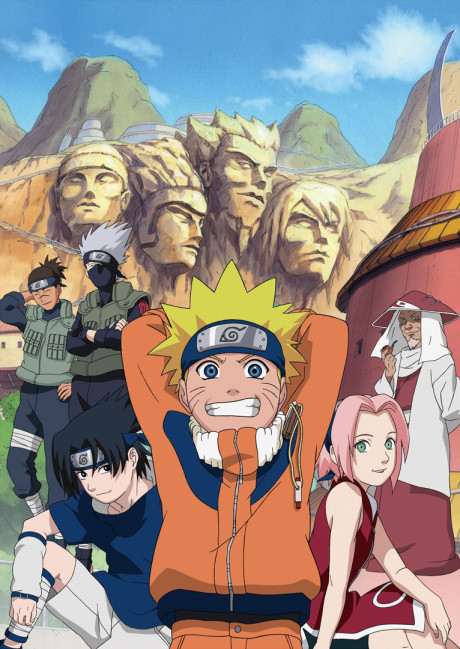
3. You can be strong alone, but you won't get far that way
Before meeting Iruka — the first adult to treat him with kindness instead of suspicion — Naruto lived almost entirely on his own. Team 7, alongside Sasuke, Sakura and Kakashi, was the first place he actually learned what belonging to something felt like, even though the three of them barely got along at first.
Kakashi once told his students a line that ends up carrying the whole series: "Those who break the rules are scum, but those who abandon their friends are worse than scum." Naruto took that completely to heart, and it's the reason he spent dozens of episodes chasing after Sasuke even after Sasuke betrayed the village and repeatedly tried to kill him. To Naruto, a bond that had actually meant something wasn't something you threw away the moment it got hard.

4. Understanding someone's pain hits harder than any attack
Naruto's greatest strength was never his chakra reserves — it was his ability to see the wound behind someone who should have just been an enemy. Gaara, another jinchuriki who'd been cast out by his own village even more brutally than Naruto, changed completely after one short conversation, not because he lost a fight but because someone finally understood what he'd actually been through.
At the peak of the Pain arc, instead of finishing off Nagato the moment he had the chance, Naruto chose to stop and listen to the reasoning trapped inside the cycle of violence Nagato had built his life around. The result wasn't a military victory — it was one of the series' most dangerous villains choosing to sacrifice himself to bring back the people he'd killed. That's the moment the story makes its clearest point: understanding someone doesn't mean excusing everything they've done, but it can open a resolution that pure force never could.
5. A dream people laugh at is still worth chasing
Naruto's declaration in the very first episodes — "I'm going to become Hokage" — was almost always met with laughter. From a kid the entire village avoided, it sounded more like a punchline than an actual goal. But to Naruto, Hokage was never just a title. It was the only way he could think of to force the people who'd turned their backs on him to finally look at him differently.
Getting there took up nearly the entire series: hundreds of episodes, more near-death battles than anyone could count, and plenty of moments where even his own allies doubted he'd make it. When Naruto finally became the Seventh Hokage, it didn't land as a twist — it landed as the payoff of a promise he never let himself forget, even when the whole world once treated it as a joke.

Why these lessons still hold up
Naruto was never built as a story about teaching lessons, and the series itself never really tried to act like one. But because its lead was never written to be flawless — impulsive, slow to learn, failing repeatedly before finally getting it right — his journey is easy to see pieces of yourself in. That's probably why a shonen series that started at the end of the last century still gets brought back up every year, not just within anime circles but in places that have never watched a single episode.
Based on Naruto and Naruto: Shippuden by Masashi Kishimoto, written from OtaHub's own perspective. Current as of September 29, 2026.