Genshin Impact is at its most appealing when a quest leads me somewhere I had not planned to go. A chest on a mountainside makes me look for a route up. An unfamiliar mechanism has me changing characters to see whether an ability will help. Teyvat keeps offering reasons to leave the direct path, with the pleasure of working something out accompanying the loot.
Combat encourages that curiosity too, through the skills of four characters working together. Exploring freely and developing a party freely are different things, however. I can spend another evening climbing or solving puzzles, while character progression depends on materials and resources that replenish over time. That tension runs through Genshin: an inviting adventure sharing space with restrictions that can make building a team frustrating.
Finding a route and building a party
Climbing, swimming and gliding make terrain part of the adventure. Stamina limits how far you can travel without stopping, so spotting a summit does not automatically mean you can climb straight towards it. Finding a resting point or approaching from another direction gives the journey decisions of its own. The landscape becomes more than a distance between quest markers.
I particularly like how an activity can lead into another. A visible chest may turn out to sit behind a puzzle, while following a Seelie can take you somewhere you had not intended to visit. These distractions repeatedly pulled me away from my original objective. The loot matters, but working out a route or solving a mechanism provides a reward of its own.
Character abilities also influence travel. Kaeya can freeze water with his Cryo skill, offering a way across stretches that would be harder to swim. Venti can create wind currents to help gain height. A new party member can therefore change how you explore, rather than simply adding another damage option.
In battle, one character is active at a time, with quick switching between four party members. Their skills become more interesting when used together to cause elemental reactions. Applying Hydro to an enemy and following with Electro, for example, creates Electro-Charged. Choosing who applies an element and when to change characters matters alongside individual statistics.
That leaves plenty of room to experiment. A useful combination still needs suitable characters, equipment and upgrades, though. Discovering new possibilities was exciting early on, while the investment needed to develop more party members gradually slowed the process. The freedom to imagine another team is greater than the freedom to build it immediately.
The world is more inviting than its storytelling
The premise is easy to follow. The Traveler is separated from their twin and searches for them across Teyvat, where regions are connected to different gods and elements. Paimon accompanies the journey, and the people you meet gradually broaden your understanding of the world. There is a clear long-term objective linking its destinations.
The early storytelling often wanders away from that search. Conversations spend too long explaining terminology, while successive errands delay progress towards the central goal. Some characters remain enjoyable company, but following the dialogue and quest directions is less consistently engaging than investigating the surrounding landscape.
The world gives me reasons to continue even when the narrative slows down. Its structures, terrain and creatures suggest stories beyond the immediate quest. That curiosity is a strength, although an intriguing setting does not entirely make up for lengthy conversations or unfocused pacing.
Art and music make the journey appealing
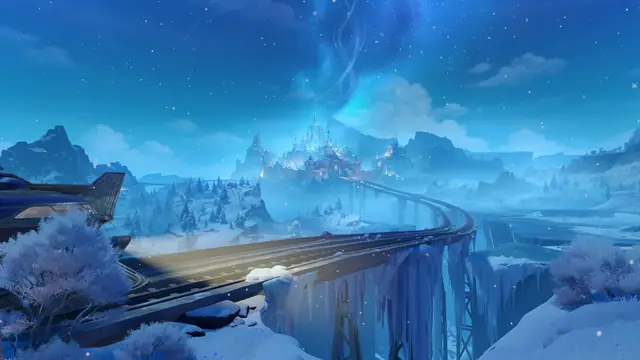
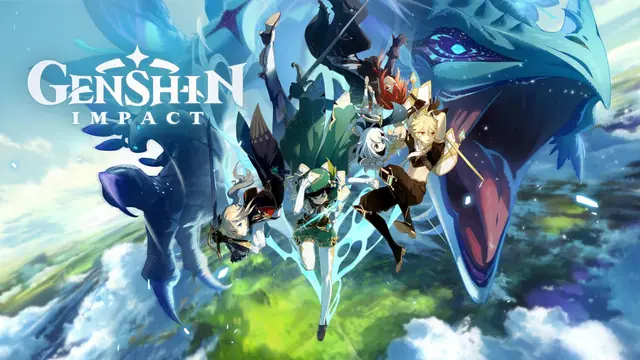
The anime aesthetic suits Teyvat’s open spaces and colour. Mondstadt’s grasslands and Liyue’s stone peaks have clearly different identities. From high ground, a structure or a distinctive part of the landscape can become the next place you want to visit. The presentation encourages exploration instead of serving only as a backdrop for screenshots.
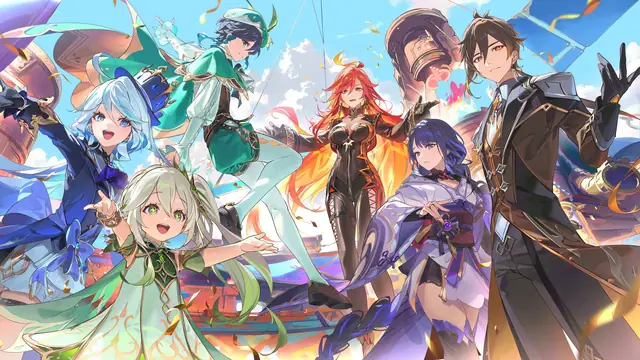
Character designs and elemental effects also make changing a party visually engaging. Reactions bring their own movement and colour to a fight. Genshin does not need every surface to look photorealistic to create an appealing world. Its use of colour and the arrangement of the landscape leave a stronger impression.
Music is part of what I enjoy about travelling through Teyvat. It gives quiet stretches of exploration an atmosphere, then shifts towards the action during encounters. The combination of scenery and sound makes continuing across the world appealing even when I am not pursuing a particular reward.
Voice acting gives characters personality, although exaggerated delivery occasionally makes the dialogue less natural. That is a smaller reservation than the overall appeal of the audio, but it matters in a game with substantial conversation. Music can make a location more inviting, while a lengthy exchange can still leave me wanting to return to exploration.
Loading can interrupt the adventure
Around launch, Genshin generally ran well in this experience. On PS4 and mobile, however, the character sometimes arrived at a fast-travel destination before the surroundings had finished loading. Those waits were noticeable against the otherwise inviting freedom of movement and briefly interrupted the journey.
These observations concern the early release. Anyone starting today should check the official store requirements and choose settings suited to their device. Since Genshin is free to start, trying the opening is a practical way to assess performance and controls on the hardware you actually intend to use.
A tempting party takes time to build
The free download lets you begin exploring without first committing money. Quests, puzzles, chests and encounters make the adventure appealing in its own right. Rare characters are not a requirement for enjoying every activity, particularly when much of the pleasure comes from finding routes and experimenting with elemental combinations.
Wishes are more likely to create a temptation to spend. The system offers randomised characters and weapons rather than an immediate guarantee of the particular one you want. If exploration rewards become only a calculation of how many pulls you still need, travelling can turn into a pursuit of the next character.
Party development also depends on materials and Original Resin, a resource that regenerates over time and is used to claim rewards from certain activities. Running out does not lock you out of the whole game, but it slows access to those upgrade rewards. That is where the opening’s freedom encounters a more constrained pace, especially when developing several characters.
I find Genshin most worthwhile without treating every activity as a fixed schedule. Prioritising a few characters, saving resources for clear goals and leaving time to explore feels more comfortable. When the recurring activities are no longer enjoyable, a break makes more sense than logging in solely out of fear of missing something.
Verdict
Genshin Impact makes exploration and combat enjoyable before owning another rare character becomes a consideration. Its scenery and music encourage me to keep travelling, while elemental reactions offer plenty to try in battle. Lengthy dialogue and resource restrictions hold it back, particularly when developing a broader party. I enjoy it most when following my curiosity rather than treating each session as a checklist for the next set of wishes.
A rewarding world with restrictive progression
Exploration, elemental combat and an excellent audiovisual identity carry the adventure, despite lengthy dialogue and limits on party development.
Recommendation: Worth playing if you enjoy exploration and experimenting with elemental combinations. Start free and decide on a spending limit before buying wishes.
This review covers early exploration and combat in Mondstadt and Liyue. Technical impressions concern PS4 and mobile around launch, rather than current-version performance. It does not evaluate Snezhnaya or version 7.0.
Sources: previous review supplied by the author, Epic Games Store: price and languages, miHoYo on PlayStation Blog.
Images: HoYoverse / PlayStation Blog.