The Elder Scrolls IV: Oblivion Remastered officially launched on Nintendo Switch 2 on August 11, marking the first time any version of Oblivion has appeared on a Nintendo console.
Bethesda confirmed the release date on June 30 alongside a new live-action trailer. The Switch 2 version costs $49.99 for the standard digital edition, while the boxed Deluxe Edition at $59.99 ships with all of its content on the cartridge, with no extra download needed. Both editions include the full set of original DLC, such as Shivering Isles and Knights of the Nine.
Graphics performance and resolution on Switch 2
On the technical side, the game renders at 1080p when docked (from a native resolution of 960x540 via DLSS) and 900p in handheld mode (rendered from 800x450), locked to 30 frames per second in both modes. According to a Digital Foundry analysis published in mid-August, frame times fluctuate unpredictably between 16ms and 50ms whenever the camera turns or the player moves through open-world areas dense with objects, although handheld mode was more stable than docked for most of the playtime. Environmental detail has also been cut back compared with the PC, PS5 and Xbox Series versions.
Why is the native resolution so low? Oblivion Remastered uses smart rendering technology (upscaling such as DLSS) to scale an image rendered at a low resolution up to a higher display resolution, a technique that is increasingly common on consoles to balance image quality against limited hardware performance. For an open-world game heavy on environmental detail like Oblivion, the fact that the Switch 2, with considerably weaker hardware than the PS5 and Xbox Series, can still run the full remaster, even with reduced rendering resolution and some trimmed detail, shows how well modern upscaling tools can optimize a game.
Early impressions and the open-world experience
Despite the frame-rate stutter in some outdoor areas, early reviews such as Nintendo Life's still rate this as a decent port of one of Bethesda's classic RPGs, especially for people who want to explore Cyrodiil while on the move.
OtaHub's take
Frame times that fluctuate when the camera turns or when moving through object-heavy areas are a notable limitation for anyone who puts smooth performance first. But given that this is the first AAA open-world game of this scale to run on Switch 2, these technical compromises are understandable. For players who prioritize portability, playing Cyrodiil on a train, a bus or in bed, the resolution and frame-stability limits may be acceptable in exchange for carrying a large open-world RPG with you.
You can find more on OtaHub's latest news and Gaming pages.
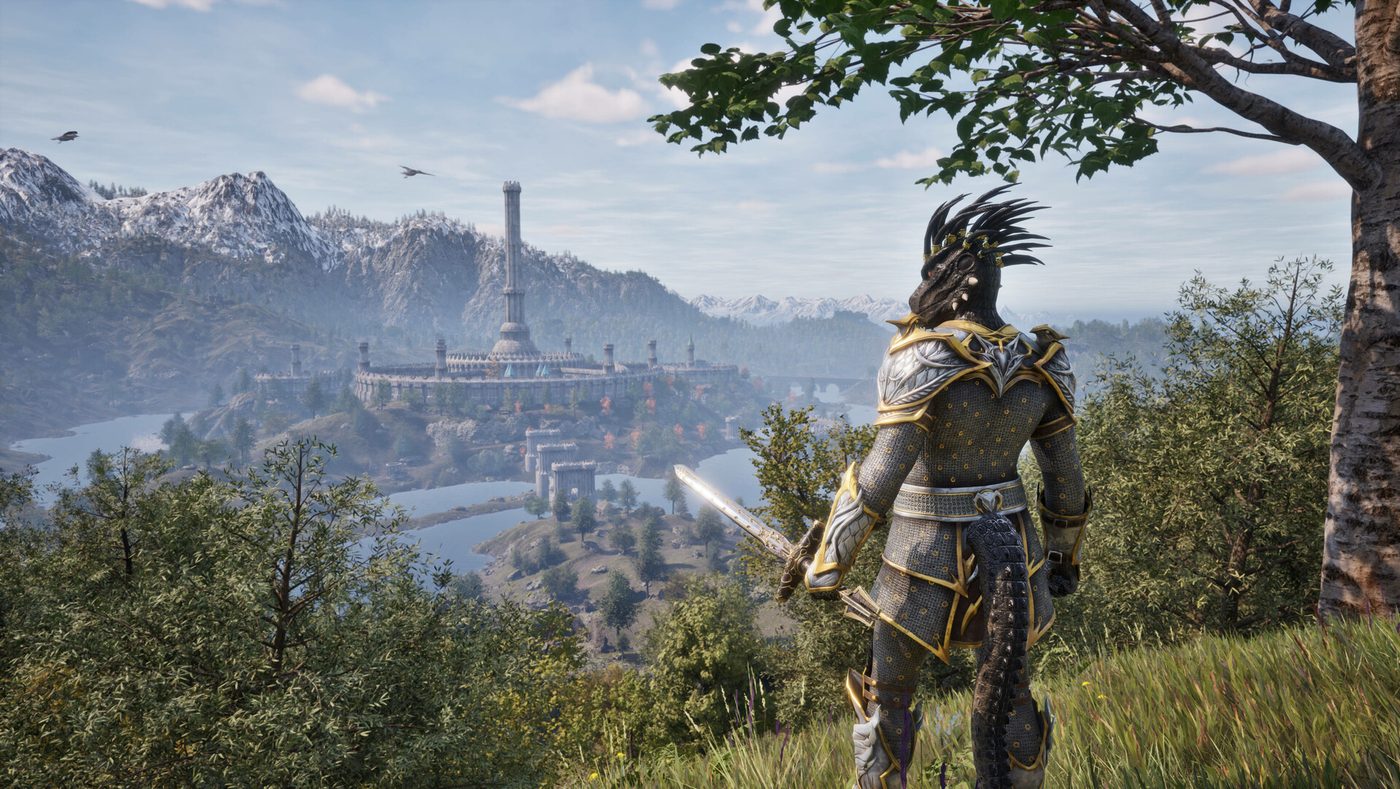
Source: Nintendo.