Blue Protocol: Star Resonance makes a strong first impression through its character creator. Mixing hairstyles, choosing colors and previewing outfits can be engaging before the adventure even begins. That introduction suggests an online RPG where building a personal identity will be as appealing as exploring alongside other players.
The question becomes less flattering once the daily routine takes over. Are the activities enjoyable enough to make another login worthwhile? In the version before Season 2, interesting class choices compete with restricted progression and repetitive content. Its attractive presentation establishes expectations that the adventure does not consistently meet.
Character creation is the clearest attraction
Hairstyles can be assembled from separate parts instead of selected as complete presets. Base colors, gradients and highlights provide further control. Two characters starting from a similar face can therefore develop distinct appearances without relying on a single dramatic accessory.
Facial options are less extensive, though there is still room for adjustments. Body sliders and outfit previews expand the possibilities, while clothing dyes help tie the design together. That matters in an MMO because the avatar remains the player's visible identity through repeated quests and social encounters.
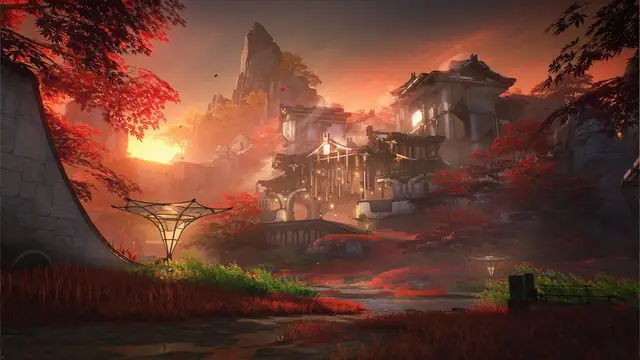
The anime art direction continues to provide an appealing identity outside the creator. It makes the opening stretch inviting and gives exploration an immediate visual reward. However, attractive surroundings cannot indefinitely disguise repetitive objectives. Once the same actions become routine, presentation has already done most of the work it can do.

Classes offer more interest than the opening quests
The eight starting classes cover familiar tank, healer and damage roles, but their presentation adds personality. Beat Performer uses a guitar and melodies to support allies, giving a familiar party function a more distinctive expression. Choosing a class can consequently involve more than deciding between a melee weapon and a spell.
Two specializations for each class add another layer. Stormblade's Iaido Slash approach builds Thunder Sigils toward a major burst, whereas Moonstrike spends them periodically on a special ability. Different rhythms for the same resource give players something meaningful to consider beyond an increase in damage numbers.
The early campaign rarely makes full use of that potential. Much of it consists of moving to a designated location, speaking to someone and clearing enemies that offer little resistance. Class design suggests an interesting system to learn, yet the initial encounters provide limited pressure to understand it.
Automatic travel has a practical use when vertically arranged spaces make a route difficult to read. Nevertheless, combining automated navigation with customizable automatic attacks weakens the sense of directly participating. Players who value finding their own routes and learning combat through practice may find that convenience comes at a substantial cost to involvement.
A slow story struggles to build momentum
Airona directs much of the opening activity. The protagonist carries out her requests to repay a debt, creating a succession of small errands. That structure can support a lighter introduction, but the relationship does not make the simple objectives compelling enough on its own.
A larger threat eventually gives the adventure broader stakes. The difficulty is how little the player's participation changes alongside that escalation. Walking somewhere, listening to dialogue and defeating another small group of enemies rarely communicates the importance that the story wants its events to carry.
Daily progression restrictions further interrupt the momentum. Wanting to continue is not always enough to access the most effective next step. A narrative that already struggles to generate urgency has an even harder time maintaining attention when the schedule dictates a break.
Sound and the PC experience are satisfactory
Sound was satisfactory during this playthrough. It met the author’s general expectations without becoming as clear an attraction as the visual design. It is a serviceable part of the experience rather than a reason to place the game alongside the strongest examples of musical presentation in the genre.
The author's PC experience was also satisfactory. The technical side met expectations well enough to keep playing. Progression and repetitive activities were more significant concerns than performance in this PC playthrough.
Satisfactory performance does not prevent interruptions to the flow of a session. Having to wait for the next progression unlock is a different frustration from stuttering or a slow load. For someone who usually sets aside one long evening to play, the progression schedule is the more important consideration here.
Repeated endgame runs and spending systems weaken the value
Goblin Lair and Dark Mist Fortress provide conventional dungeon runs, while Stimen Vaults asks players to advance through floors against a timer. These activities establish goals beyond the opening quests. Repeating them for equipment slots, however, becomes less appealing when combat does not change enough to make another run feel substantially different.
The currency problem deserves more precision than simply counting the number of tokens. Luno supports in-game activities, while Rose Orbs are tied to purchases. Bound and unbound versions impose different permissions, so two similar-looking balances may not offer the same practical choices. Earning more currency is not automatically equivalent to gaining more freedom.
The shop and monthly pass also introduce trading benefits and conveniences that complicate the free-to-play proposition. What matters is not merely the size of a reward but what can actually be done with it. Anyone considering a lasting commitment should understand those distinctions before spending.
Daily restrictions may fit players who prefer a short session followed by a break. They are less welcoming to someone with one long evening available to progress. Combined with repetitive endgame objectives, this structure can make logging in on schedule seem more important than enjoying the time a player has chosen to set aside.
Verdict
Blue Protocol: Star Resonance is worth a look for its anime presentation and expressive character creator. Class specializations provide interesting possibilities, and the PC experience was satisfactory. Yet simple quests, scheduled progression and repetitive endgame activities limit the appeal of a long-term commitment. Its strongest features encourage an initial visit more effectively than they justify returning every day.
An inviting world with limited lasting appeal
Character creation and visuals outshine the quest design. Satisfactory PC performance and sound do not resolve daily gates or repetitive endgame content.
OtaHub recommendation: Try it if it suits you. Best suited to players who enjoy anime character creation and shorter sessions.
Review scope: PC before Season 2, using the author’s playthrough and supplied article. Season 2 and mobile performance are outside this review.
Author material: Blue Protocol: Star Resonance Review (28/10/2025). Product information: Steam.
Image credit: Steam.