The opening fights gave me high hopes for Wuthering Waves, Kuro Games’ open-world action RPG. You watch an opponent, dodge at the right moment, counter, then swap between three characters to chain their skills. Handling a dangerous moment yourself feels far more involving than pressing moves as their cooldowns expire.
Unfortunately, the stretches between the fun fights got in the way. Long conversations, tutorials for simple tasks and constant errands kept interrupting the action. The game has a combat system worth learning, but rarely lets you enjoy it at your own pace.
The strongest ideas are in battle
Picture a boss throwing attack after attack at you. You dodge, parry and look for an opening. Each Resonator, the game’s name for its playable characters, has its own abilities, and a party of three lets you swap characters mid-fight. Swap at the right moment and the character coming in uses a skill, and the one leaving triggers one too, so the order of your swaps changes how strong the whole team is. I like that a fight asks you to watch more than cooldown timers, especially when an enemy pressures you so much that a rehearsed combo becomes hard to land.
Dodging and parrying make the fights most engaging. You have to recognise an incoming attack and respond, rather than leaning on strong gear to soak up damage. Once you know a boss, its openings become easier to spot, and sharper reactions make a real difference. That is the part of Wuthering Waves that made me want to keep learning.
Support characters matter too: with a healer or a buffer, the team loses its rhythm less often than a team of pure damage dealers. Echoes, which characters equip after you collect them from defeated enemies, add skills of their own and widen your options.
That depth needs good encounters to show itself. After an exciting opening battle, the game spends too long on less demanding activities. The problem is how the content is spread out, not the combat system.
The introduction makes it hard to care
Take the opening. Rover, the main character, awakens in a world that has just survived a major disaster and starts investigating their own identity. The enemies are strange creatures, along with phenomena tied to resonance, the power the Resonators use. As an idea, the setting is intriguing enough. But the opening explains for so long that I had barely started to care about the people involved before more jargon arrived.
Conversations are often longer than they are worth. After an important piece of worldbuilding, the game can switch to a chat about favourite food or a long exchange about a simple task.
Skipping dialogue is also inconsistent in this early version. Some passages let you skip, while others make you wait for a character to finish speaking before moving on. When you have finished reading and still have to wait, the story feels restrictive. Heavy dialogue is fine, but it has to justify the time it asks for.
The cast did not build enough appeal to carry me through the impatience. The setting’s heavy sci-fi terminology gradually became something to memorise rather than a mystery I wanted to investigate.
A large setting without a strong personal connection
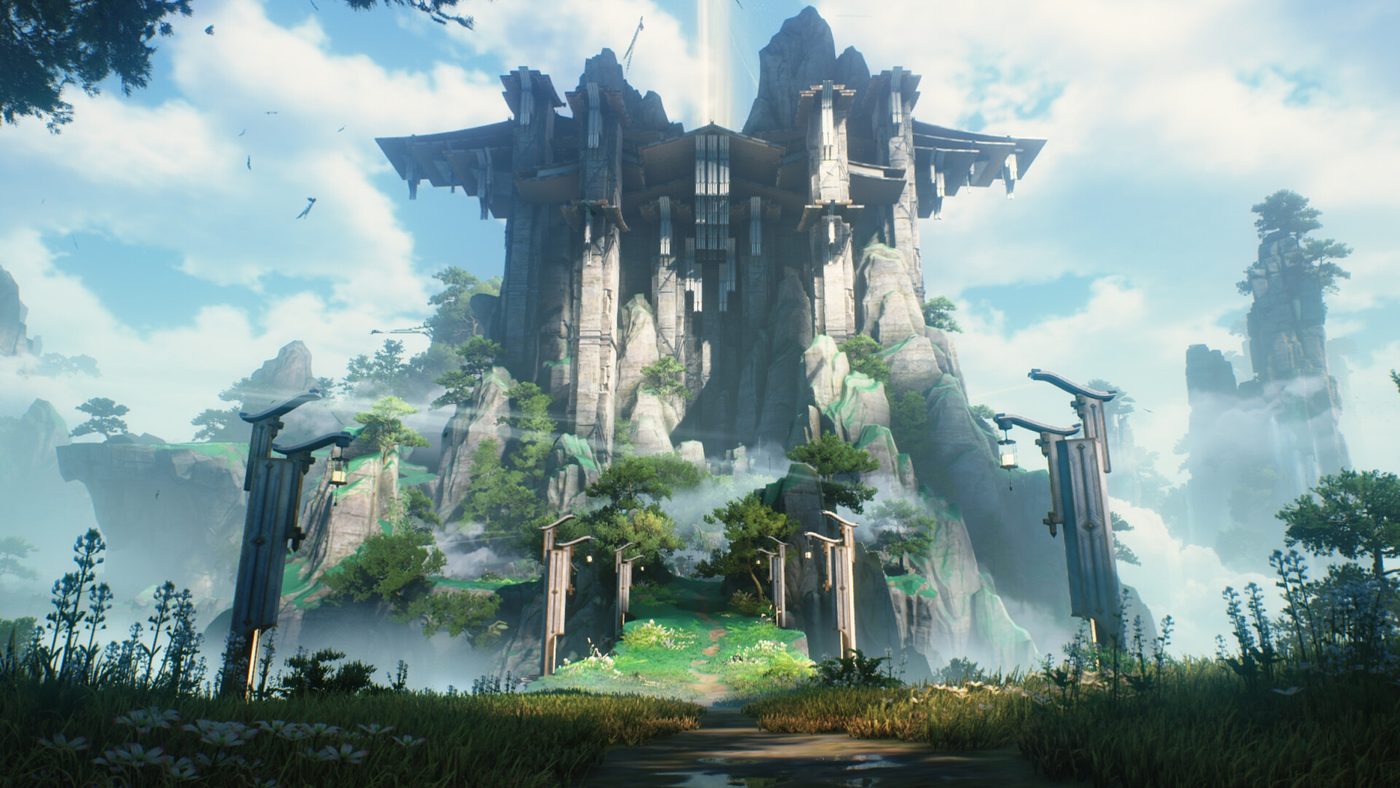
Large structures, cliffs and distant locations give the landscape scale, and you can spot them from afar and then work out how to reach them. Climbing, gliding and grappling make crossing the terrain easy, so exploration is not a chore even at the basic level.
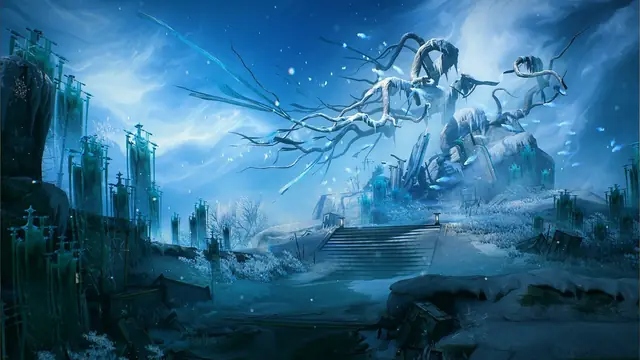
The scenery can look good in individual shots, like the stone structure on the mountaintop pictured below, but the journey as a whole never made me feel attached. Few small details made me stop to look.
As for sound, the music is decent and fits the world, but few melodies stayed with me afterwards. Sound effects serve combat better, giving attacks and counters clear feedback. The audio supports the action well, but it is not a reason to go back to exploring.
Challenges wait behind progression requirements
Think of the moment you just want to reach the more interesting content. Union Level, your account level, blocks the way. Some activities require a certain level, so you have to earn experience through quests and other challenges first. One type of challenge helps you level up, but it spends limited resources to give rewards. Once those run out, I had to go back to side quests and exploration to keep progressing.
The early endgame has three main modes: a run of enemy waves with limited attempts, so you need a broad roster; Tactical Hologram, which pits you against stronger versions of bosses; and a mode played in runs where you pick power-ups, so each run differs. The boss fights gave me the clearest reason to keep practising, because the dodging and parrying I enjoyed most shows up there.
They are not varied enough to make up for the repetition elsewhere. Even with a strong party, these three modes do not give you much new to look forward to. I wanted this combat in an adventure with fewer interruptions, not one that keeps pulling me back to farming materials.
The game is free to download and play, so you can try the combat without spending anything. Still, the character and weapon pulls affect which parties you can build. I would not pay just to ease the waiting, since another powerful character cannot necessarily fix those frustrations.
Smooth Android play on the device used
The game ran smoothly on my Android device. That matters when dodging, parrying and swapping all depend on timing, and performance was never the main obstacle.
My frustration came from quest pacing and progression limits, not from how the game runs. A fight can feel responsive while the stretch leading to the next one still kills the mood.
Verdict
Wuthering Waves is at its best when I can concentrate on fighting. Character switching, dodging and parrying form a system worth practising. But lengthy dialogue and progression restrictions undermine the early experience, and the world and characters did not give me a strong enough reason to accept its slower stretches. Action fans can try it free to see what the combat offers, but I did not find that strength sufficient to carry the whole adventure.
Combat deserves a better surrounding adventure
Responsive fighting and party-building are the highlights, while slow storytelling and progression restrictions limit the appeal of the early release.
Recommendation: Try it if it suits you and try the free combat before committing time or money to a broader party.
This review covers the Android release period in 2024. It discusses the opening story and early endgame, without major story spoilers. It does not assess version 3.7 or later regions.
Sources: MMORPG.com’s review, NoobFeed’s review, official store: pricing model and languages.
Images: Kuro Games. Official promotional images illustrating the setting.