Ghost of Tsushima gave Sucker Punch a strong foundation, but it also left its successor with a difficult question. Would a new protagonist and setting make another adventure built around the same activities feel worthwhile? Ghost of Yōtei keeps much of that familiar structure. You ride through open countryside, help people along the way and fight groups of enemies. What made me enjoy this installment more was the care put into those activities, particularly the combat and the freedom to explore Ezo at my own pace.
My affection for it grew as I played. Atsu’s revenge provided a reason to move forward, but there were also stretches when I preferred to leave the main quest alone and ride through flower fields, watching petals scatter in the wind. For someone who enjoys open-world action games, wanting to stay without an immediate objective says a great deal about the appeal of a place.
Atsu gives a familiar revenge story its weight
Set in Ezo in 1603, Yōtei follows Atsu as she returns to hunt the six people who murdered her family sixteen years earlier. The premise is familiar, and several developments are easy to anticipate. Nevertheless, I wanted to follow her because the game pays attention to who she is and how her purpose changes, rather than treating tragedy as a convenient excuse for the next fight.
Atsu makes choices I do not always agree with. Her stubbornness and flaws make her convincing, especially as new relationships begin to complicate the revenge she has built her life around. Those changes feel natural even when the broad direction is predictable. The story can also encourage sympathy for an enemy without making its violence feel weightless.
The supporting cast is less consistent, however, and the freedom to choose which target to pursue first comes at a cost. Some early branches run long enough to feel detached from the central narrative. Choosing a direction suits the open world, but it does not always help the story gather momentum. The ending fits Atsu’s development, although it plays things safely and left less of an impression than I had hoped.
More ways to turn a fight around
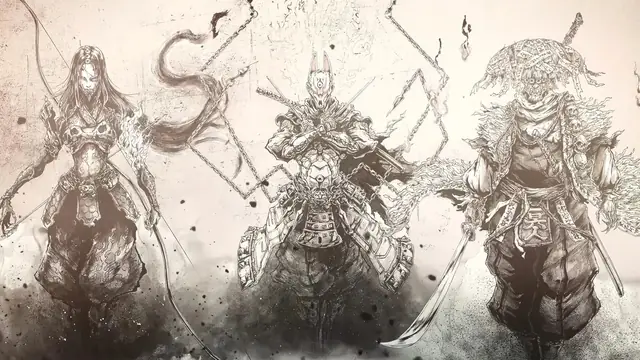
Combat repeatedly restored my enthusiasm whenever the story slowed. Dodging, blocking and parrying remain its foundation, so Tsushima players should settle in quickly. The meaningful change comes from Atsu’s weapons. Dual katana feel faster, the yari offers greater reach, and the ōdachi gives attacks a heavier rhythm. Switching between them changes how I manage distance and approach an opponent.
I prefer this to changing stances around a single katana. Weapons still have particular matchups, but their different handling makes the choice feel more personal than simply selecting the required answer. Kunai and weapons picked up during an encounter add further options when a fight stops going according to plan.
Disarming is an especially welcome addition because its risks work both ways. Atsu can knock an enemy’s weapon away, but a mistimed counter can leave her without her own. The wolf companion occasionally helps in dangerous situations like these, adding another way for an encounter to develop beyond a familiar sequence of counters.
Automatic targeting is the main frustration. When an attack goes toward a different enemy from the one I intended, it undermines the sense of control that the rest of the combat establishes. Losing in that situation feels worse than simply misreading an incoming strike. It is a noticeable flaw in a system that otherwise feels responsive and satisfying.
Ezo is beautiful in motion
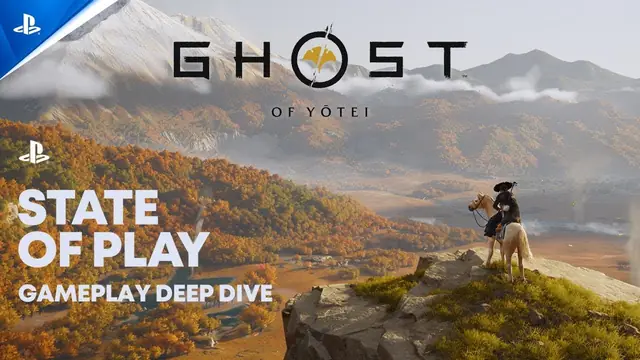
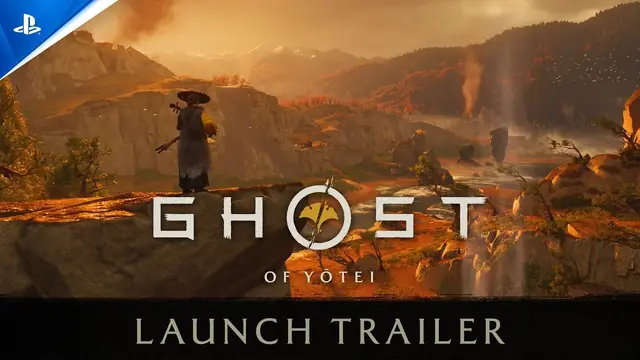
The visuals are Yōtei’s strongest feature for me. Colour, lighting and movement work together to make the countryside appealing during ordinary play. Riding through flowers as the wind carries petals across the screen often made me slow down rather than take the quickest route to a quest. The scenery contributes directly to the pleasure of travelling.
Cinematic framing gives important scenes a distinct atmosphere, although it occasionally makes action harder to see. A striking shot is less helpful when I need a clear view of an opponent. Those moments are frustrating precisely because the presentation is otherwise so accomplished.
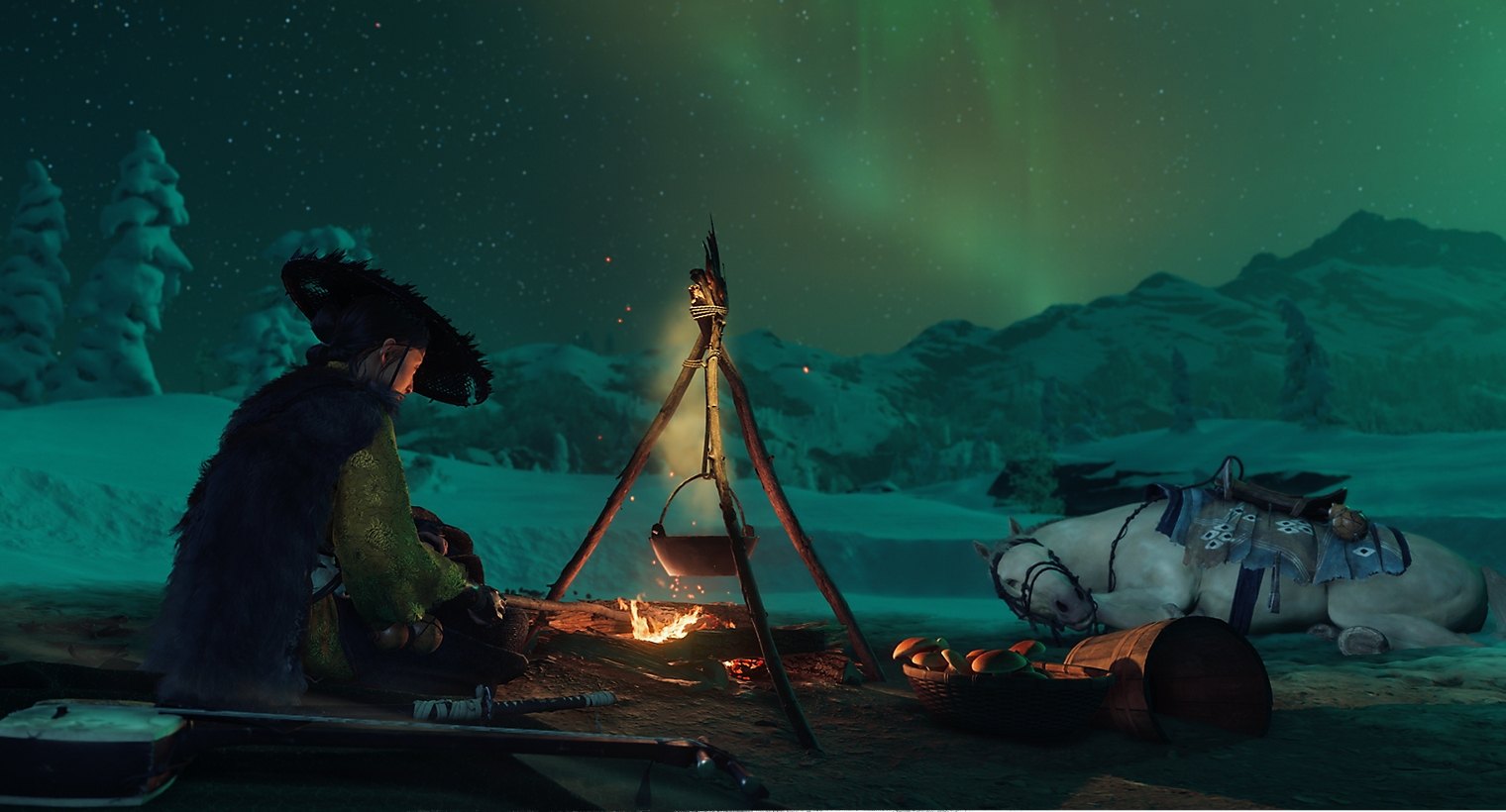
The soundtrack supports quiet travel and tense scenes well, though not every piece stayed with me afterward. Atsu’s shamisen songs are more memorable. Hearing the instrument through the controller speaker makes it feel close and distinct from background music playing through the television. The melodies associated with Atsu, the Wolf and Soma are particular favourites.
Audio provides a good emotional accompaniment, even if it does not impress me quite as much as the art direction. Options such as Watanabe mode’s lo-fi selection offer a different mood, but the number of modes is less important than how the regular soundtrack fits the journey. The quieter musical moments help Ezo feel like somewhere to spend time rather than a place that constantly pushes another task at you.
Comfortable performance on PS5
My completed playthrough on a standard PS5 was smooth, with responsive controls throughout the main story. That matters in a game which pairs detailed scenery with combat that demands quick reactions. I could enjoy a leisurely ride and move into a fight without performance becoming a distraction.
The camera and targeting problems remain relevant to how it feels to play, but they are separate from stuttering or sluggish performance. On the hardware I used, the technical experience was solid enough to keep my attention on exploring and fighting over many sessions.
A familiar world worth exploring
Freeing settlements, finding shrines, gathering resources and helping strangers remain central activities. Anyone tired of them in Tsushima is unlikely to find a radical change here. They worked for me because travelling and fighting were enjoyable, and the scenery made a detour inviting. I did not need to clear every icon to feel that an evening had been worthwhile.
Bounty hunting is a highlight. Tracking distinctive targets and facing them in duels gives these outings more personality than another generic map task. The Spider Lily General mythic tale is also worth seeking out for its haunting atmosphere and storytelling. Such quests make the optional content feel worthwhile beyond its upgrade rewards.
The standard edition launched with a suggested Vietnamese price of 1,799,000 VND. I consider the main game worth that price for players who enjoy open-world action and want to explore at their own pace. Its value comes from enjoyable sessions rather than a promised number of hours. Players seeking a brief adventure with relentless narrative momentum may feel differently. There is also no official Vietnamese language support, which matters for local players deciding how comfortably they can follow the dialogue.
Verdict
Ghost of Yōtei does not fundamentally reinvent Tsushima, but it improves enough of the experience to make this new journey worthwhile. Distinct weapons give combat more variety, Ezo remains inviting away from the main quest, and Atsu’s emotional development makes her worth following. Uneven pacing and unreliable targeting occasionally get in the way, yet neither outweighs the pleasure of playing. For me, this is an excellent sequel, particularly for anyone drawn to Sucker Punch’s approach to open-world adventure.
A beautifully refined adventure
Varied combat and an inviting Ezo make the journey rewarding, despite uneven story pacing and frustrating targeting.
Recommendation: Buy now if you enjoy open-world action and want time to explore Ezo.
Reviewed after completing the main story on a standard PS5. The score covers the main game, without multiplayer or expansion content. No major ending spoilers.
Sources: author-supplied previous review, PlayStation: characters and combat, PlayStation Southeast Asia: launch price.
Images: Sucker Punch Productions / PlayStation. Official promotional images.