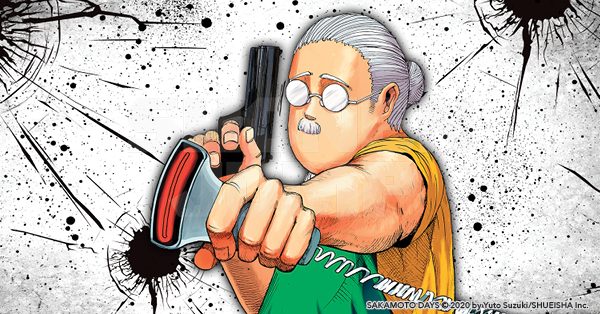
Sakamoto Days is an action-comedy manga by Yuto Suzuki, serialized in Shueisha's Weekly Shonen Jump since November 21, 2020. Its hero, Taro Sakamoto, was the greatest hitman in the underworld until he fell for a convenience store clerk, retired, and now runs a corner store several kilos heavier. The series has 28 volumes in Japan and more than 18 million copies in circulation. This Sakamoto Days manga review asks two things: does it live up to the reputation, and is now a good time to start? OtaHub reads it as a manga; TMS Entertainment's anime is only background here.
Sakamoto Days quick facts
| Item | Details |
|---|---|
| Author | Yuto Suzuki (story and art) |
| Publisher, magazine | Shueisha, Weekly Shonen Jump (Jump Comics) |
| Timeline | One-shot in Jump Giga in late 2019; serialized from November 21, 2020; volume 1 in Japan on April 2, 2021 |
| Length | 28 tankōbon volumes (volume 28 on August 4, 2026), more than 270 magazine chapters by late September 2026; ongoing |
| Circulation | More than 18 million copies worldwide (early August 2026) |
| English edition | VIZ Media, print since April 5, 2022 |
| Where to read | MANGA Plus (Shueisha) and VIZ Media; print volumes from VIZ |
| Critics and readers | Katherine Dacey (Manga Bookshelf) rated volume 1 "Recommended"; MyAnimeList about 8.05/10 (read October 3, 2026) |
| OtaHub score | 8.8/10, Great |
The premise: a legend behind the register
The hook is easy to retell. Taro Sakamoto was feared by villains and admired by other hitmen until the day he fell in love with Aoi, a convenience store clerk. She had one condition: no more killing. He retired, married, had a daughter named Hana and opened a shop. A few years later, people with grudges, or with a bounty in mind, start showing up at the door.
What keeps the premise from going stale is Aoi's no-kill rule. In every fight Sakamoto has to take opponents down without taking lives, so Suzuki keeps finding new ways to use items from the shop and the house as tools. The risk still feels real, because this shopkeeper is bound by his promise and by his body. Think of a warmer cousin of the "old but deadly" action film, with a family waiting behind the shutter.
Cinematic action you can read at speed
This is Suzuki's clearest strength. Critic Katherine Dacey, reviewing volume 1, praised how he compresses a fight into a few pages with panels of many shapes, calling it an antidote to the multi-chapter fights common in Jump. You always know who is where, what is flying toward whom and why a hit lands. For an action manga, that clarity is a big plus.
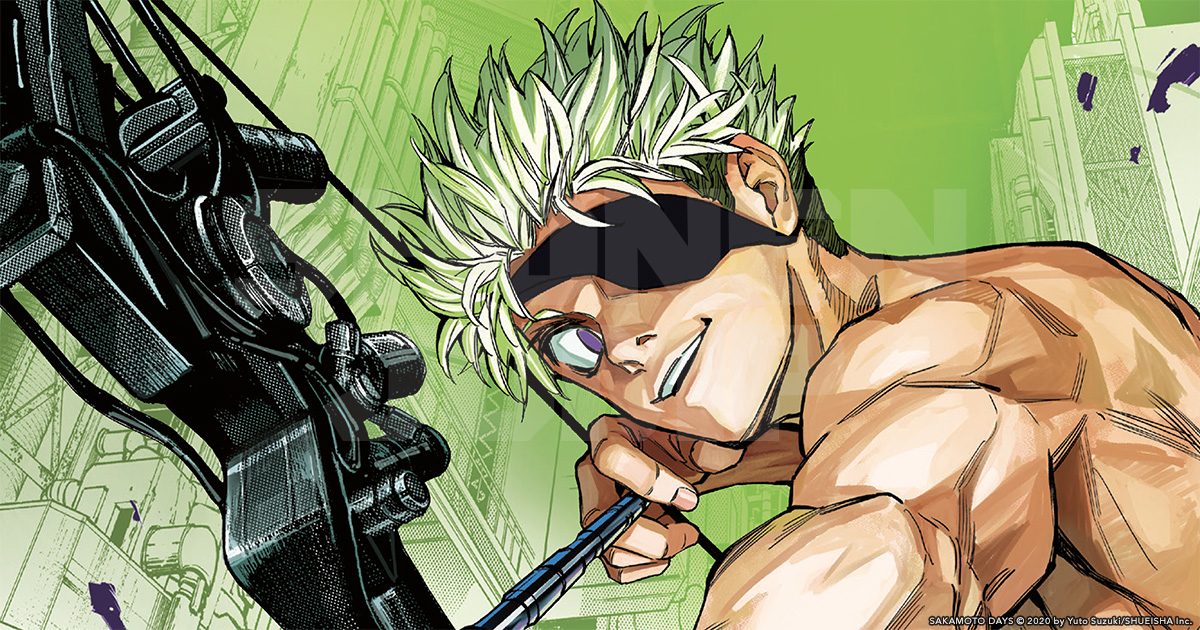
The comedy rides alongside the fighting instead of interrupting it. Sakamoto is deadpan and quiet, the opposite of Shin Asakura, an ally who reads minds and panics easily. That pairing drives much of the humour in the early chapters. Dacey also names the weak spot: the running joke about Sakamoto's weight repeats and loses force with each new opponent. OtaHub agrees, though it fades as the story moves into arcs with larger casts.
The cast: from one store to the whole assassin world
After Shin, the story adds Lu Xiaotang, a sniper who is the daughter of a crime boss, then a long list of enemies, allies and the ORDER organisation. Each has a distinct skill set, so team fights always have something new to show. The story also passes through JCC, Japan's assassin training school, in a stretch that anime season 2 is about to retell.
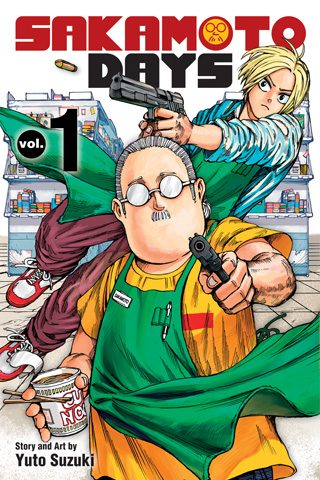
One point OtaHub finds worth stressing: even as the world widens, the story returns to the Sakamoto family fairly regularly. The ordinary scenes in the shop, at the table or with Hana are where the series catches its breath, and they give the fights their weight. Without them this would be a shonen brawler with clever tricks.
The final battle and the length problem
Since August 2025 the manga has been in its "final battle" stretch, and issue 34 of Weekly Shonen Jump in 2026 confirmed it is heading toward its climax. No official end date exists yet, so you are reading an open story and OtaHub cannot score its ending.
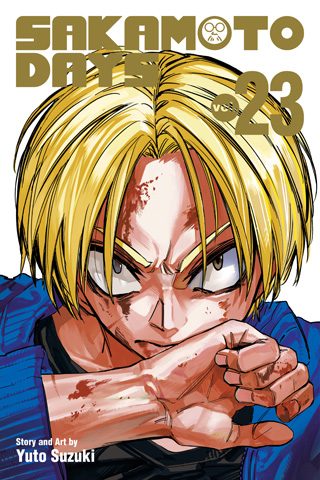
The price of a final battle that has run for more than a year is pacing. A large cast means chapters sometimes stop to share the stage among everyone, and the compact feel of the early volumes thins out. In exchange, many emotional threads are pulled to the same place. That is why OtaHub rates Lasting Value below the other criteria: most of the series is very good, but the finish still has to prove itself.
Strengths and weaknesses
Strengths
- Clear action staging that packs a fight into a few well-built pages.
- A retired-hitman premise with a no-kill rule that invites surprising use of everyday objects.
- Everyday comedy and family warmth keep the characters grounded between fights.
- Easy to read officially: MANGA Plus and VIZ release chapters close to Japan's schedule.
Weaknesses
- The running gag about Sakamoto's weight repeats and fades.
- The long final battle and big cast loosen the pacing.
- OtaHub has not found an official Vietnamese edition, so Vietnamese readers mostly read in English.
- The ending is not out yet, so the whole series cannot be judged.
What critics say
Katherine Dacey (Manga Bookshelf) rated volume 1 "Recommended," praising the pacing of the action and the page layouts while criticising the repeated weight joke; she also noted that some later chapters were less tight than the first. According to Wikipedia's summary, Rebecca Silverman of Anime News Network called it highly entertaining with a strong cast and an engaging premise. On MyAnimeList the manga sits at about 8.05/10 (read October 3, 2026).
In Japan it placed 6th among 50 nominees at the 2021 Next Manga Award and won the U-NEXT Prize, was nominated for the 68th Shogakukan Manga Award (shonen category) and ranked 6th in the 2022 Nationwide Bookstore Employees' Recommended Comics. Circulation grew from 2.2 million (October 2022) to over 15 million (August 2025) and over 18 million (August 2026).
OtaHub score
The overall score is the weighted average of the four criteria, with up to ±0.2 editorial adjustment. See our review standards.
Who should read Sakamoto Days?
Read it if you like shonen action with inventive fights, characters who are cool but also funny, and a comedy with real family feeling. If you have watched the anime, the manga shows the original linework and previews the story of later seasons.
Think twice if you dislike stories that are still open or want to wait for the complete run and binge it. The same goes for readers who avoid shonen-style violence, or who need an official Vietnamese edition.
Frequently asked questions
How many volumes does the Sakamoto Days manga have, and is it finished?
The Japanese edition had 28 tankōbon volumes as of August 4, 2026, with volume 28 collecting chapters Days 246 to 255. The series is still running in Weekly Shonen Jump and entered its climax in mid-2026, but no official end date has been announced.
Where can I read Sakamoto Days officially?
You can read it in English on Shueisha's MANGA Plus or through VIZ Media's Shonen Jump service, and buy VIZ's English print volumes (volume 1 came out April 5, 2022). OtaHub has not found an announcement of an official Vietnamese edition.
How many copies has Sakamoto Days sold?
Shueisha announced more than 18 million copies in circulation worldwide in early August 2026, up from 15 million in August 2025.
Should I watch the anime or read the manga first?
Either works. TMS Entertainment's anime has streamed on Netflix since January 11, 2025 and season 2 is set for January 2027, but the manga is far ahead and shows Suzuki's original linework and page layouts.
Is Sakamoto Days a good starting point for new action manga readers?
Yes. Volume 1 sets up the premise (retired hitman, wife and daughter, a store) within a few chapters, the fights are easy to follow and the tone is light. The violence is typical shonen, so it suits teenage readers and up.
Sources: VIZ Media, Shueisha's MANGA Plus, the official anime site, Anime News Network (18 million milestone), Wikipedia and its chapter list (volume counts, awards), Manga Bookshelf (Katherine Dacey) and MyAnimeList (8.05, read October 3, 2026). The score is OtaHub's editorial judgement under the Review Standards.