Kaiju No. 8 initially gave OtaHub considerable hope for a monster manga. Kafka Hibino is 32, cleans up kaiju remains and watches his childhood friend Mina Ashiro advance through the Defense Force. An adult returning to an abandoned ambition is an appealing premise, especially when his job constantly exposes him to the aftermath of battles he has never been able to join.
Finishing the manga leaves a more moderate impression. Naoya Matsumoto tells an accessible story with a striking transformation and enough confrontations to keep the pages turning. What OtaHub misses is a distinctive approach sustained across the series. A somewhat disappointing ending also does little to make the whole journey more memorable.
An appealing premise develops along familiar lines
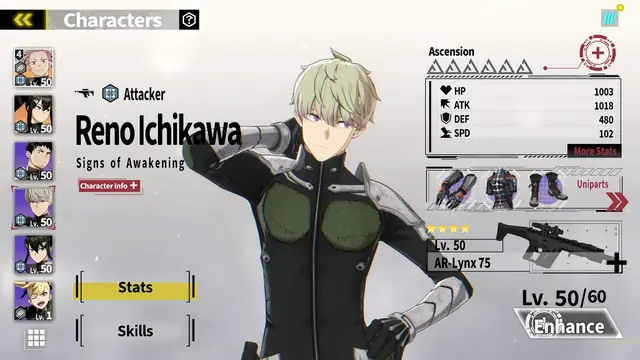
Kafka's starting point raises two interesting questions. What does someone do with another chance after repeated failure, and how can he live with power borrowed from the monsters his desired organization hunts? Meeting Reno Ichikawa and the incident at the hospital return Kafka to recruitment while creating a secret capable of destroying everything he hopes to achieve.
Much of the subsequent progression follows familiar action structures. Kafka enters an organization, meets more capable recruits, trains and faces escalating threats. An enemy's power and the risk of losing control are also established genre ingredients. They can still produce climaxes, but OtaHub does not find their treatment distinctive enough to linger in memory.
The initial acquisition of power feels particularly convenient. A small creature appears and transforms Kafka before the reader has much opportunity to understand their connection. This concerns the opening's construction rather than claiming that later material never addresses the power's origins. Even so, the mystery does not fully compensate for how quickly the premise provides an extraordinary route past his original limitations.
Being 32 does not distinguish Kafka as much as expected
Kafka begins in a relatable position. He has worked, understands being left behind and must relearn things that younger people may grasp faster. Those differences do not always remain central once combat takes over. Many situations instead ask him to become stronger, protect colleagues and prove that he belongs in the Defense Force.
His promise to Mina gives him a clear objective, but their childhood connection does not make every development equally convincing for OtaHub. The manga could explore the distance between the person he wants to become and the life he has already lived more thoroughly. As development increasingly becomes a series of strength-based challenges, the adult second-chance premise feels less prominent.
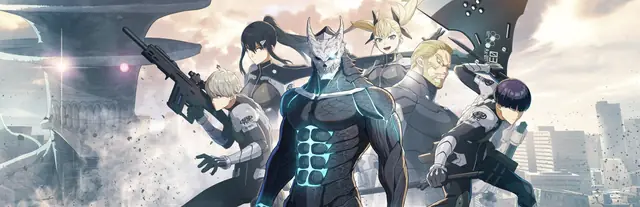
Reno, Kikoru and Hoshina have individual roles and fighting styles, so dismissing them as having no attention would be inaccurate. OtaHub's reservation concerns recognizable character templates: the gifted recruit, family pressure and the experienced fighter guiding newcomers. These work within particular situations without making the ensemble feel especially different from expectations.
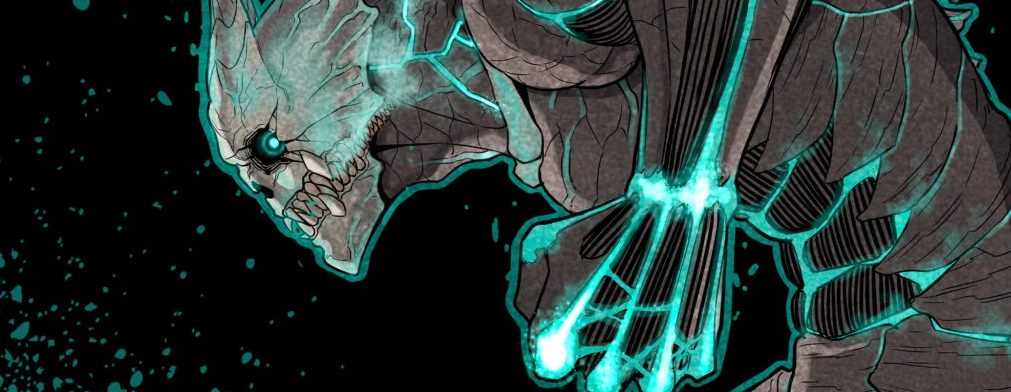
Kafka's transformed appearance is the strongest design
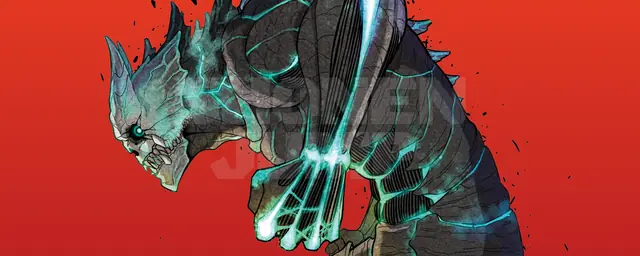
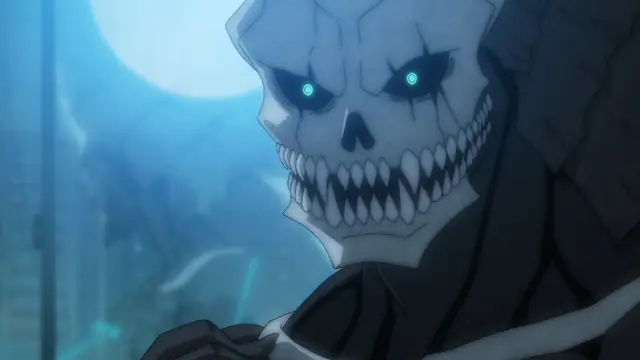
No. 8's design is a clear positive. Its skull-like face, exposed muscle-like anatomy and sharp shapes give the transformation an aggressive identity. The change affects Kafka's whole body, making the shift in his condition immediately visible.
Images concentrating on that form are where the art works best for OtaHub. Its silhouette and anatomy can anchor a large panel without further explanation. That appeal remains recognizable even when the accompanying story is less convincing.
The same enthusiasm does not extend to every monster, uniform and weapon. No. 9 is important to the plot, but its appearance does not make an equally strong impression as a major opponent. OtaHub prefers the protagonist's design to the wider visual vocabulary and would not use a few striking pages to describe the entire manga as visually exceptional.
Readable momentum with relatively few surprises
The manga generally makes the next objective clear. An examination, an operation or a new opponent provides something specific to anticipate, making transitions easy to follow. OtaHub can continue reading even without finding that progression particularly original.
Familiarity also makes the direction of some climaxes predictable. Once the pattern of introducing an ability, meeting resistance and making another breakthrough becomes apparent, interest depends more heavily on choices and consequences. For OtaHub, the emotional dimension does not consistently make the confrontations more than demonstrations of strength.
No single decision immediately makes OtaHub want to abandon the series. Dissatisfaction instead accumulates through a shortage of genuinely memorable developments. It is more accurate to call this a functional, entertaining manga that does less with its premise than initially hoped.
A stronger emphasis on squad combat than kaiju spectacle
Expectations matter here. Coming to a manga called Kaiju No. 8, OtaHub hoped for the appeal of giant creatures and the disruption their presence causes to human life. Those elements exist, but the more prominent development concerns individual fighters and confrontations between powerful opponents.
No. 9 speaks and has a relatively humanlike form, while Hoshina's relationship with No. 10 brings monster power into combat equipment. These choices help establish matchups and distinctive abilities. They also bring the series closer to a monster-hunting action structure than the kaiju-disaster story OtaHub anticipated.
This is a difference in emphasis rather than a reason to deny that the creatures are kaiju. Monsters need not share one size or behavior to belong to the same fictional world. Readers seeking the overwhelming presence of giant creatures may simply find less satisfaction than those interested in fighters improving their abilities and working together.
An ending that leaves some disappointment
After all 129 chapters, OtaHub finds the conclusion less satisfying than the time spent following the series might warrant. The story reaches a stopping point, but finishing it leaves a sense of disappointment. The ending does little to change the reservations that had accumulated earlier.
Ending within sixteen volumes is therefore insufficient reason to award this criterion a high score. A short or long story still needs its accumulated events to lead somewhere rewarding. Here, the journey is finished without leaving much lasting feeling. This review avoids describing the final confrontation's outcome so new readers can experience it themselves.
Its value depends on the entertainment you want
The completed sixteen-volume series can be read without waiting for new chapters. IPM publishes the Vietnamese edition as Monster #8. Its volume-six product page lists a 58,000 VND cover price, which is an example for that volume rather than a universal price or confirmation that the entire set is in stock.
OtaHub sees an accessible option for readers seeking straightforward action and an appealing transformation. Reasons to return center on favorite designs and confrontations, while the plot offers less incentive to search for further meaning. If a strong identity and an affecting conclusion are priorities, sampling it before buying the complete series makes sense.
Verdict
Kaiju No. 8 is decent for OtaHub. It has an attractive premise, a memorable protagonist design and enough readability to finish. Familiar action patterns, a cast that feels insufficiently distinctive and a somewhat disappointing conclusion keep the assessment at 7/10. Squad-combat fans may still enjoy it, while expectations of a genuinely fresh kaiju manga should remain measured.
OtaHub recommendation: Read if it suits you.
Reviewed across all 129 manga chapters from the author’s reading experience. Includes premise and power-development spoilers without revealing the final confrontation’s outcome. Edition assessment covers access and content value, not untested paper or translation quality.
Publication information: VIZ · Volume 16 · IPM: Monster #8 - 6. Artwork: Naoya Matsumoto / Shueisha; promotional artwork from VIZ.