Vinland Saga opens like the best revenge stories: a boy loses his father, follows the very man who killed him, and lives only for the day he can duel him. The battles are drawn fiercely and fast, exactly what you would expect from a manga that started in Weekly Shonen Magazine in 2005. Then, at chapter 54, Makoto Yukimura titles the chapter "End of the Prologue". Eight volumes and more than fifty bloody chapters turn out to be an introduction. The rest of the twenty years is spent taking apart the very thing that made readers fall for the series.
Quick facts
| Item | Details |
|---|---|
| Author | Makoto Yukimura (story and art) |
| Publisher / magazine | Kodansha: Weekly Shonen Magazine (April to October 2005), then Monthly Afternoon (December 2005 to 25 July 2025) |
| Status | Completed; final chapter (220) published 25 July 2025 |
| Volumes / chapters | 29 volumes, 220 chapters; volume 29 released 22 September 2025; over 7 million copies in print |
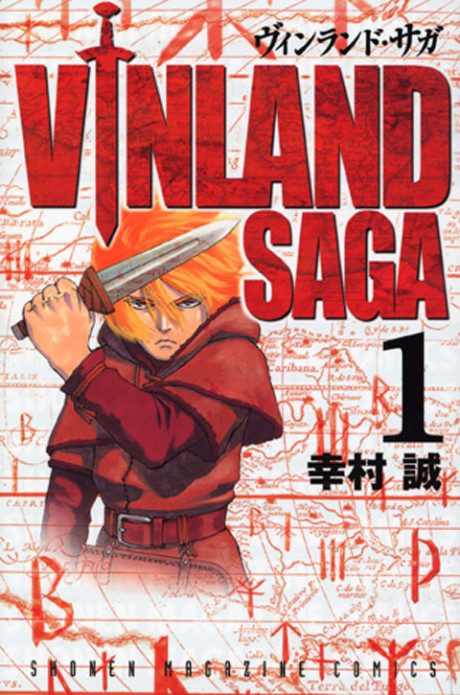
| Editions | Japanese by Kodansha; English by Kodansha USA (two-in-one hardcovers, 15 books; three-in-one Deluxe); no Vietnamese edition |
| Where to read | Kodansha print editions; English digital on BookWalker, Kindle, Google Play |
| Community / critic scores | MyAnimeList 9.09/10 (5 Oct 2026); Kodansha Manga Award 2012, Japan Media Arts Festival Grand Prize 2009 |
| Adaptations | Anime: Wit Studio (24 episodes, 2019), MAPPA (24 episodes, 2023) |
Review scope
This review covers all 29 volumes and 220 chapters, based on cross-checking the sources listed at the end (Wikipedia, Anime News Network, Anime Corner, Thế Giới Manga, MyAnimeList), and OtaHub has no hands-on reading notes. The analysis and score are OtaHub's editorial judgement; awards and community scores are only used for comparison. The plot is discussed at the level of structure without revealing the ending, and the "Memorable moment" box covers a scene at the end of the Farmland arc and carries its own warning.
Story and structure: an eight-volume prologue
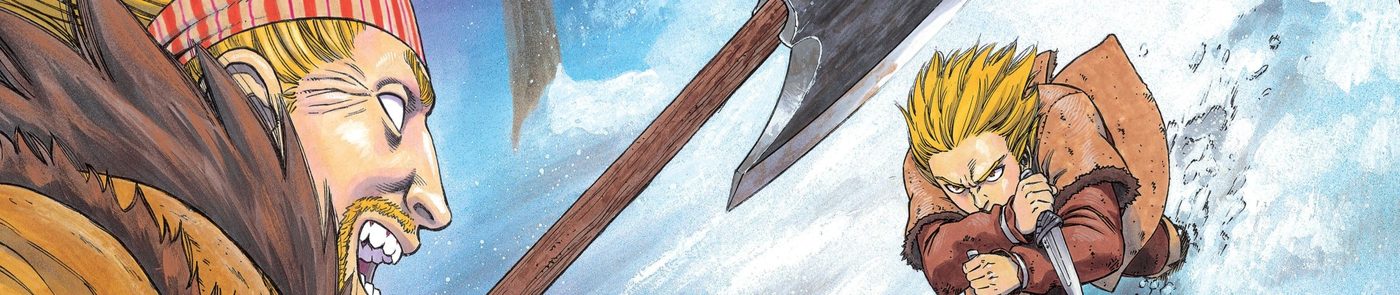
Vinland Saga's structure is a statement. The war arc (chapters 1 to 54) has everything an action shonen needs: a formidable enemy in Askeladd, a battle-mad giant in Thorkell, duels on the battlefields of 11th-century England. And Yukimura calls all of it the prologue. The Farmland arc (chapters 55 to 100) takes everything from Thorfinn: his revenge, his weapon, his freedom. He becomes a slave ploughing fields on Ketil's farm. A series that could have ended at a peak of violence chooses to begin its real story where its hero is emptiest.
It is a brave and correct choice. But not every stretch holds that weight. The Eastern Expedition arc (chapters 101 to 166) contains a 36-chapter run titled "War in the Baltic" (chapters 125 to 160). It brings violence back to test Thorfinn's vow of non-violence, but that test was essentially answered at the end of the Farmland arc. The result is a long stretch with many new characters and a moral question that is not new. Many readers, OtaHub included, see the conversation between Thorfinn and Canute at the end of the Farmland arc as the philosophical peak the later arcs never surpass.
Characters and themes: "You have no enemies"
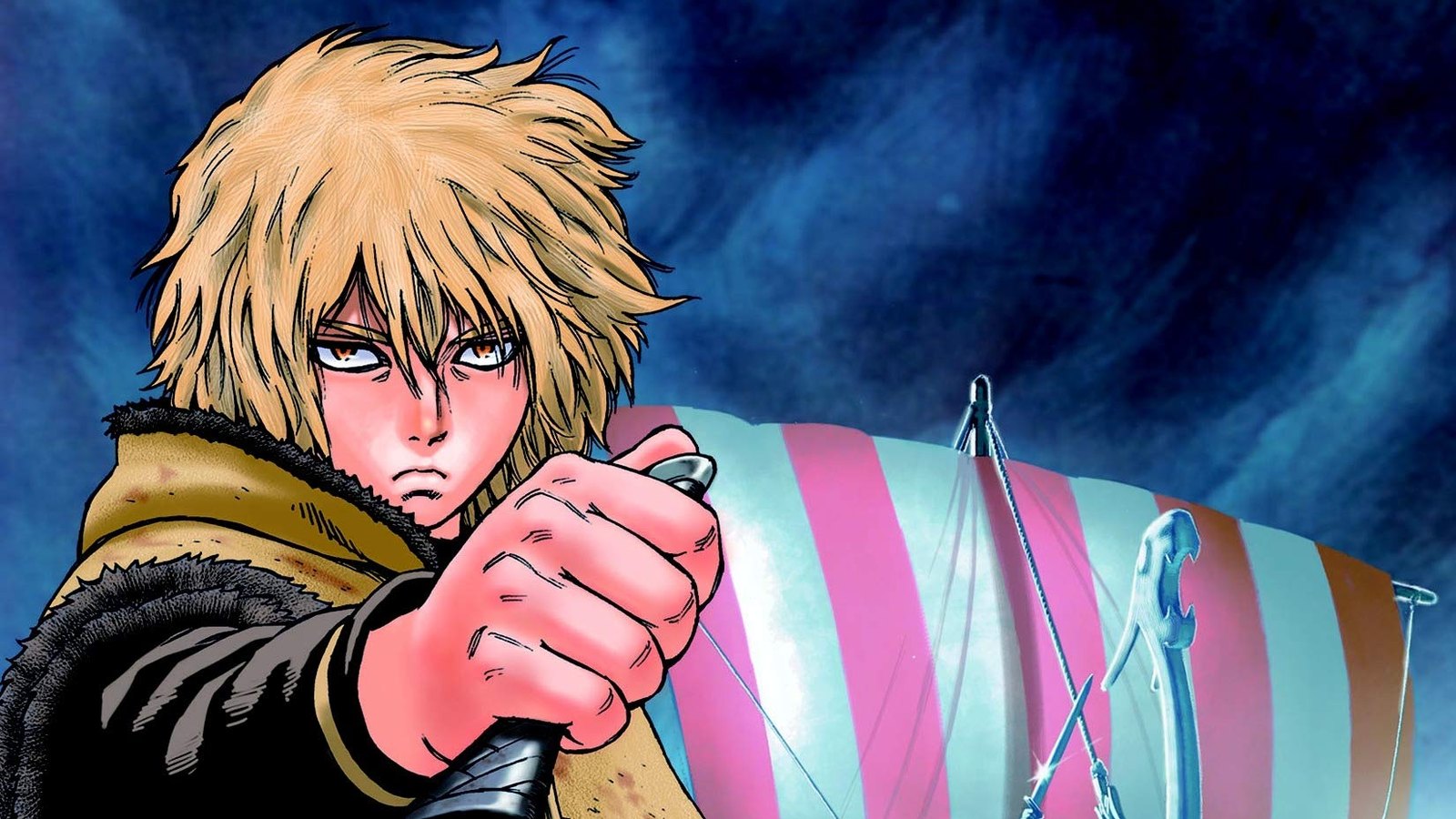
Vinland Saga's most important line comes in the early chapters, when Thors, Thorfinn's father, tells his son that he has no enemies, that nobody has any enemies. Thorfinn spends nearly a hundred chapters and his whole youth learning what that means, and when he says it again before King Canute's army in the Farmland arc, it is no longer his father's lesson but something he paid for himself.
The series is strong because it does not leave Thorfinn alone with that theme. Canute is the mirror image: from a timid prince he becomes a king who wants to build paradise on earth through war. Thorfinn wants the same paradise, but without the sword. Askeladd, the man who killed Thorfinn's father, is written with such depth that his death at the end of the war arc leaves a hole for both the hero and the reader. Even Thorkell, the giant who lives only to fight, is not drawn as a villain. At San Diego Comic-Con 2023, Yukimura said he created Thorkell to show that violent people are not simply bad, and that he sees them as something like children.
Yukimura has also said he wanted to show that violence leads nowhere good, and defined growing up as becoming a kind person. What is impressive is that the series never lectures. It makes Thorfinn live with the consequences of every person he killed, chapter after chapter.
Art and paneling: from battlefields to hands
Yukimura is known for his research: he travelled to Scandinavia, Iceland, England and Canada, and even built ship models to draw them correctly. In the war arc, that accuracy serves the action: armour, longships and battle lines have real weight, so the violence on the page feels heavy too.
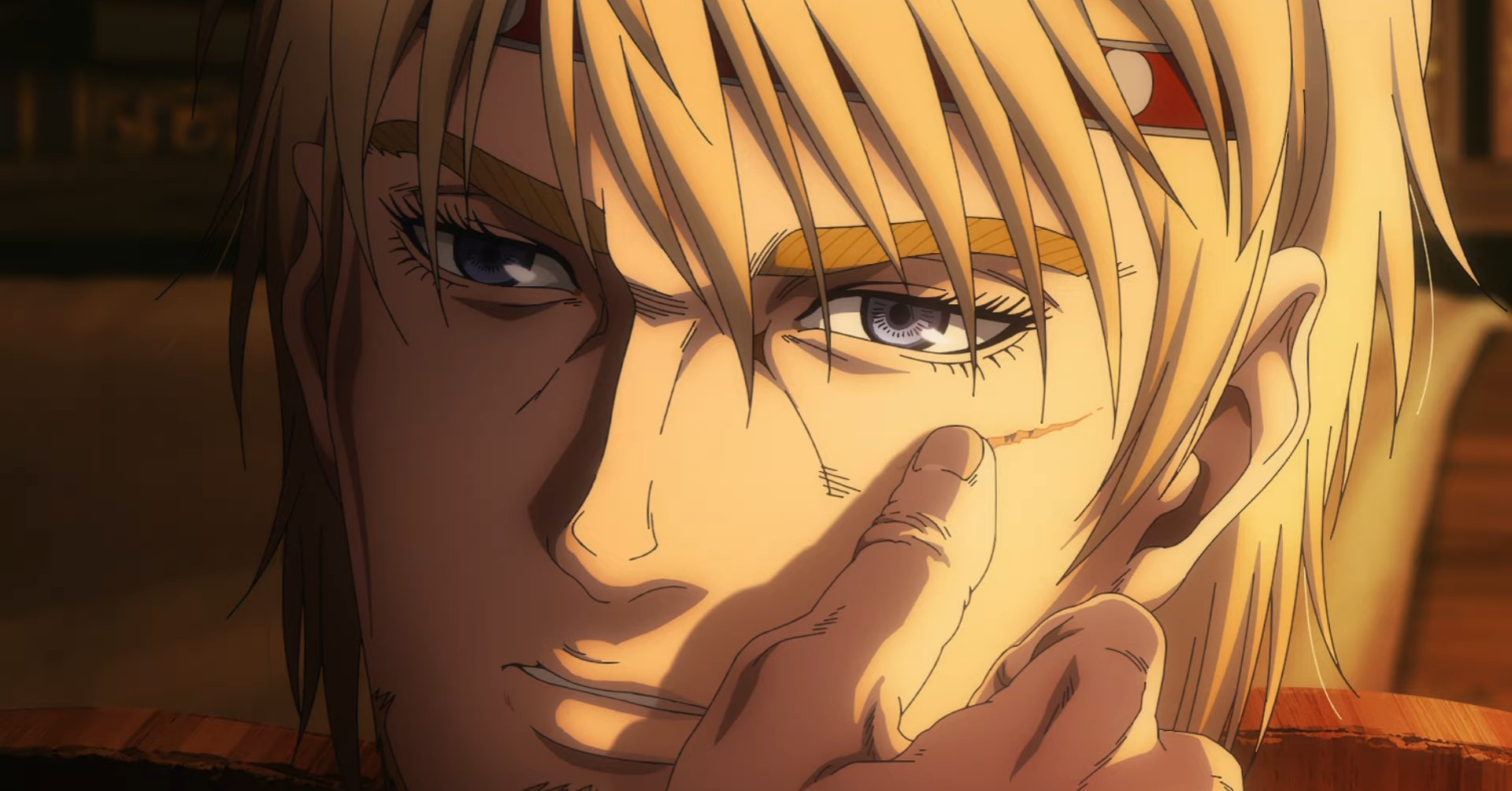
More interesting is how the art shifts focus in the Farmland arc. Battlefields give way to soil, wheat fields and hands. In chapters 68 and 70, Thorfinn dreams of the hands of the dead pulling him down, with the people he killed now clinging to him. The hands that held a dagger now plough a field, and those same hands become where his guilt returns. An action manga whose most haunting image is not a sword stroke but a dream of hands is art serving theme.
Pacing and emotion: slow on purpose, sometimes too slow
From late 2005, Vinland Saga moved to Monthly Afternoon because Yukimura could not keep a weekly schedule. Each chapter runs about 30 pages, once a month. That rhythm gives the series pauses rarely seen in shonen: a chapter can be just Thorfinn and Einar clearing land, nobody dying, nobody fighting, and it still carries weight.
The Farmland arc is where the slow pace pays off most. The story of Arnheid, a slave on Ketil's farm, unfolds over many chapters before reaching her tragedy around chapter 93, a chapter bitterly titled "Birth of a Warrior". The emotion does not come from a twist but from the reader having lived long enough with these characters. The Baltic stretch shows the other side of the same rhythm: 36 monthly chapters are three real years of reading for a storyline whose moral core had already been resolved.
A hundred punches
Spoilers for the end of the Farmland arc (also the end of anime Season 2).
To get an audience with King Canute and stop his army from ravaging Ketil's farm, Thorfinn agrees to take a hundred punches from Drott, a warrior in Canute's forces, without hitting back. This is the scene where Vinland Saga answers its own prologue. In the war arc, Thorfinn proved his worth by winning fights. Here he proves it by standing up after every blow without raising a hand.
The scene is risky as storytelling: it could become a sermon on patience. It does not, because the reader has seen how dangerous a fighter Thorfinn was in the war arc. The vow "I have no enemies" only means something when the person saying it could absolutely have enemies, and chooses not to.
Consistency and ending: back to "Somewhere Not Here"
Finishing a series after twenty years is already an achievement. In 2019, Yukimura announced the final arc would run more than 50 chapters and over 1,000 pages, and the series closed with chapter 220 on 25 July 2025. The most striking detail about the ending needs no spoilers. The final chapter is titled "Somewhere Not Here", the same as chapter 2, where the dream of Vinland is first mentioned. The story ends with the name of the dream that started it.
The Vinland arc (chapters 167 to 220) does not give Thorfinn's ideal an easy victory, a choice consistent with the whole series. OtaHub scores this part highly for that consistency, though not perfectly, because the long middle diluted some of the weight the ending needed.
Edition and where to read: no Vietnamese edition
Kodansha USA's English edition is a two-in-one hardcover, 15 books, published since 2013; book 15 (volume 29) is out digitally from 6 October 2026 and in print from 13 October 2026. Since 2024, Kodansha has also published a three-in-one Deluxe edition. The series is complete, so it can be read in one run, and it rewards rereading: once you know who Thorfinn becomes, the violent early chapters read very differently.
For readers in Vietnam
- Vietnamese edition
- None yet. According to Thế Giới Manga (updated April 2025), Vinland Saga has not been published in Vietnam.
- Legal reading
- Kodansha USA's English edition, in print or digitally on BookWalker, Kindle and Google Play.
- After the anime
- The two anime seasons stop at the end of the Farmland arc, around chapter 100. Continue from around chapter 101 (volume 15).
- Note
- The first eight volumes are full of battles and violence, and later arcs are psychologically heavy, so it is best for mature readers.
Strengths and weaknesses
Strengths
- A bold structure: eight volumes of war are only the prologue
- Thorfinn, Canute, Askeladd and Thorkell answer one question four ways
- Non-violence is paid for in action, not preached
- The ending returns to chapter 2's title, complete after 20 years
Weaknesses
- The 36-chapter "War in the Baltic" repeats a test already answered
- The monthly rhythm stretches the middle
- Heavy violence and trauma, not for every reader
- No Vietnamese edition
What critics say, and where OtaHub differs
Vinland Saga won the Grand Prize for manga at the 2009 Japan Media Arts Festival and the 2012 Kodansha Manga Award, has sold over 7 million copies and holds 9.09 on MyAnimeList. OtaHub has not found reviews of the ending from major outlets such as Anime News Network or Comic Natalie. Reader reaction after the final chapter has been broadly positive.
Where OtaHub differs is the middle stretch. The general view treats Vinland Saga as a flawless whole, but OtaHub thinks the Baltic run is a real weakness, not just "slow". It is weak because it repeats a test the Farmland arc had already answered completely. That is why OtaHub's total is 9.4 rather than a perfect score. It is a masterpiece of theme on an uneven road.
OtaHub score
The total is the weighted average of the six manga criteria; editors may adjust it by up to ±0.2. See OtaHub's review standards.
- Story & Structure · 9.4Turning eight volumes of war into a "prologue" is a bold decision, though the 36-chapter Baltic war makes the middle drag.
- Characters & Themes · 9.9Thorfinn, Canute, Askeladd and Thorkell are four views of violence, shown through action rather than lectures.
- Art & Paneling · 9.5Battles carry weight thanks to deep research, and the art shifts its focus from swords to hands when the story changes direction.
- Pacing & Emotion · 9.1The slow pace creates moving stretches in the Farmland arc, but the same pace drags out the Baltic run.
- Consistency & Ending · 9.4Completed and true to its theme to the last chapter, though the long middle makes the journey uneven.
- Edition & Reading Value · 8.8A complete, handsome English edition that rewards rereading, but still no official Vietnamese edition.
OtaHub recommendation: Read now
Who is it for
Read it if you have ever felt action manga stop right when the most interesting question appears: what happens after revenge? Vinland Saga is twenty years of answering that question.
Think twice if you read manga mainly for the fights. The first eight volumes will satisfy you, but the rest deliberately takes away what you came for. If you have seen both anime seasons, that is a good test, because if you liked Season 2 you will like the rest of the manga.
FAQ
How many volumes does Vinland Saga have?
The manga has 29 volumes and 220 chapters. The final chapter ran in Monthly Afternoon on 25 July 2025, and volume 29 was released in Japan on 22 September 2025.
Is there a Vietnamese edition of Vinland Saga?
Not yet. According to Thế Giới Manga (updated April 2025), Vinland Saga has not been published in Vietnam, and OtaHub has found no publisher announcing the licence.
Where can I read Vinland Saga in English?
Kodansha USA publishes two-in-one hardcovers (15 books, with the last one out digitally from 6 October 2026 and in print from 13 October 2026) and three-in-one Deluxe editions. Digital copies are on stores such as BookWalker, Kindle and Google Play.
I watched the anime. Where do I start the manga?
The two anime seasons (Wit Studio 2019, MAPPA 2023) end at the close of the Farmland arc, around chapter 100. Continue from around chapter 101 (volume 15), the start of the Eastern Expedition arc.
Is Vinland Saga dark?
Yes. The first eight volumes are full of battles and violence, and later arcs are heavy on trauma, slavery and guilt, so it is best for mature readers.
Sources: Wikipedia (chapter list), Wikipedia (Vinland Saga), Anime News Network (Yukimura interview, 2023), Anime Corner (final volume), Thế Giới Manga (publication status in Vietnam), MyAnimeList. The score is OtaHub's editorial judgement under our review standards.