In-Depth · Design & Craft · Light spoilers (how Mr. X works, no story reveals)
In Resident Evil 2 Remake, Mr. X is at his scariest when you cannot see him. I think Capcom pulls this off with three things: footsteps you cannot quite place, a stalker who patrols the whole building, and a Raccoon City police station you have learned by heart. He scares you because you do not know where he is, not because he is strong.
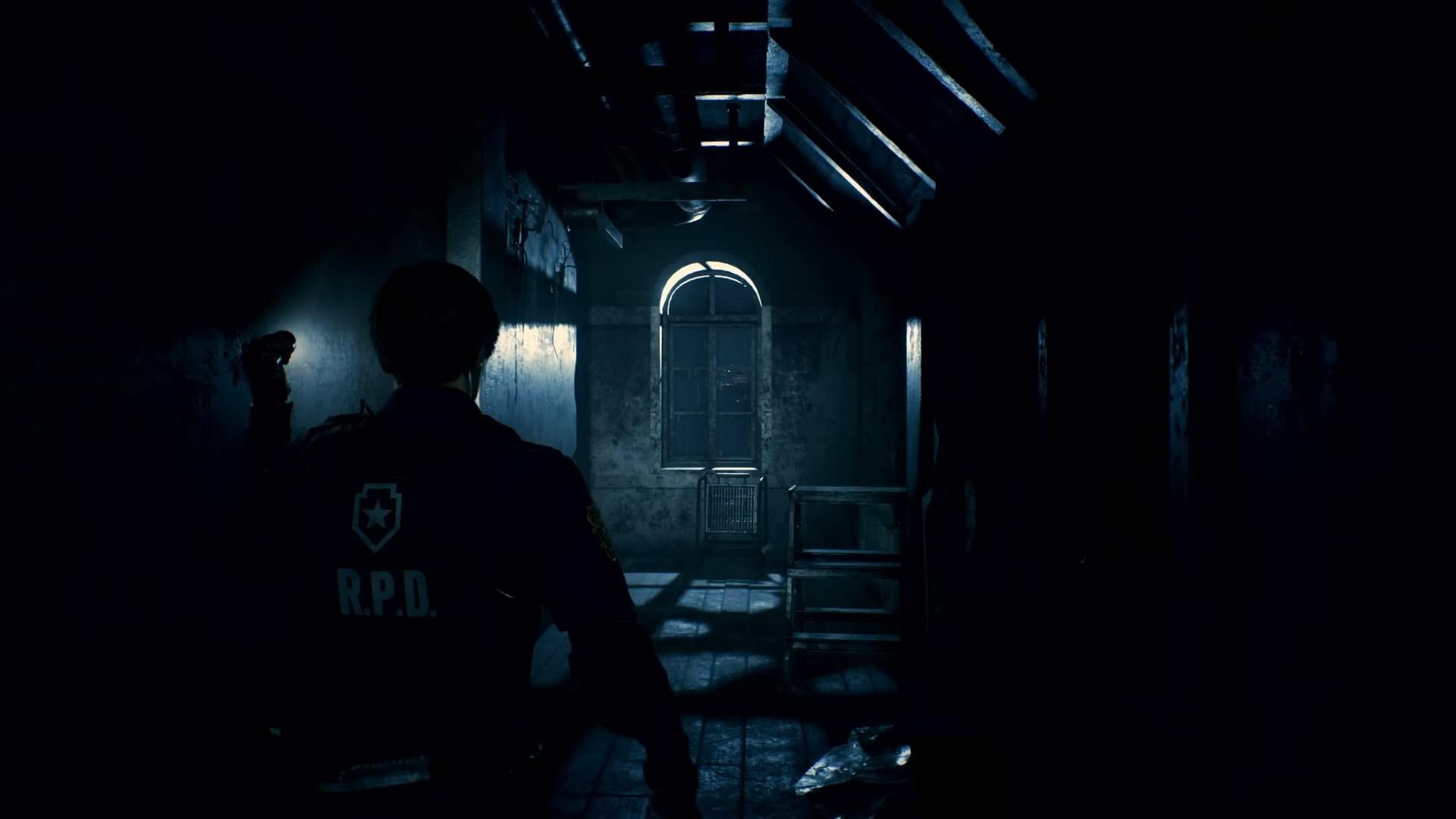
Who is Mr. X, and why is he so hard to shake?
Mr. X’s official name is Tyrant, designation T-00, a bioweapon of the Umbrella Corporation. In the story he is sent to the Raccoon City Police Department (RPD) to eliminate survivors and track down a sample of the G-Virus.
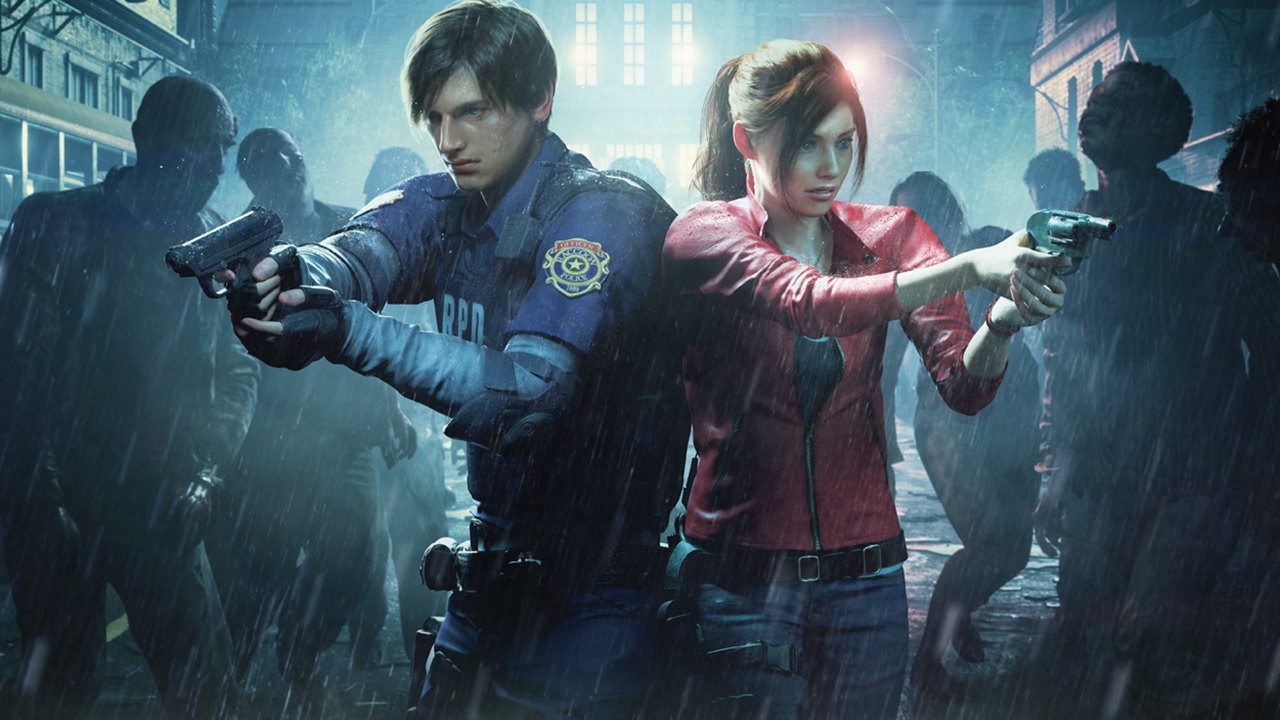
He is nothing like a zombie. He is huge, very strong and so tough that while you explore the RPD, no amount of ammo does more than make him drop to his knees for a moment before he gets back up. To survive you have to learn to avoid him instead of fighting him.
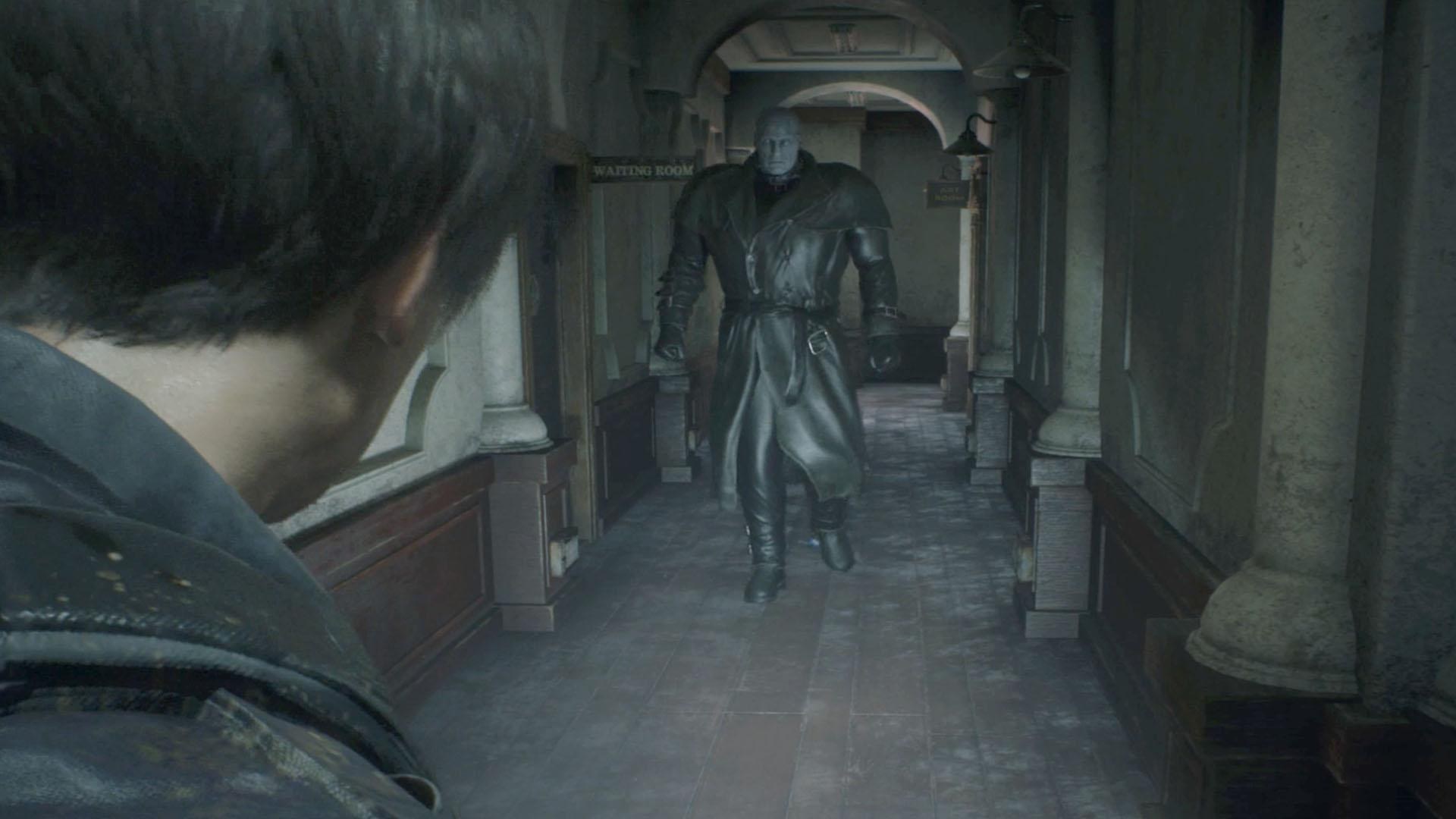
The 1998 original did it differently. According to Wikipedia, Mr. X mostly appeared in scripted moments back then, and if you moved to another section he lost track of you. The 2019 remake changes that: he is designed to stalk the player across many areas of the RPD. Art director Satoshi Takamatsu describes him as an infiltrator who will relentlessly pursue his target until he can exterminate them.
Why do his footsteps scare players?
If you have played up to the point where Mr. X starts chasing you, you remember the heavy footsteps echoing down the corridors. The sound tells you he is still moving around the building, but not always where. Wikipedia adds that the music and footsteps grow louder and more intense the closer he gets.
Picture yourself solving a puzzle while the footsteps get clearer. You know he is close, but you are not sure whether he will walk past or come straight into this room. When the sound suddenly stops, you are still not relieved, because he may have gone far away or may just be heading to another area.
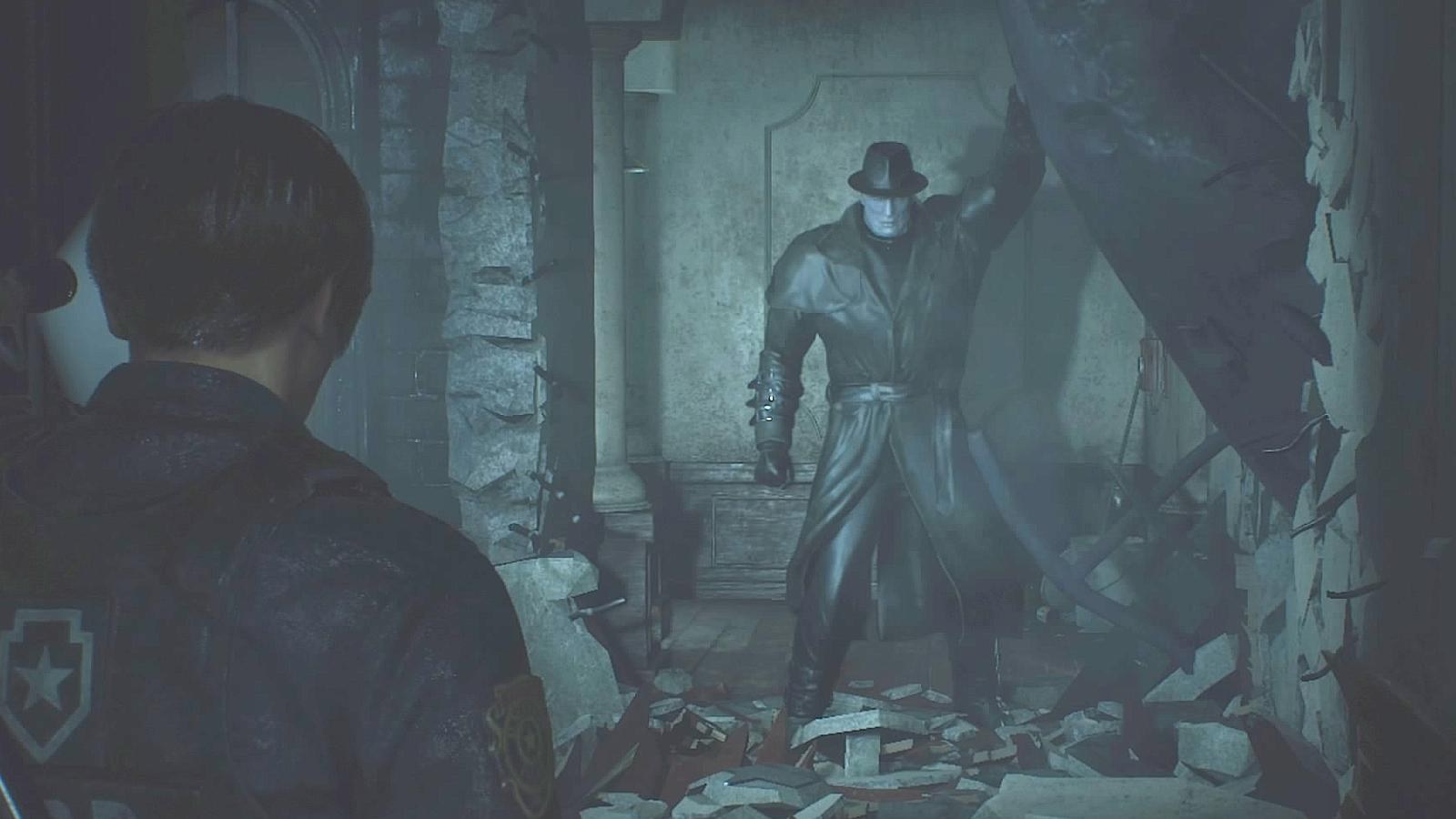
The sound is not an accident. In an interview with Digital Trends, audio director Kentaro Nakashima said the team used a real-time binaural system and tied it to the game’s over-the-shoulder camera. Binaural audio is a technique that lets listeners sense which direction a sound comes from, so the footsteps feel like they are echoing around you inside the building. Capcom’s Yasuhiro Anpo puts it bluntly on the PlayStation Blog: if you hear the footsteps, run (as quoted by ComicBook).
Why do players still feel hunted when he is not in front of them?
Other enemies mostly stay put, while Mr. X roams the RPD looking for you. Once he spots you he gives chase, and many players report that gunfire can draw him in too.
An independent level designer once used a noclip camera, a tool that lets you fly through walls to observe the game, and found that he could sense the player’s position but did not cheat by teleporting. This is from Wikipedia’s Mr. X article, which cites Eurogamer.
So shaking him off does not mean you are safe. He can go back to patrolling and turn up on exactly the route you were about to take. But he does not know where you are at every moment either, and works by detection and search rules. That unpredictability is why the moments when you cannot see him are sometimes tenser than facing him: you do not know where he is, yet you have to act as if the chase could start again at any second.
How does Mr. X turn familiar areas into dangerous ones?
Before Mr. X shows up, you gradually learn the RPD by finding keys, solving puzzles and opening new routes. Corridors that once made you wary become familiar. Then he starts patrolling and everything changes.
Take the bookshelf-moving puzzle in the library. You need time to slide the shelves to open the way to the upper floor. While he is stalking you, standing still to solve it is far riskier: once you hear footsteps getting close, you have to drop everything and find a way out.
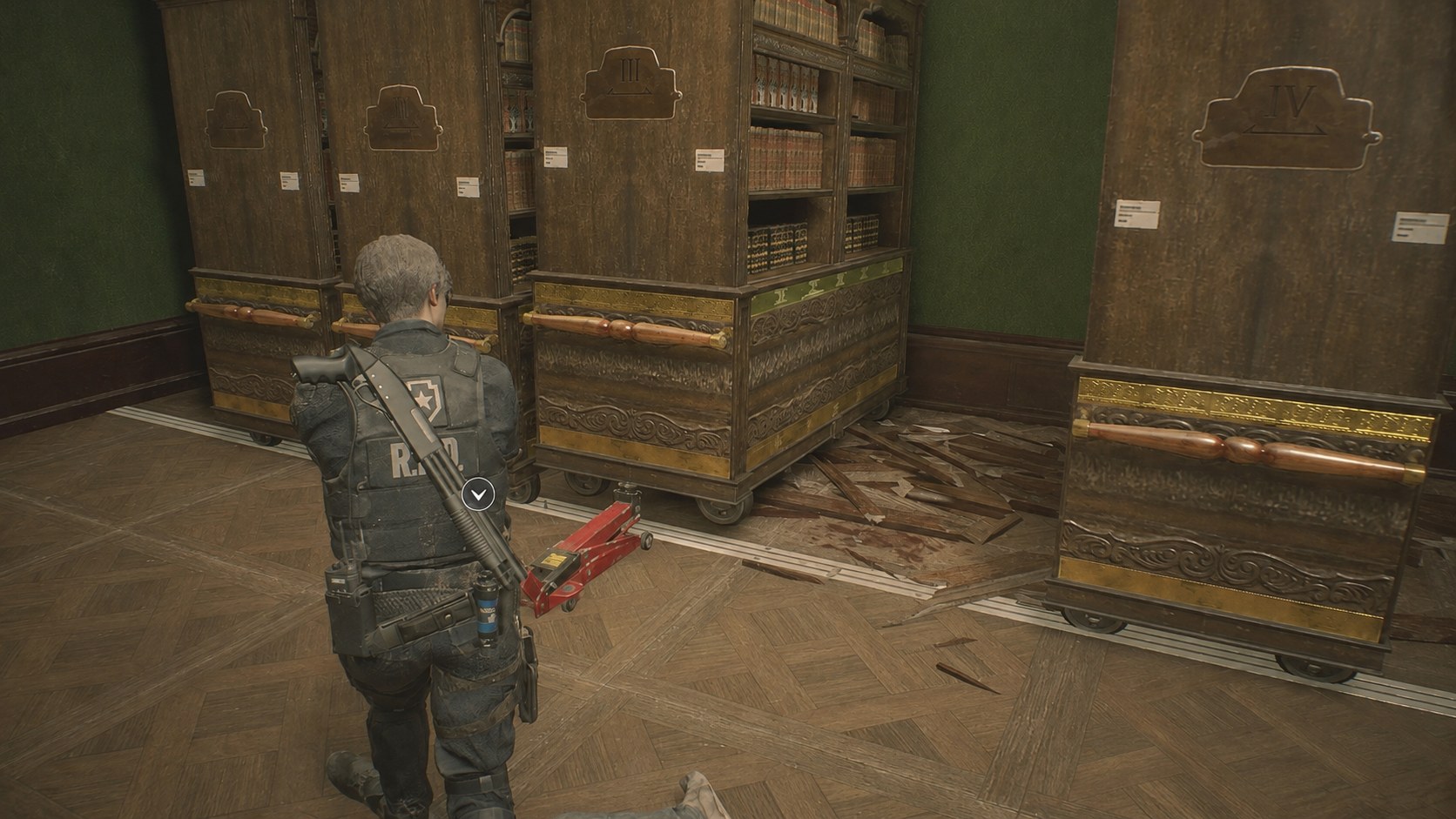
It gets harder because the corridors around you still hold zombies and Lickers, while ammo and healing items are limited. Running from him can push you through dangerous areas, burn resources or wreck a route you had planned.
This is the part I find cleverest. He does not need to attack to force you to change how you play, from choosing routes to deciding when to solve a puzzle or pick up items. The RPD does not need new threats, because his presence alone makes familiar places unpredictable.
Why is waiting for him scarier than facing him?
Fear in horror games usually comes from two sources: surprise and anticipation. Jump scares belong to the first: strong but brief, and they stop working once players get used to them. Mr. X belongs to the second.
When he stands right in front of you, you know where he is and can react: which way to run, which route to use, what to do to create distance. When he is out of sight, that information is gone. The footsteps make you build scenarios on your own: is he coming to this room, is the route ahead safe, is there still time to finish the puzzle before he shows up?
The approach appears in other games too. The Xenomorph in Alien: Isolation is the familiar example of being hunted without knowing where the hunter is, while Nemesis in Resident Evil 3 Remake leans more toward relentless chases. Each game picks its own balance between sustained pressure and direct action.
The other side: does the fear fade once players get used to it?
There is an interesting limit to this design. After many playthroughs, you remember the safe areas, know how to shake him off and use his footsteps to guess where he is heading. The sounds that once made you panic become information for planning. When the unknown becomes familiar, the chase gradually shifts from a horror experience into a pathfinding and resource-management puzzle.
That shows Mr. X is scary not only because of his strength but because the player lacks information about him. He does not need to be smarter or chase without limits. As long as you cannot predict his next move, the tension stays. To me, the lesson goes beyond one monster: in horror games, what scares players most is usually not on the screen but in the gap between what they know and what they cannot know.
Cover image: official Resident Evil 2 Remake image on the PlayStation Blog; the images in the article are screenshots from the game, © Capcom. Sources: Wikipedia: Mr. X (Resident Evil) (the Tyrant T-00 name, mission, differences from the original, music and footsteps, the noclip camera observation) · PlayStation Blog: Resident Evil 2 turns one (art director Satoshi Takamatsu on the Tyrant) · Digital Trends: interview with audio director Kentaro Nakashima (real-time binaural audio, the over-the-shoulder camera) · ComicBook: Yasuhiro Anpo on the Tyrant. The gameplay scenes are based on observations from playing the game. Checked on November 24, 2026.