In-depth · Design & Craft · Spoilers for episodes 7 and 11–12 of season one
Dark Gathering makes tunnels and ruins frightening by turning familiar routes into places its characters can no longer trust.
A tunnel and castle ruins do not need ghosts to exist. They have entrances, paths and visible traces of human activity. When Dark Gathering sends Yayoi Hozuki and Keitaro Gentoga into them, those ordinary means of orientation become sources of unease.
That change is what makes the setting compelling. A place's reputation creates apprehension before the visit. What happens there then forces the characters to reconsider whether they can trust a route, a companion or even their own means of protection.
Dark Gathering starts with somewhere you might pass every day
A tunnel is built to take people from one side to the other. Its purpose is so clear that a traveler rarely needs to wonder what might be waiting inside. A horror story breaks that familiarity by putting a spirit there. A short stretch of road becomes somewhere a person can no longer assume they will leave safely.
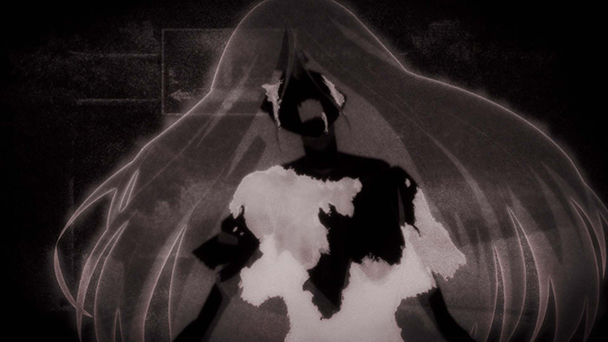
In episode 7, Keitaro agrees to help Yayoi gather spirits so that they can gain the power to free Eiko from her curse. Their destination is S Tunnel, where they encounter the bloodied spirit of a woman in a white dress. The visit has a purpose before the encounter begins. The characters enter danger to achieve something rather than simply getting lost and meeting a ghost.
That setup makes the location part of a character's choice. Continuing might help Keitaro protect someone important to him, but it also means approaching what he fears. The tunnel is both a physical passage and a test of his new resolve. Its threat matters because of the person who chooses to enter.

A passage can become a trap
A tunnel gives a horror story a clear spatial advantage. The audience understands its basic structure without learning a map or the rules of a new world. There is a way forward and a way back, but both choices follow a restricted passage. If danger occupies that passage, knowing where the exit lies may not be enough to escape.
Familiarity makes the questions immediate. When should someone turn back? Can they trust what they see? Must they approach the threat to accomplish their goal? Those questions do not require an extensive history of the tunnel. They begin with the ordinary ways people use a space.
This also means a verified real-world name is not essential to the situation's effect. Someone who has never visited Tokyo can understand the anxiety of a restricted escape route. Recognizing an actual place would add another association. The underlying threat remains a structure built for passage no longer guaranteeing a way out.
H Castle Ruins makes a guide difficult to trust
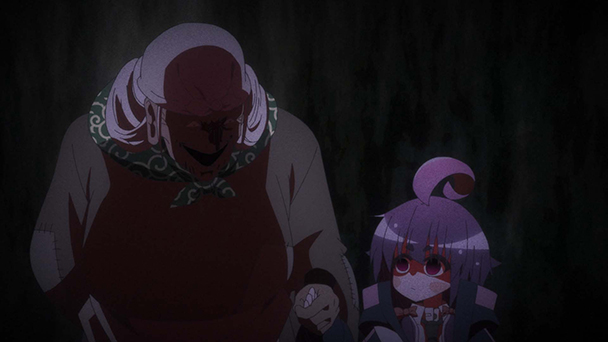
Episode 11 moves from transport infrastructure to H Castle Ruins. Yayoi and Keitaro visit the danger-rank-S location and accompany an elderly woman who offers to guide them to a waterfall. Keitaro becomes separated from the group. Finding Yayoi brings another disturbing discovery. The situation makes even the attempt to reunite with a companion frightening.
A guide normally reassures visitors. At a reportedly haunted site, however, that person's knowledge also creates dependence. The newcomers do not know the path ahead, while the guide appears to know where they should go. Once the group separates, what should make the visit easier can instead deprive them of control over their situation.
Ruins also suggest time differently from a tunnel. What remains invites thoughts about the people who once lived there. A landscape can be a sightseeing destination or suggest an unfinished story. Dark Gathering exploits that shift by making the past of a place a threat to the people entering it.
History gives a landscape weight without proving a haunting
Hachioji provides a real-world example of why castle ruins can carry strong associations. Hachioji City's account records Hojo Ujiteru's castle falling in 1590 to the forces of Maeda Toshiie and Uesugi Kagekatsu during Toyotomi Hideyoshi's campaign. The site retains remains and restored features, including paths and stone walls. A seemingly quiet landscape is connected to a particular historical upheaval.
A place with a violent history must be distinguished from a place proven to be haunted. History supplies people, losses and physical traces around which a storyteller can build associations. Legends have their own circulation, while the anime's spirits and curses belong to fiction. Recognizing the value of a legend in horror does not require presenting it as fact.
Likewise, the abbreviation H Castle does not by itself make every detail a reproduction of Hachioji. More useful than matching a name is examining how the story uses this kind of setting. Stone steps, paths and a destination such as a waterfall can all become points of orientation. Undermining confidence in those landmarks turns exploration into a search for escape.
A ghost story heard elsewhere can feel close to home
In a Shueisha conversation, Kenichi Kondo describes memories of paranormal footage on television and the influence of scary stories online. He also says that recognizing fictional cues before a ghost appears can make him think about what he would do. This suggests a useful way to read Dark Gathering: a frightening account becomes a situation someone must respond to.
A tale about a haunted tunnel or ruin can travel in very few words. A location and an unusual occurrence give the listener something to imagine. When characters visit that place, the account creates expectations. A stranger appearing or a group becoming separated means something different from the same event on an ordinary outing.
Everyday material can therefore bring a story into its situation quickly, but it cannot do all the storytelling. The work still needs to establish what the characters want, why they do not leave and how danger changes their actions. A location gains weight by affecting choices. A famous name alone risks becoming an entry on a list rather than somewhere a story unfolds.
Another view when fear turns into a contest between spirits
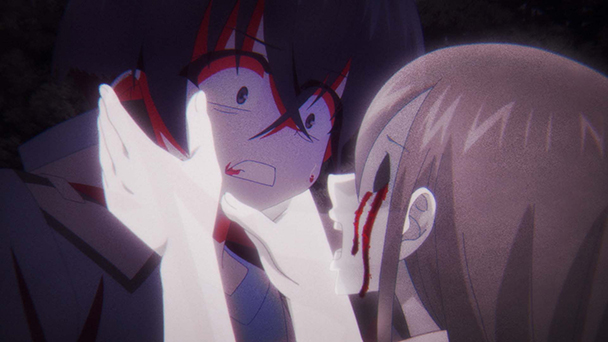
Episode 12 places the H Castle spirit's wish to preserve memories alongside its practice of cursing survivors. Yayoi uses a spirit in her possession to capture it, but Keitaro is caught in the consequences. Responding to the danger creates another problem. Having power to oppose a ghost does not mean controlling the outcome.
This can change the audience's experience. Once spirits can be confronted and captured, anticipation may move from fear of an incomprehensible presence toward curiosity about how Yayoi will solve the situation. That transition can appeal to viewers who enjoy tactical action. For someone seeking helplessness before the inexplicable, it may reduce the fear.
The effectiveness of the horror therefore cannot be credited entirely to recognizable locations. Character power and knowledge of the rules matter too. What remains valuable is danger persisting after the characters acquire a response. If a solution can still pull a companion into a curse, the location continues to demand caution.
Conclusion on familiar places in Dark Gathering
For OtaHub, Dark Gathering uses setting effectively when it unsettles ordinary assumptions about a place. A tunnel should provide passage, a guide should offer direction and knowledge should help someone avoid danger. Unease grows when those assurances become unreliable.
Real locations and stories passed between people can enrich those associations. Fear is not stored in a name on a map, however. It emerges when someone has to continue without trusting that the path ahead will take them where they want to go.
Sources: Episode 7: S Tunnel, Episode 11: H Castle Ruins, Episode 12: the spirit at H Castle, Kenichi Kondo’s Shueisha conversation, Hachioji City’s historical site guide.