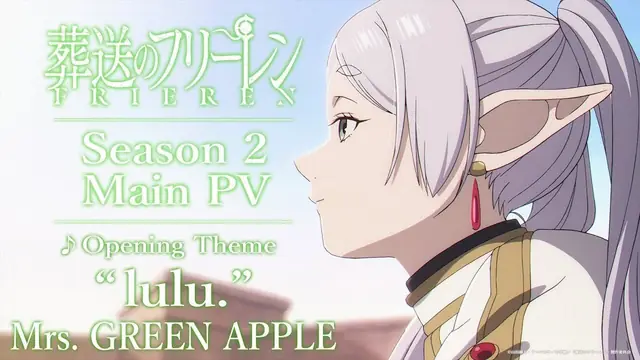
Frieren: Beyond Journey’s End begins where a conventional fantasy adventure could finish. The Demon King has been defeated, the heroes return to a celebration, and the companions prepare for the rest of their lives. For Himmel, Heiter and Eisen, ten years together make a lasting memory. For Frieren, an elven mage who has lived for more than a thousand years, that time passes too quickly for her to understand its importance.
That premise drew OtaHub to Kanehito Yamada and Tsukasa Abe’s manga. With Madhouse adapting it under director Keiichiro Saito, the question was how animation would express the distance between Frieren’s long life and the shorter lives around her. Across the first season’s 28 episodes, the adaptation is so convincing that stretches which felt prolonged on the page become absorbing on screen.
A new journey changes the meaning of an old adventure
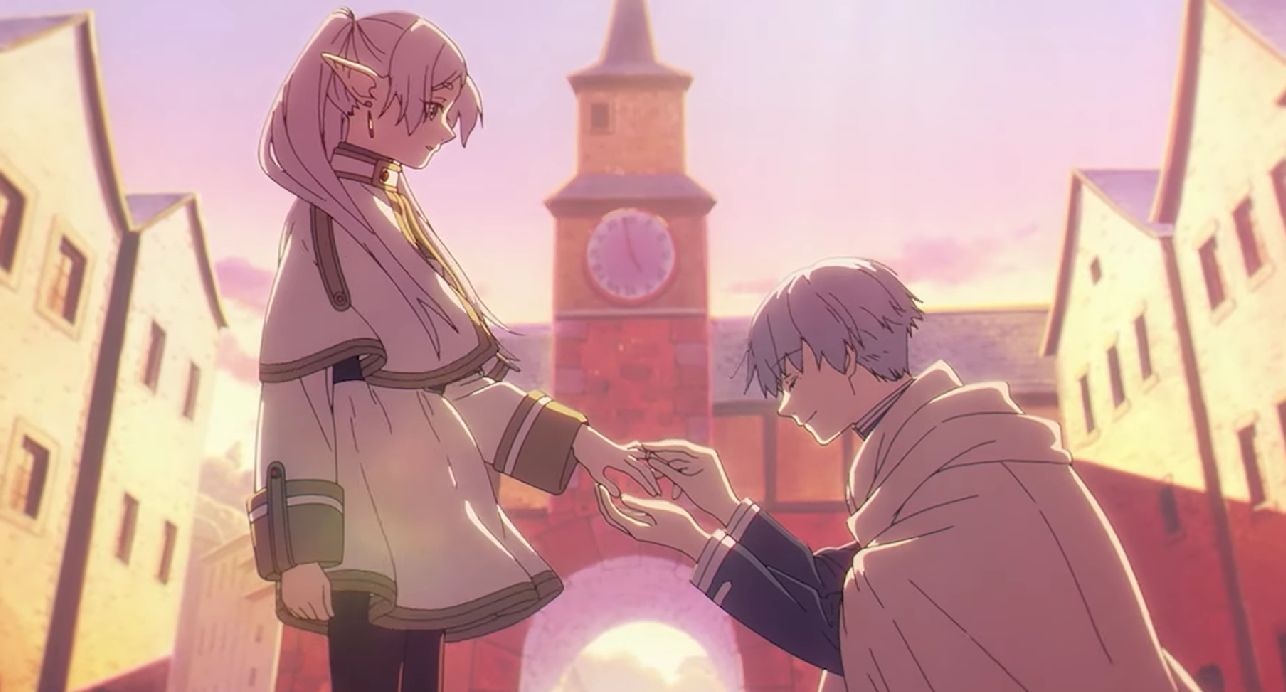
Himmel’s death makes Frieren realize how little she knew about someone who shared an entire adventure with her. The sadness comes from opportunities to understand each other that have passed. She remembers events, but does not always understand why a companion wanted to stop for a view, help a stranger or preserve a small memory.
Her journey with Fern and Stark is therefore compelling even when the group simply visits a town or answers a modest request. New places and encounters recall earlier experiences, while Frieren’s responses show her growing understanding of her former companions. The series connects past and present through specific situations, giving its flashbacks a clear relationship to what the characters are experiencing now.
This also keeps Himmel present after his adventure has ended. An apparently ordinary action becomes memorable when Frieren revisits it with an understanding she lacked at the time. OtaHub appreciates the trust placed in these details. The characters do not have to keep explaining their sadness or announce every lesson they have learned.
Quiet voices can carry a great deal of feeling
Frieren often remains composed when others would worry. That suits someone whose sense of time differs so much from a human’s, but the series also gives her approachable habits. She can become excited about an odd object, be lazy about everyday tasks or accidentally make a companion uncomfortable. Those moments give her a life beyond her regrets about the past.
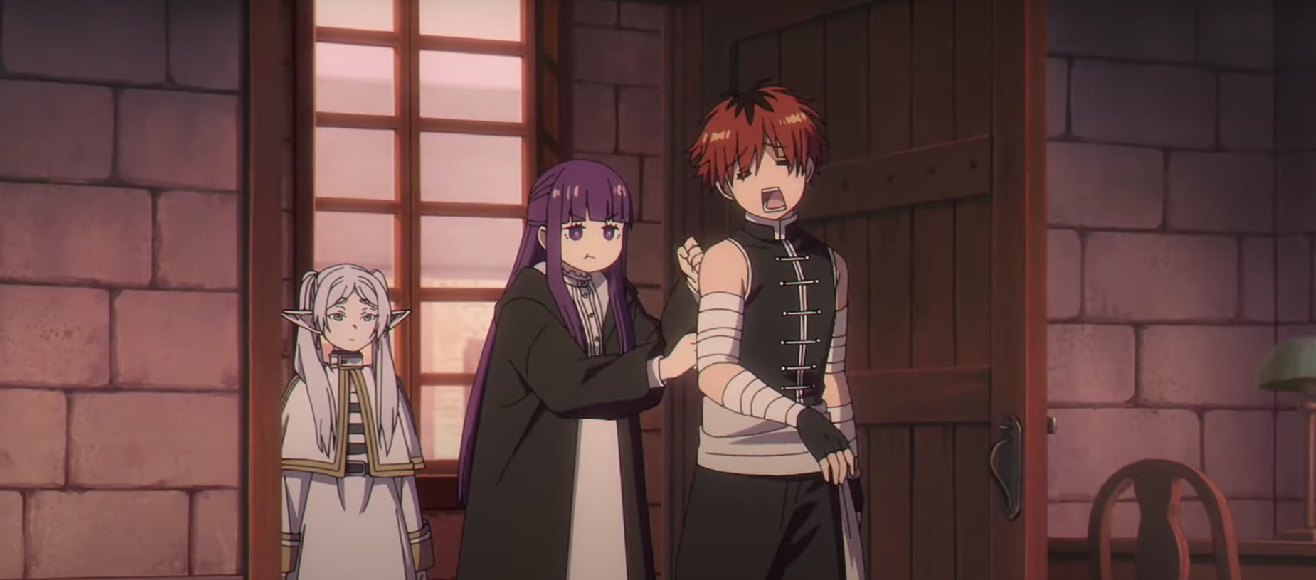
Fern and Stark complement each other naturally. Fern is serious, while Stark more readily displays embarrassment and exaggerated reactions. Their minor disagreements are funny because they misunderstand each other or struggle to say what they want. These exchanges work for OtaHub because the direction allows both characters to react, rather than delivering a joke and immediately moving on.
The Japanese performances preserve that restraint without making everyone sound alike. Atsumi Tanezaki gives Frieren her familiar composure, while Kana Ichinose brings different shades to Fern’s seriousness. Chiaki Kobayashi supplies energy through Stark’s flustered responses and attempts to stay calm. Since much of the dialogue is delivered quietly, the occasional burst of emotion lands especially well.
Madhouse gives small movements the attention they deserve
The animation exceeds OtaHub’s initial expectations. Battles develop into sustained action sequences from comparatively brief passages in the manga. Movement and staging make the characters’ power more tangible and give each encounter a progression to follow, rather than simply asking the viewer to wait for an outcome.
The same care appears in everyday scenes. Even getting out of bed can involve enough detailed movement and reaction to make a joke funnier. That matters in Frieren because spending time with the characters should be enjoyable before the audience is asked to care about what they might lose.
The visual approach also serves the storytelling. Landscapes, towns and gentle light make pauses along the road appealing, while measured expressions preserve the characters’ familiar composure. Action and ordinary life consequently feel part of the same world. The series does not seem to reserve all its visual attention for climaxes.
Evan Call’s music deepens the emotion of each scene
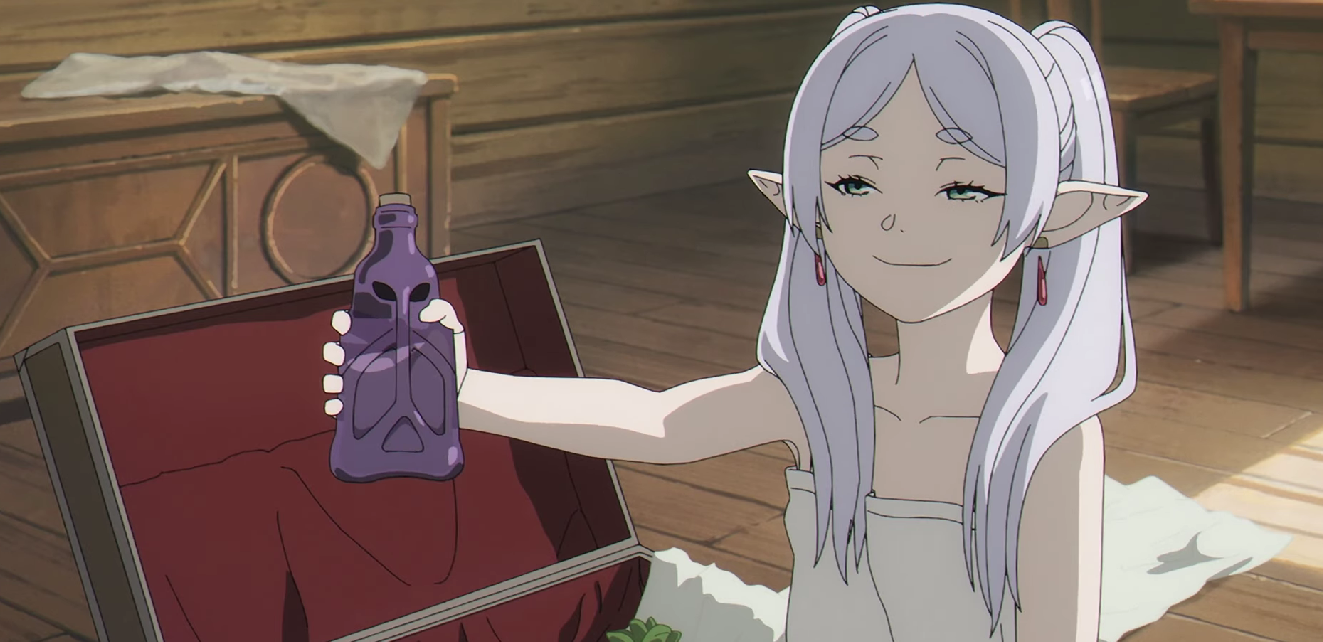
The music is a major reason the anime affects OtaHub more strongly than the manga. Evan Call’s score works with the images to establish each scene’s atmosphere, from the openness of an adventure to the quieter feeling of remembering an old friend. When a scene needs time for an emotion to develop, the music gives that pause life.
During battles, the score increases tension while remaining connected to the action. In character scenes, the combination of voice, music and the listener’s response can make a simple conversation memorable. For OtaHub, that contribution matters more than whether an individual piece stands alone, because the sound is helping the story find its full expression.
An adaptation that knows when to slow down
The first season’s 28 episodes allow viewers to become familiar with the group’s daily rhythm. Saito and the Madhouse team preserve the source material’s reflective quality while using movement, performance and music to make scenes flow. Passages OtaHub found drawn out in the manga become easier to engage with through their staging on screen.
The series also moves from small journeys into confrontations and a mage examination without losing its interest in people. By the time the action begins, viewers have learned more about the personalities and choices of those taking part. The attraction comes partly from impressive magic, but also from waiting to see how the characters will respond.
OtaHub has no substantial criticism that diminishes the first season. The main consideration for a new viewer is a preference for pacing. Frieren will stop for a conversation, a view or a memory. If you are willing to follow that rhythm, the pauses feel carefully prepared and meaningful to her journey.
Worth returning to for what you understand differently
Frieren is immediately engaging as a story about time and companionship. Once the characters are familiar, early memories and words gain further weight. The reason for revisiting a small incident, or for making an apparently unnecessary choice, becomes clearer. This is why OtaHub wants to return to season one instead of remembering only a handful of action scenes.
The adaptation also makes the prospect of later installments exciting. It establishes confidence that memorable manga passages can grow on screen while keeping their emotional foundation. For OtaHub, this is among the finest manga adaptations experienced, as well as an anime season capable of convincing viewers who have never read the original.
Verdict
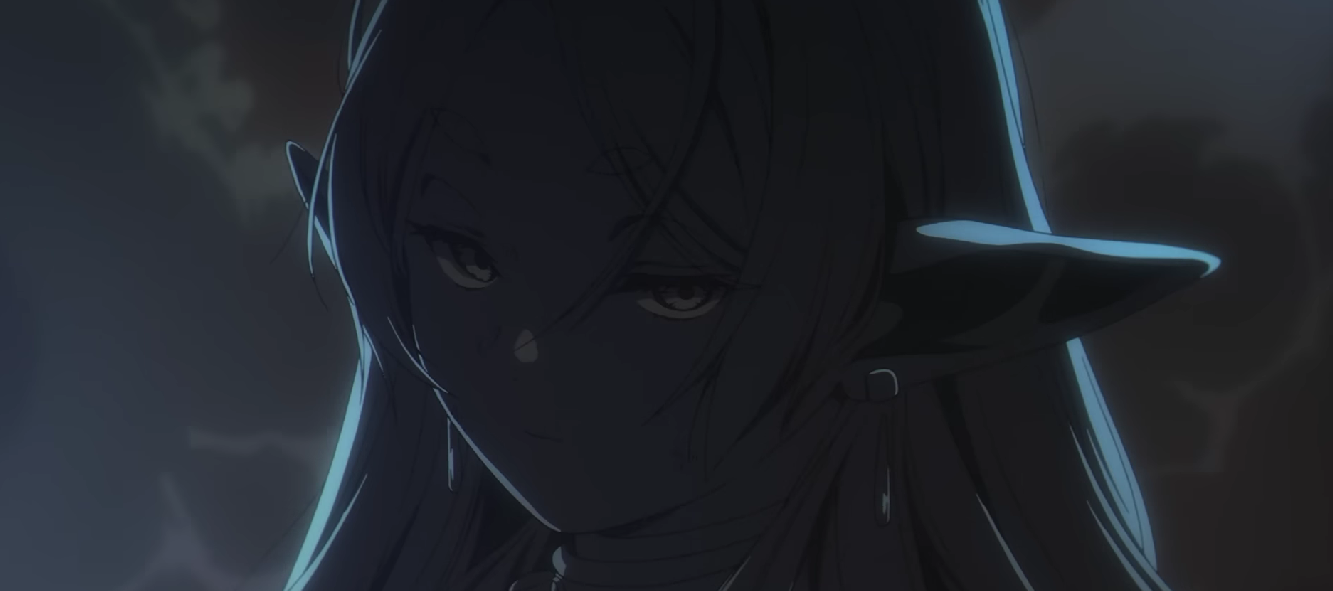
Frieren’s first season does what OtaHub wants from an exceptional adaptation: it preserves a story already loved and makes watching it rewarding in its own right. Detailed animation, expressive music and thoughtful performances make even small incidents worth following. If you want a fantasy series that makes you care about the people behind the adventure, these first 28 episodes deserve your time.
OtaHub recommendation: Watch now.
Reviewed across all 28 episodes of season one, with Japanese performances and comparison to the original manga. Includes opening-premise spoilers without revealing the outcomes of major confrontations.
Production and episode information: official staff and cast · season-one episode list. Cover: season-one promotional visual. Screenshots from the first anime season. ©Kanehito Yamada, Tsukasa Abe / Shogakukan / Frieren Project. Review standards.