In-depth · Story & Themes · Major spoilers through season 2
That Time I Got Reincarnated as a Slime makes Tempest a place to care about but risks losing its appeal when victory becomes too predictable.
After the war against the orcs in the first season, Rimuru has more to decide than what to do with a defeated enemy. He must find a way for people who have just fought one another to live together. By accepting responsibility for the orcs’ crimes and proposing a nation shared by different peoples, he turns the end of a war into the beginning of a community.
That is what makes Tempest worth following. The protagonist’s achievements become residents who remain part of the story, rather than ending with a beaten opponent. Yet a community with a leader powerful enough to keep rescuing it presents another storytelling problem. How can the series make us fear for Tempest while preserving the feeling that it is somewhere we want to return?
A victory matters because someone stays
The battle at the goblin village in episode 3 establishes this appeal early. Rimuru helps the villagers fight the wolves, defeats their leader and accepts the attackers into his following. He then names both goblins and wolves, causing them to evolve. A conflict that could have ended with an enemy driven away instead produces new members of the community.
Rimuru’s strength is decisive here. The wolves submit because he overwhelms them, so describing this simply as friendship achieved through kindness would miss an essential part of the encounter. What matters is his choice after winning. He uses his advantage to bring the other side in rather than preserving the relationship as one of hostility.
Naming consequently does two things at once. It makes characters stronger under the world’s rules and gives them individual identities within the emerging community. The people around Rimuru can become recognizable companions rather than an anonymous crowd of monsters summoned whenever he needs soldiers.
This is a satisfying form of progress. A battle leaves more people to care about and more relationships to develop. Wherever Rimuru goes, the results accumulate in Tempest. That continuity gives the journey the feeling of building something, rather than simply moving through a succession of defeated opponents.
Accepting the orcs gives coexistence a concrete meaning
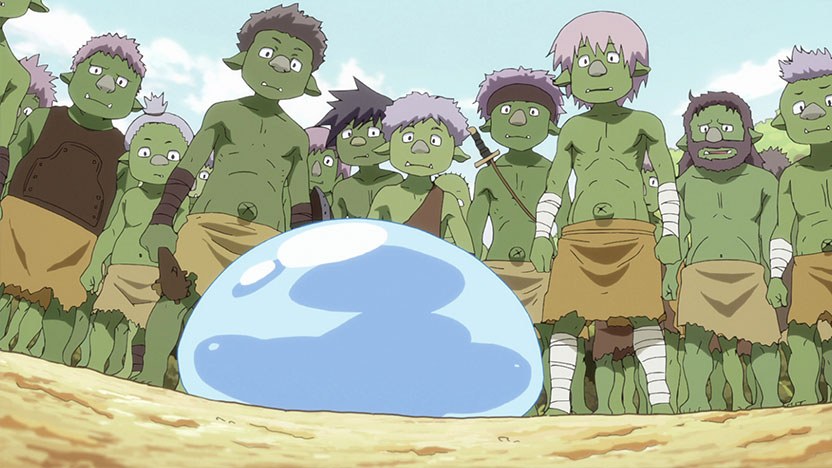
Episode 15 takes the idea further. Rimuru accepts the burden of the orcs’ crimes in accordance with his promise to Geld, the leader he has just opposed. The survivors are welcomed, and the lizardmen and kijin agree to the settlement. The Great Jura Forest Alliance emerges from a proposal to build a nation where different peoples can coexist.
Rimuru is not merely recruiting people already willing to follow him. He asks those who have suffered losses to accept members of the force responsible for the war. Compared with a straightforward victory, that decision raises a harder question about who should have a future once the fighting ends.
In OtaHub’s reading, this is where his ideal becomes most tangible. A shared country must have room for people who previously stood on the other side. His generosity stops being only an appealing personal trait and begins determining how the community will be organized.
Still, the parties’ acceptance of that solution reveals a limit of this approach. The story offers an attractive resolution to a major conflict, while living together could contain many further disagreements. For someone drawn to reconciliation, it is a warm conclusion. For someone hoping to follow the enduring mistrust between former enemies, agreement may arrive too readily.
Rimuru’s power is both a reward and a limitation
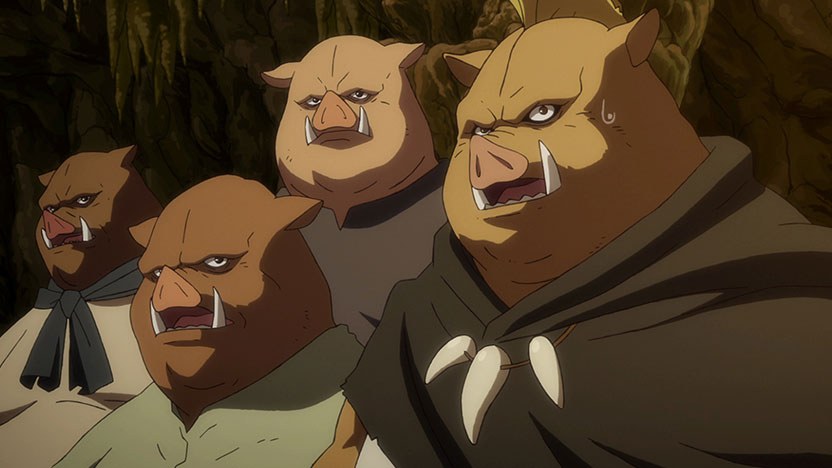
Tempest’s appeal cannot be separated from its leader’s strength. Without the ability to protect its residents and make opponents listen, Rimuru’s proposal for coexistence would not carry the same force. Part of the reassurance this community offers comes from having someone capable of defending it.
Season 2 shows how severe that protection can become. In episode 34, Rimuru confronts Falmuth’s main army and attacks with the intention of allowing nobody to escape. His companions also overwhelm opponents who previously harmed Tempest. This is a punitive counterattack rather than an evenly balanced test of strength.
Such a counterattack can be compelling because those responsible for the harm are made to pay. The imbalance serves that sense of release. The same choice is less effective when the desired attraction is an unpredictable fight. Once the advantage is obvious, the remaining question is often how the opponent will lose rather than whether Rimuru might be defeated.
There is consequently no useful rule that a powerful protagonist automatically makes a poor story. Power can still create difficult choices about responsibility, violence and the limits of protection. The series risks becoming less engaging when those questions are settled as comfortably as the battles themselves.
Resurrection changes what there is to fear
The attack on Tempest directly tests the promise that its community can be protected. In episode 31, Rimuru returns to find the place he has built covered in blood and smoke. He must contain his anger, identify the enemy and deal with the crisis rather than simply continue gathering allies.
He subsequently evolves into a Demon Lord and attempts to resurrect Shion and the others who died. Episode 35 centers the possibility of saving them, while episode 36 confirms their return. Loss becomes something that a new advance in power and ability can reverse.
For anyone attached to Tempest’s residents, their return has clear emotional value. The story restores the people who make the place matter. Yet that resolution also changes expectations for later crises. Once death has proved reversible, there is a reason to anticipate another rescue, even though this does not guarantee that everyone can be saved in every circumstance.
These reactions can coexist. Someone can be glad to have Shion back and still feel that a threat has lost some of its force. Creating tension now calls for additional problems that greater strength or a new ability may not settle. If every danger leads to another upgrade, Tempest can keep growing while the feeling of uncertainty keeps shrinking.
Diplomacy needs to change something
Even after a military victory, a strong community must deal with how other countries perceive it. In episode 38, Rimuru recounts what has happened to foreign representatives. Erald of Sarion chooses friendship over hostility, and cooperation with Dwargon and Blumund is reaffirmed.
The meeting has a distinct purpose. Defeating an army does not automatically win acceptance from neighboring states. Rimuru needs to turn his strength into a relationship that can survive the war. Diplomacy therefore belongs in this nation-building story rather than existing merely as a pause before the next fight.
But a meeting’s significance and its appeal to watch are separate matters. When Rimuru recounts earlier events, foreign representatives need that information to decide their position. The audience already knows much of what happened. The conversation becomes worth anticipating when it produces a choice, a condition for cooperation or a new disagreement. If it merely repeats established information, it can be useful to the characters while making the story feel stationary.
“Too many meetings” is therefore an incomplete explanation for boredom. The more useful question is whose intentions change afterward and what Tempest must now do differently. Diplomacy can create conflicts of its own as long as the people at the table retain different interests and choices. A favorable outcome signaled too far in advance can drain tension from both a conference and a battlefield.
Another view of a reassuring world
Slime’s choices deserve a fair reading. Not every story needs to hold attention through the risk that a favorite character might die. Watching a community being built and protected has an appeal of its own. The acceptance of the orcs and the relief of having companions return both serve that desire.
Recognizing the value of reassurance does not mean that every slow passage is necessary or every convenient resolution convincing. The series can remain optimistic while allowing disagreement, forcing Rimuru to choose and letting those decisions have consequences. What matters is the feeling that the community changes through its trials, rather than always returning to greater safety with a larger group of allies.
The takeaway for Tempest
For OtaHub, the series’ appeal and limitations meet in its promise about Tempest. Rimuru makes it attractive to believe that different people can find a place to live together. When he can guarantee that promise too easily, however, there is less reason to wonder what will happen next. Tempest is memorable because people want to stay, and becomes more compelling when keeping them together remains a challenge.
References: The official anime site’s pages for episode 3 and the goblin village, episode 15 and the Great Jura Forest Alliance, episode 31 and the aftermath of the attack, episode 34 and the counterattack, episode 35 and the resurrection attempt, episode 36 following the resurrection and episode 38 and the diplomatic conference.